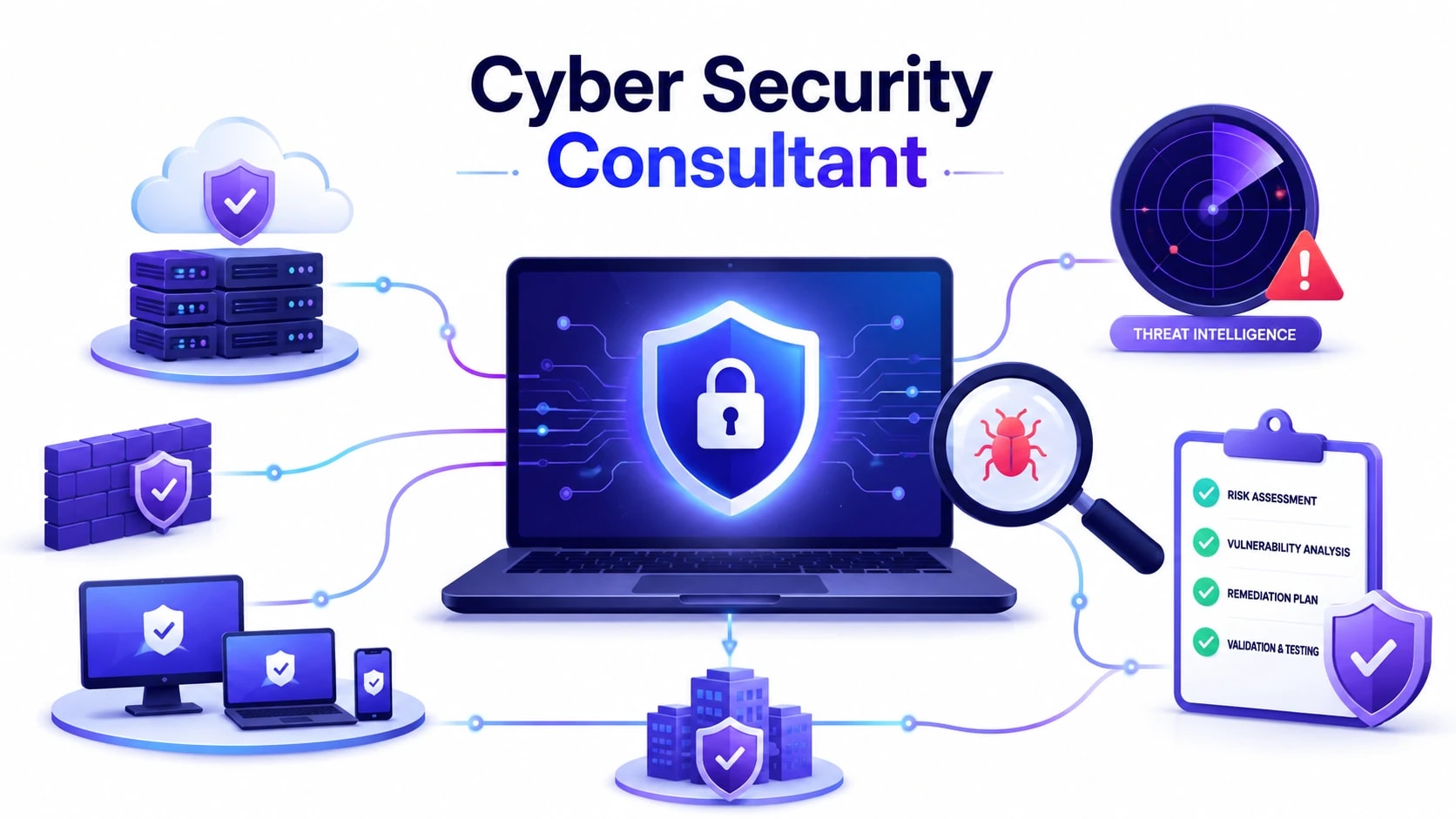
Threat actors do not wait for organizations to get their security posture in order, and the gap between a misconfigured system and a full-scale breach is often measured in hours, not weeks. A qualified cyber security consultant closes that gap by applying technical depth, operational experience, and structured methodology to the specific risks your environment faces. Whether your organization is preparing for a compliance audit, recovering from an incident, or trying to understand exactly where its defenses are weakest, the right consultant delivers answers that generic tools simply cannot.
What a Cyber Security Consultant Actually Does Day-to-Day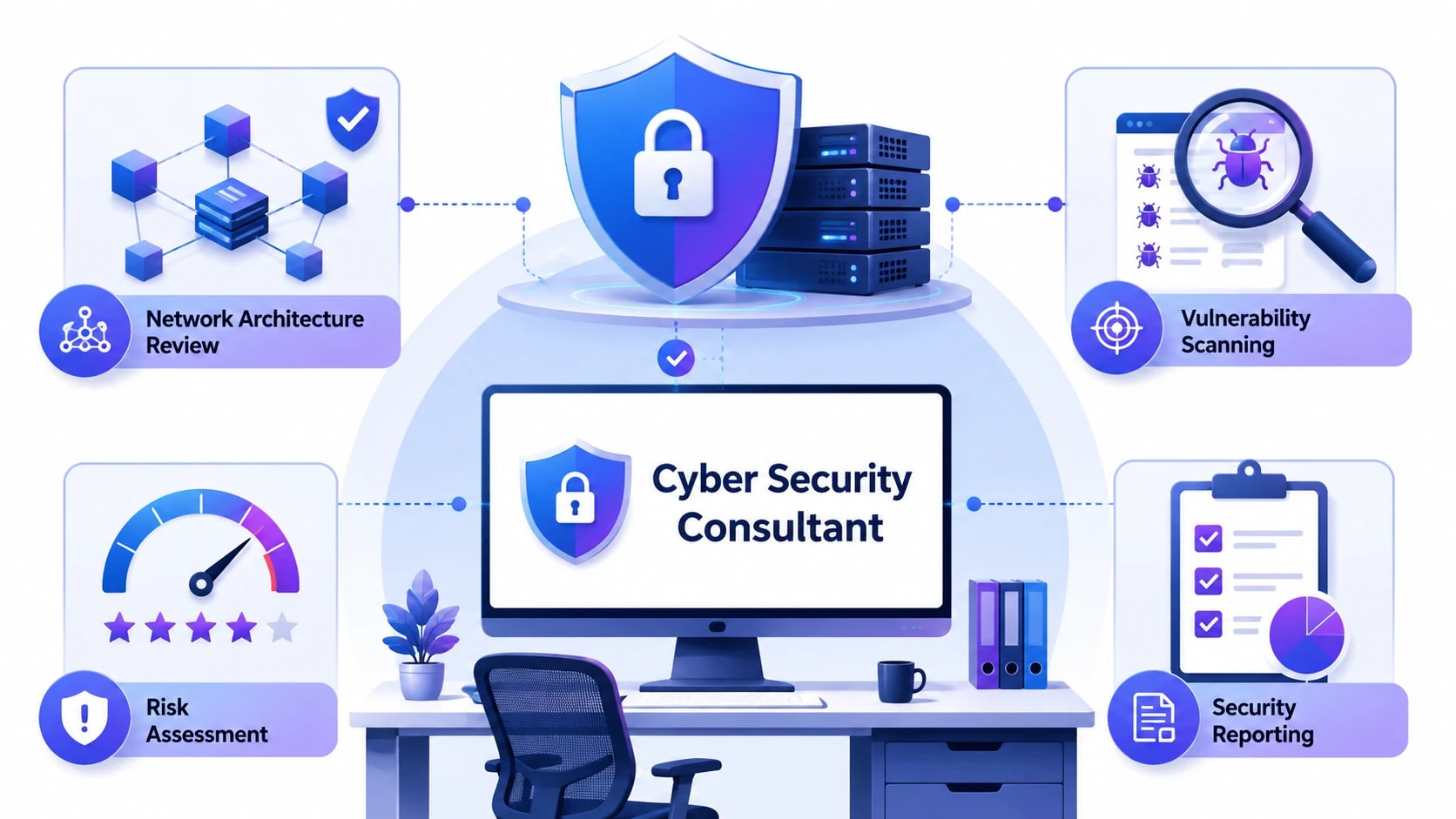
The title "cyber security consultant" covers a wide range of daily activities, and understanding those activities helps organizations set realistic expectations before an engagement begins. At its core, the role is about translating technical risk into actionable guidance, but the path to that guidance involves several distinct working disciplines.
On a typical engagement, a consultant begins with an information-gathering phase. This includes reviewing existing network architecture, firewall rule sets, identity and access management configurations, endpoint protection policies, and any available audit logs. The goal is to build an accurate picture of the attack surface before any active testing or advisory work begins. This phase is often where the most significant misconfigurations are discovered, because documentation rarely matches the live environment.
From there, the consultant moves into active assessment. Depending on the engagement scope, this may involve running vulnerability scans against internal and external assets, manually reviewing application code for injection flaws or broken authentication, or simulating attacker behavior through controlled penetration testing exercises. Each finding is validated rather than simply reported from a scanner output, which is a critical distinction. A raw vulnerability scan produces noise. A skilled consultant produces signal.
Risk prioritization follows assessment. Not every vulnerability carries the same business impact, and a competent cyber security consultant maps technical findings to operational context. A critical CVE on an isolated test server carries different weight than a medium-severity misconfiguration on a system processing payment data. Consultants assign severity ratings based on exploitability, exposure, and the potential downstream consequences of compromise.
The final daily output is communication, both written and verbal. Consultants produce structured reports for technical teams and executive summaries for leadership. They run remediation workshops, answer follow-up questions during fix cycles, and often return for validation retesting once patches and configuration changes have been applied. The advisory relationship does not end at report delivery.
Types of Cyber Security Consultant Engagements: A Direct Comparison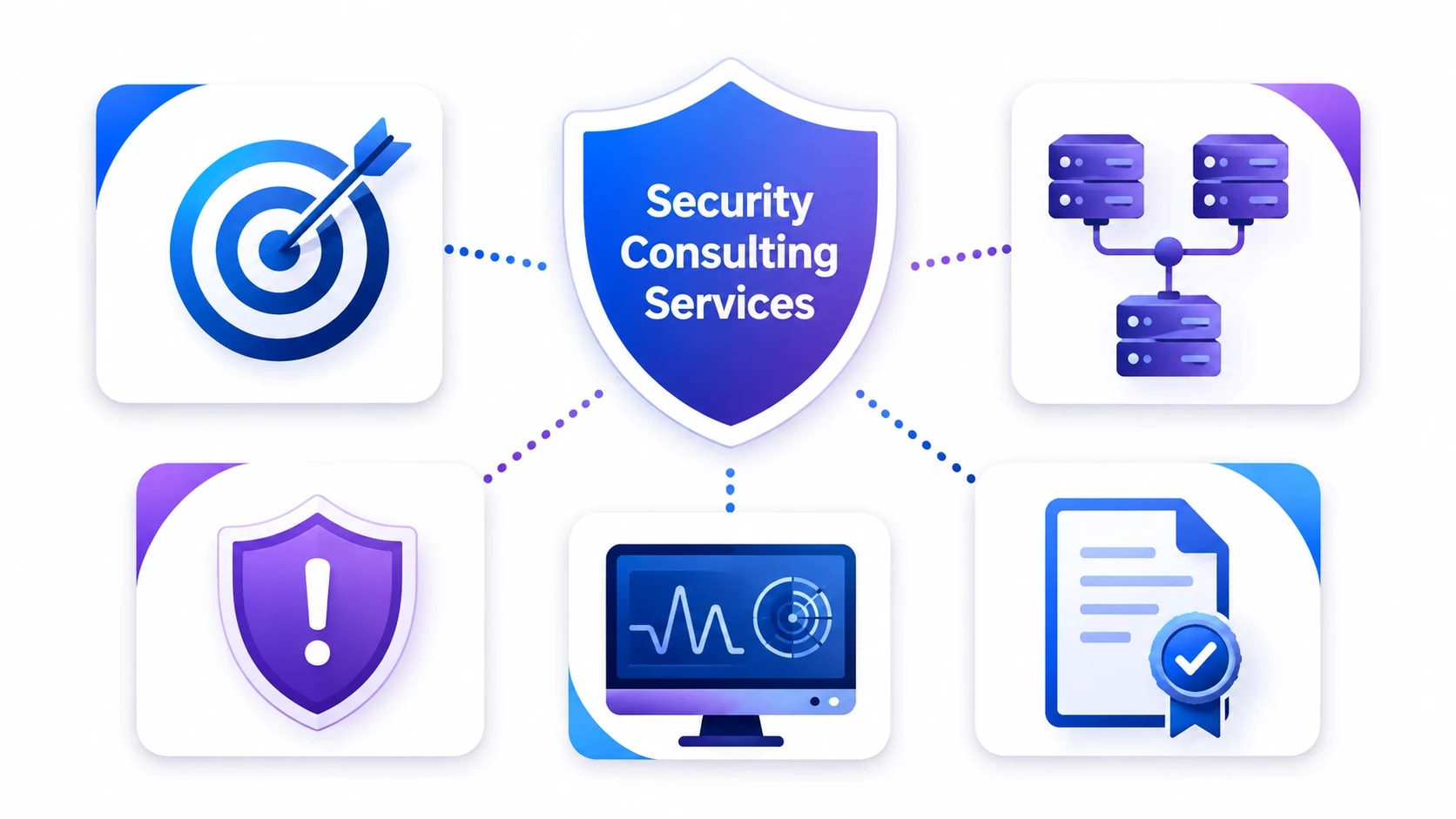
Organizations engaging a cyber security consultant for the first time often underestimate how different each engagement type is in terms of scope, duration, and deliverables. Choosing the wrong engagement model wastes budget and leaves critical risks unaddressed. The following breakdown covers the most common engagement types and what each actually produces.
Penetration Testing Engagements
A penetration test is a time-boxed, authorized simulation of an attack against a defined target scope. External network penetration tests focus on internet-facing assets. Internal tests assume a foothold inside the network perimeter and attempt lateral movement toward high-value targets. Web application tests follow structured methodologies such as OWASP to identify injection vulnerabilities, authentication weaknesses, and broken access controls. The deliverable is a technical report with validated findings, proof-of-concept evidence, and prioritized remediation guidance.
Security Architecture Review
This engagement type examines how an organization's security controls are designed and whether that design holds up against realistic threat scenarios. Consultants review firewall segmentation, cloud security group configurations, identity federation setups, encryption in transit and at rest, and logging pipelines. The output is a gap analysis against a recognized framework such as NIST CSF or ISO 27001, paired with specific architectural recommendations rather than generic best-practice lists.
Incident Response Consulting
When a breach is suspected or confirmed, an incident response consultant steps in to contain damage, preserve forensic evidence, identify the initial access vector, and map attacker activity through available telemetry. This engagement type operates under time pressure and requires deep familiarity with endpoint forensics, network traffic analysis, and cloud audit trail interpretation. Post-incident, the consultant produces a root cause analysis and a remediation roadmap to prevent recurrence.
SOC Advisory and Threat Intelligence Consulting
Organizations building or maturing a Security Operations Center often engage consultants to design detection logic, tune alert thresholds, and integrate threat intelligence feeds into their SIEM platforms. This type of engagement, which is a core offering at Cyberlad, focuses on improving the signal-to-noise ratio of existing monitoring infrastructure and ensuring analyst workflows are built around realistic attacker behavior rather than theoretical threat models.
Compliance-Driven Security Assessments
Regulatory requirements including PCI DSS, HIPAA, SOC 2, and DORA mandate specific security controls and evidence of their effectiveness. A compliance-focused consultant maps current controls against the relevant standard, identifies control gaps, and helps teams produce the documentation auditors actually need. The value here is not just passing the audit but building controls that work rather than controls that only appear to work on paper.
How to Evaluate and Hire a Cyber Security Consultant in 2026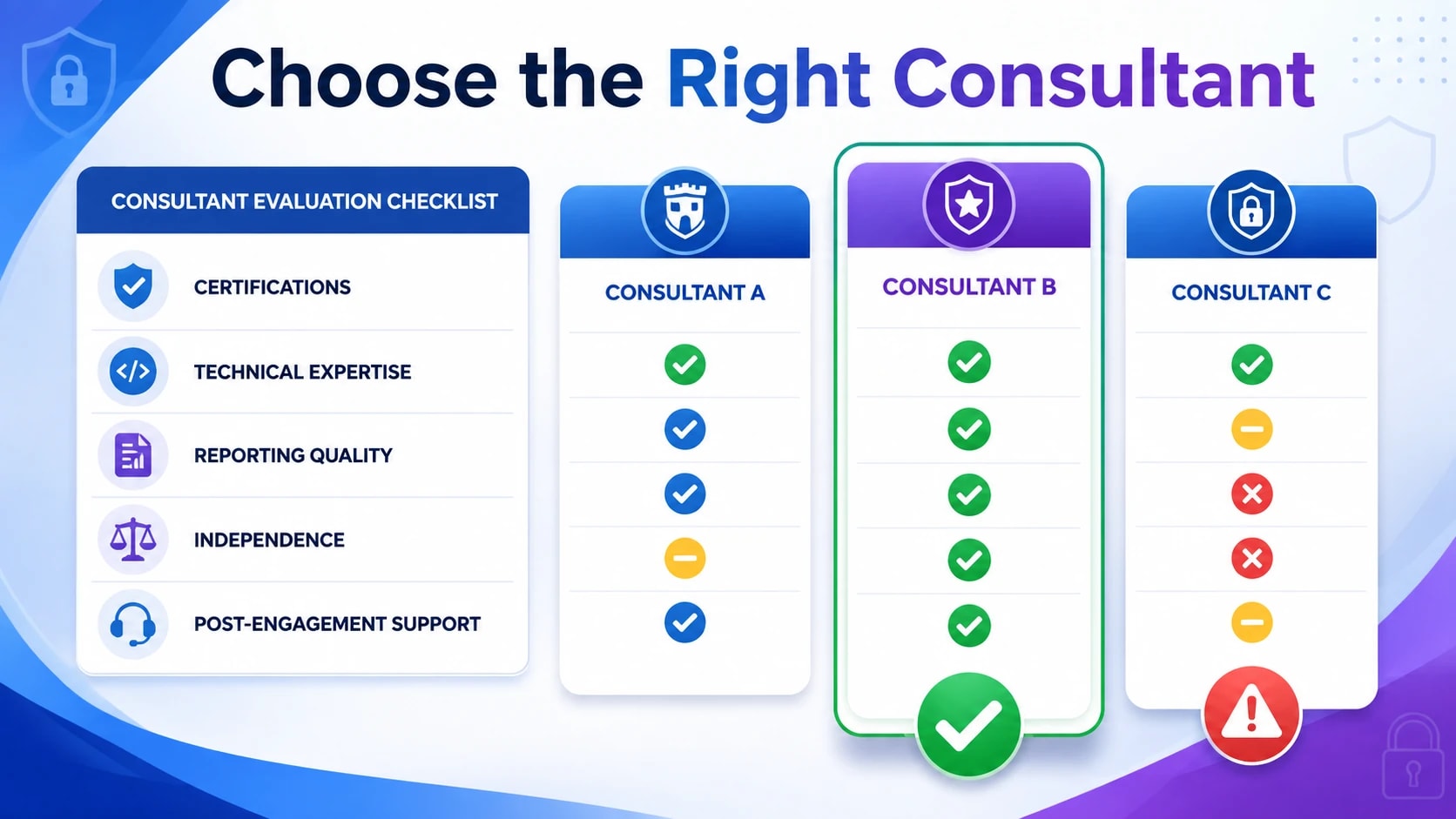
Hiring the wrong consultant is often more damaging than hiring none at all. A poor fit wastes budget, creates false confidence in your security posture, and can leave critical gaps completely unaddressed. Before you issue a request for proposal or sit down for a first call, you need a clear framework for separating genuine expertise from polished sales pitches. Start by defining exactly what problem you need solved, whether that is achieving compliance with a specific framework, hardening a cloud environment, or stress-testing your detection capabilities through red team exercises.
Credentials matter, but context matters more. Look for consultants who hold recognized certifications relevant to your specific need, such as OSCP or GPEN for penetration testing, CISSP for broad security architecture work, or CCSP for cloud-specific engagements. Beyond paper qualifications, ask for anonymized case studies from organizations in your industry, references you can actually call, and evidence of hands-on technical work rather than purely advisory output. A consultant who cannot explain their methodology in plain terms, or who avoids hard questions about scope limitations, is a red flag regardless of their resume.
Structure your evaluation process to test for fit before you commit to a full engagement:
- Request a scoping call: A competent consultant will ask detailed questions about your environment before quoting anything.
- Ask for a sample deliverable: Reports should be clear, actionable, and tailored, not recycled templates with your logo dropped in.
- Verify independence: Confirm there are no undisclosed vendor relationships that could bias their recommendations.
- Check insurance and legal coverage: Professional indemnity insurance is non-negotiable for engagements involving live systems.
- Assess communication style: You need someone who can translate technical findings to your board, not just your IT team.
| Evaluation Criterion | What Good Looks Like | Warning Sign |
|---|---|---|
| Certifications | Role-specific, current, verifiable | Generic or expired credentials listed prominently |
| Scoping approach | Asks detailed questions before pricing | Quotes a flat fee within minutes of first contact |
| Reporting quality | Findings ranked by risk with remediation steps | Dense technical output with no prioritization |
| Independence | Transparent about any vendor partnerships | Consistently recommends the same tools regardless of need |
| Post-engagement support | Offers remediation review or follow-up testing | Delivers report and disappears |
What a Cyber Security Consultant Costs in 2026 and What Drives Pricing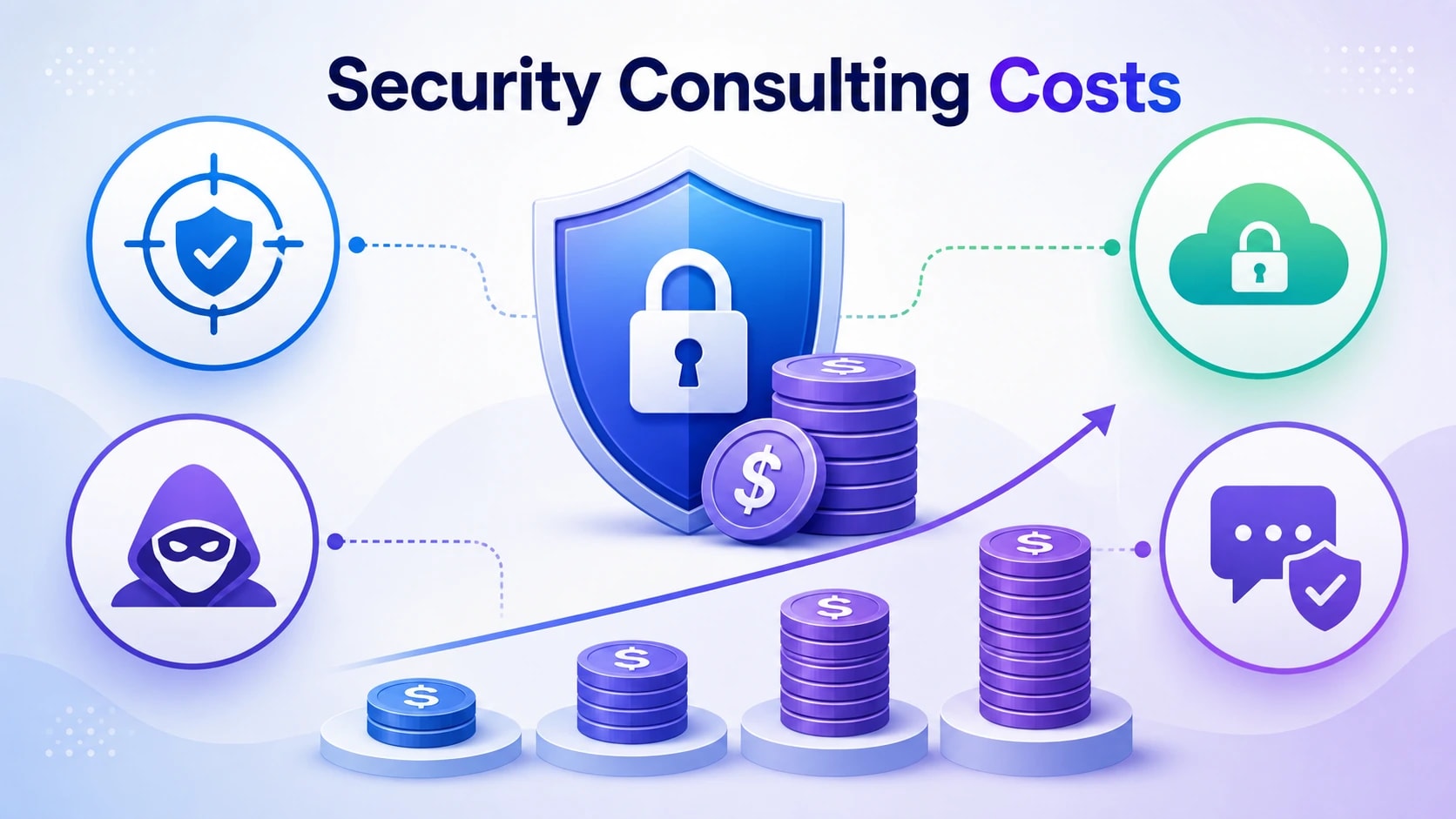
Pricing for security consulting varies enormously based on specialization, geography, engagement complexity, and whether you are working with an individual consultant or a firm. In 2026, day rates for experienced independent consultants in North America and Western Europe typically fall between $1,500 and $4,000 USD, with specialized roles such as offensive security experts or cloud security architects sitting at the higher end of that band. Project-based fees for a mid-sized penetration test might run anywhere from $8,000 to $35,000 depending on scope, while a full SOC advisory engagement over several months can reach six figures. Retainer arrangements, where a consultant provides ongoing guidance and availability, generally cost between $5,000 and $20,000 per month depending on commitment level.
Several factors push pricing upward beyond baseline rates. Tight timelines requiring accelerated delivery, highly regulated industries such as financial services or healthcare where compliance requirements add complexity, and engagements involving operational technology or industrial control systems all command premium pricing. Conversely, clearly defined scopes, longer-term commitments, and engagements that do not require travel can bring costs down meaningfully. The key is understanding that the cheapest option rarely reflects the best value, particularly when you factor in the cost of undetected vulnerabilities or a failed audit.
| Engagement Type | Typical Cost Range (USD) | Primary Pricing Driver |
|---|---|---|
| Web application penetration test | $5,000 to $20,000 | Number of applications and complexity |
| Internal network penetration test | $8,000 to $30,000 | Network size and segmentation |
| Red team exercise | $25,000 to $100,000+ | Duration and objectives defined |
| Cloud security assessment | $10,000 to $40,000 | Number of accounts and services in scope |
| vCISO retainer | $5,000 to $20,000/month | Hours committed and strategic involvement |
| Compliance gap assessment | $8,000 to $25,000 | Framework complexity and current maturity |
Common Mistakes Organizations Make When Working with a Security Consultant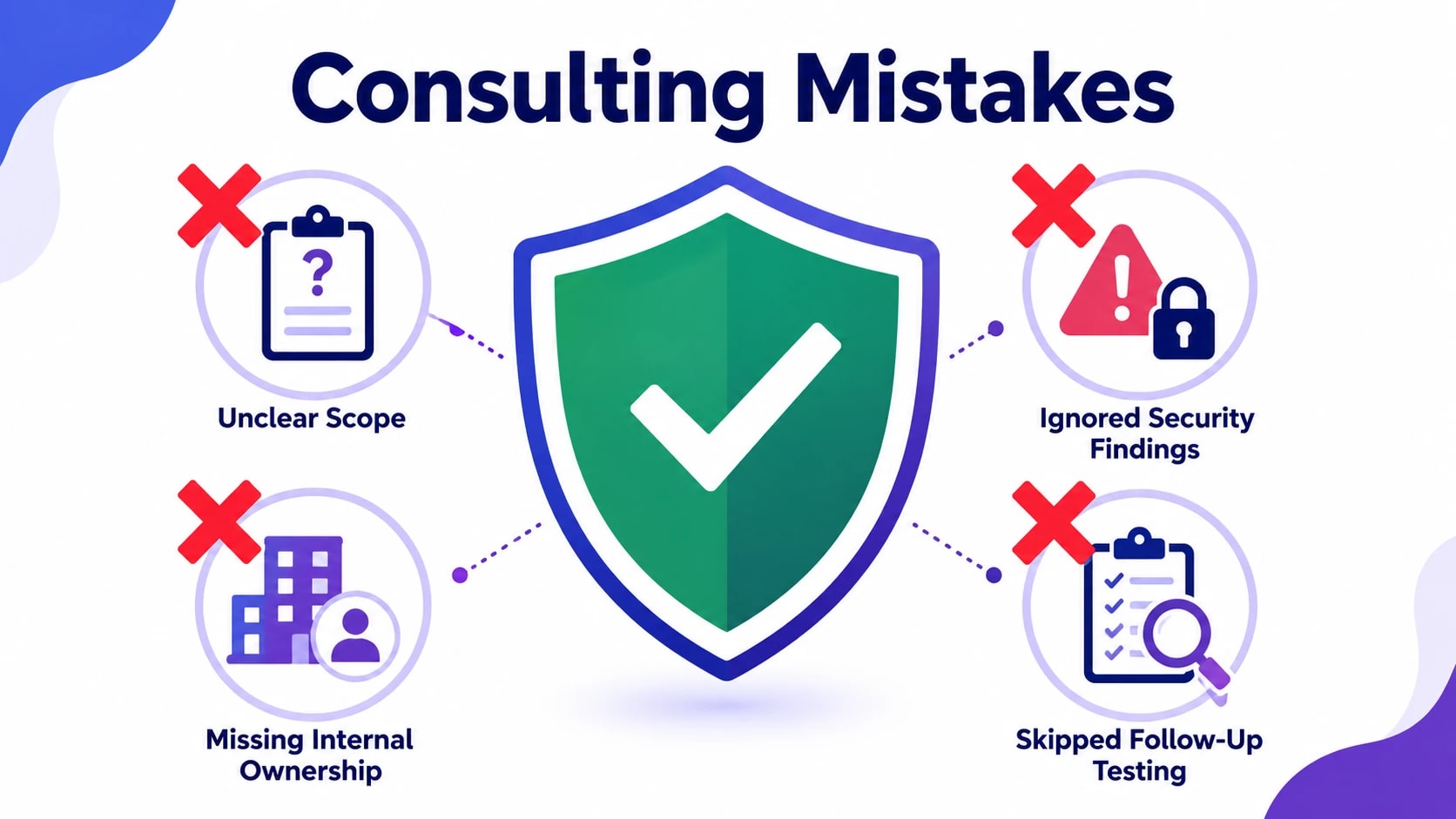
One of the most consistent mistakes organizations make is treating a consultant engagement as a box-checking exercise rather than an opportunity to genuinely improve their security position. This shows up in several ways: restricting the consultant's access to avoid uncomfortable findings, rushing the scoping process to hit a deadline, or shelving the final report without assigning ownership of remediation tasks. A penetration test or risk assessment only produces value if the findings are acted upon, and that requires internal commitment from leadership before the engagement even begins.
Another frequent problem is misaligning the type of engagement with the actual business need. Organizations that have never conducted a basic vulnerability assessment sometimes commission full red team exercises because the terminology sounds more impressive. Meanwhile, companies with genuinely mature detection capabilities waste money on entry-level assessments that tell them nothing new. Taking the time to understand what level of testing or advisory work actually fits your current maturity level, ideally with input from the consultant during scoping, prevents expensive mismatches.
Finally, many organizations underinvest in the knowledge transfer component of a consulting engagement. When a consultant completes their work and leaves, the internal team should walk away with a clearer understanding of the threat landscape specific to their environment, practical skills they can apply going forward, and documented processes they can own. Watch out for these common pitfalls that short-circuit that outcome:
- No internal owner assigned: Findings sit in a shared drive with no one accountable for remediation timelines.
- Skipping the debrief: Written reports are valuable, but verbal walkthroughs with technical staff accelerate understanding significantly.
- Ignoring low and medium findings: Organizations focus on critical vulnerabilities and leave medium-severity issues unaddressed, which attackers reliably exploit in combination.
- No follow-up testing planned: Remediation should be validated, not assumed, and a re-test is a standard part of any responsible engagement.
- Treating it as a one-time event: Security is a continuous process, and a single annual assessment leaves large windows of exposure between engagements.
How Threat Intelligence Changes What Security Consultants Recommend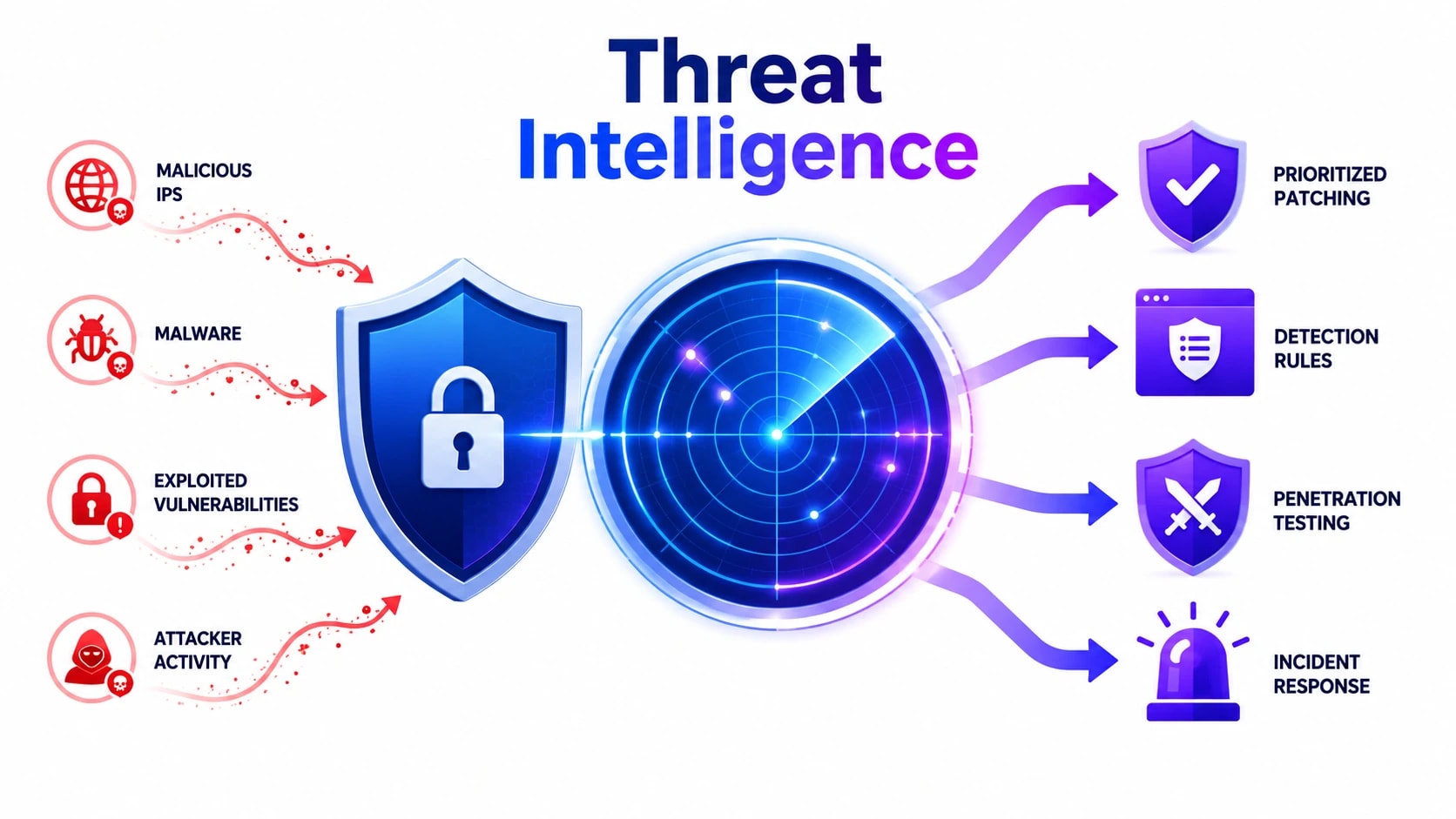
A security consultant working without current threat intelligence is essentially advising based on yesterday's threat picture. In 2026, the gap between generic security advice and intelligence-driven recommendations has grown wide enough to matter significantly in real-world outcomes. Organizations that engage consultants who actively consume and apply threat intelligence see faster, more targeted remediation and fewer wasted resources on low-probability risks.
Threat intelligence does not just inform what a consultant recommends. It changes the order in which they recommend it. When a consultant knows that a specific ransomware group is actively targeting mid-sized healthcare providers using unpatched VPN appliances, they prioritize that vector immediately, regardless of what a standard compliance checklist says. That kind of prioritization is the practical difference between intelligence-led consulting and checkbox consulting.
Here is how threat intelligence directly shapes consultant recommendations across key areas:
- Attack surface prioritization: Consultants use threat feeds to identify which exposed assets are being actively targeted in your industry, not just which ones are theoretically vulnerable.
- Penetration test scoping: Test scenarios are built around real attacker techniques observed in the wild, making findings more operationally relevant.
- Patching guidance: Rather than following a generic patch cadence, consultants highlight specific CVEs being exploited in active campaigns against organizations like yours.
- Detection rule tuning: SOC teams receive tuning recommendations based on the actual tactics, techniques, and procedures used by threat actors relevant to your sector.
- Incident response planning: Playbooks are written around the breach scenarios most likely to affect your environment, not the most common scenarios globally.
- Third-party risk assessments: Consultant findings account for known compromises or weaknesses in commonly used vendor ecosystems.
| Consulting Approach | Basis for Recommendations | Typical Outcome |
|---|---|---|
| Compliance-driven | Framework requirements | Audit readiness, not necessarily breach resilience |
| Risk-based | Internal risk register | Better prioritization, still reactive to known gaps |
| Intelligence-led | Current threat actor activity and TTPs | Proactive defense aligned to actual active threats |
When evaluating a consultant, ask directly where their threat intelligence comes from. A credible answer includes specific sources, whether commercial feeds, open-source intelligence, sector-specific information sharing groups, or an in-house research capability. Vague answers about "staying current" are a red flag. Firms like Cyberlad integrate active threat intelligence into every engagement, which means recommendations reflect what is actually happening in the threat environment, not just what happened two years ago.
Conclusion
A cyber security consultant is not a luxury for large enterprises or a box to check before an audit. For organizations that handle sensitive data, operate critical systems, or face regulatory scrutiny, a qualified consultant is one of the most direct investments available in reducing real-world risk. The value is not in the report they leave behind. It is in the decisions they help you make faster, the vulnerabilities they find before attackers do, and the response plans that work when something actually goes wrong. Getting the engagement right means choosing someone with verifiable credentials, relevant sector experience, and recommendations grounded in current threat intelligence rather than generic frameworks.
If your organization is evaluating external security expertise, start with a clear picture of what you need, whether that is a one-time penetration test, ongoing advisory support, or a full security program assessment. Define your objectives before the first conversation, ask the right questions during the evaluation process, and treat the engagement as a working partnership rather than a vendor transaction. The consultants who deliver the most value are the ones brought in early, given honest access to your environment, and engaged as a genuine part of your security decision-making.
Frequently Asked Questions
What is the difference between a cyber security consultant and a managed security service provider?
A consultant typically provides expert advice, assessments, and strategic guidance on a project or retainer basis. A managed security service provider handles ongoing operational security functions like monitoring and incident response. Many organizations use both, with consultants shaping strategy and providers executing day-to-day security operations.
How long does a typical cyber security consulting engagement last?
Engagement length varies widely depending on scope. A focused penetration test may take one to three weeks. A full security program assessment can run two to three months. Ongoing virtual CISO retainers operate continuously. Define your goals upfront and confirm the consultant's timeline estimate before signing any agreement.
Do small businesses really need a cyber security consultant?
Yes, and often more urgently than larger organizations. Small businesses frequently lack in-house security expertise, making them attractive targets. A consultant can identify critical exposures quickly, provide a prioritized remediation plan, and help allocate a limited security budget where it will have the greatest protective impact.
What certifications should a reputable cyber security consultant hold?
Look for certifications such as CISSP, CISM, CEH, OSCP, or CISA depending on the type of engagement. For penetration testing, OSCP carries significant weight. For governance and advisory work, CISSP and CISM are widely respected. Certifications alone are not enough, so verify practical experience and references alongside credentials.
How do I measure the return on investment from a security consulting engagement?
Track metrics such as the number of critical vulnerabilities identified and remediated, reduction in mean time to detect and respond to incidents, improvement in audit scores, and avoidance of regulatory penalties. Comparing the cost of the engagement against the average cost of a breach in your sector also provides useful financial context.