Best Cyber Security Schools to Consider in 2026
Choosing among cyber security schools is one of the most consequential decisions a security professional, or aspiring one, can make. The program you attend shapes not just your credentials but the depth of your technical instincts, your ability to think like an attacker, and how quickly you become useful in a real operations environment. With dozens of program types, delivery formats, and specialization tracks now available, understanding what separates strong programs from weak ones is more important than ever.
The demand for skilled cyber security professionals is not slowing down. Organizations across every sector, from financial services to critical infrastructure, are struggling to fill roles in threat detection, incident response, penetration testing, and cloud security architecture. Cyber security schools have expanded rapidly to meet this demand, but volume does not equal quality. Many graduates enter the workforce technically underprepared, trained on dated frameworks, simulated environments that bear little resemblance to production systems, or curricula built around passing certification exams rather than developing genuine analytical skill.
This guide is written for people who want more than a credential. Whether you are entering the field for the first time, moving into a more specialized role, or evaluating a program for someone on your team, the information here will help you assess programs honestly, understand what specific tracks actually prepare you for, and avoid common pitfalls that waste time and money.
What Cyber Security Schools Actually Teach, and What They Often Miss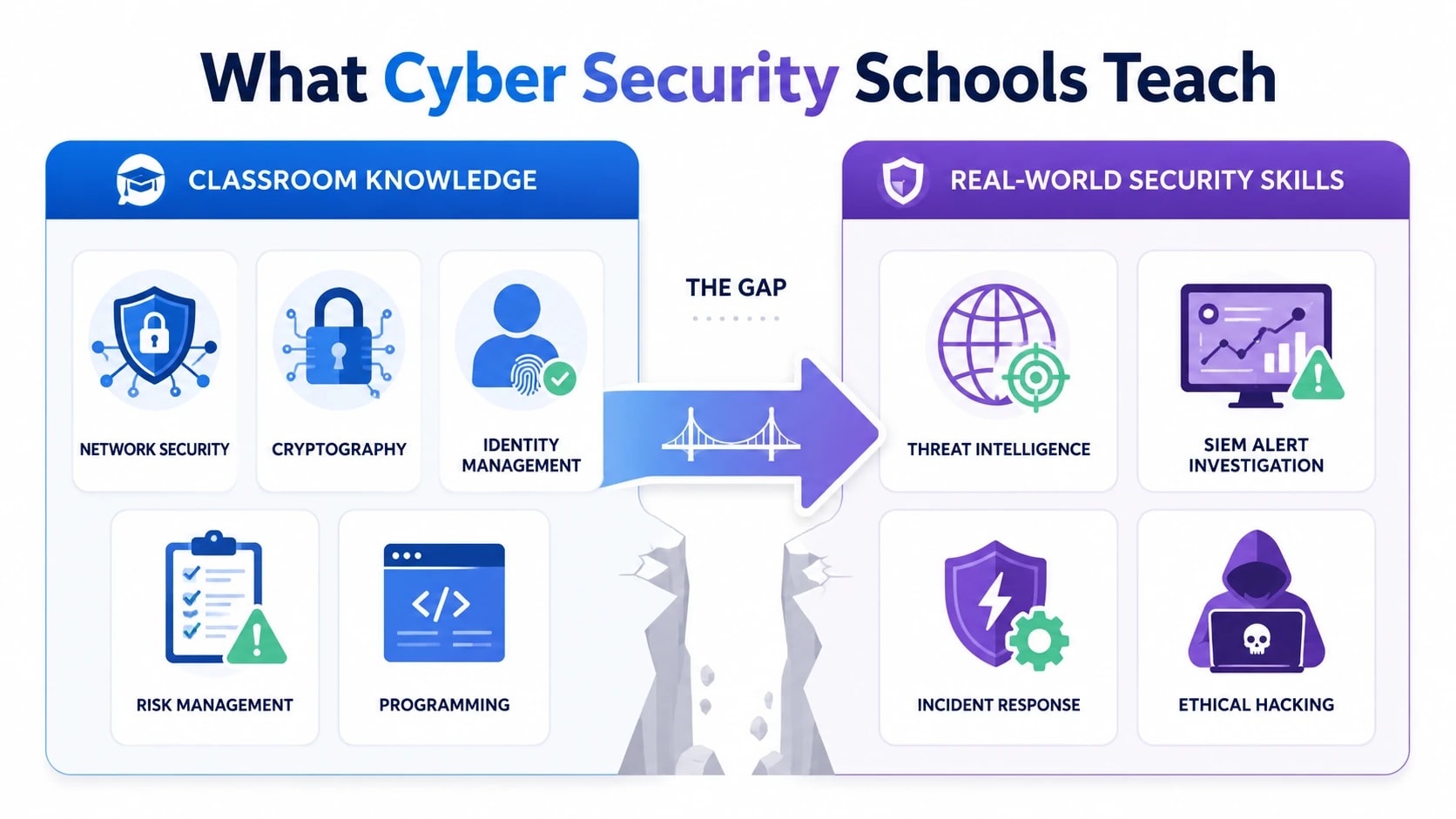
Most accredited cyber security schools organize their core curriculum around a standard set of foundational topics. These typically include network security fundamentals, operating system security, cryptography basics, risk management frameworks such as NIST or ISO 27001, identity and access management, and introductory programming or scripting. Some programs add coursework in digital forensics, secure software development, or compliance and governance.
This foundation is necessary, but it is rarely sufficient on its own. The gap between what schools teach and what employers need tends to show up most clearly in a few specific areas.
Threat Intelligence and Adversary Behavior
Most academic programs spend limited time on how real threat actors operate, how campaigns are structured, and how intelligence is collected, analyzed, and operationalized. Students often graduate familiar with general attack categories but not with the tactical techniques documented in frameworks like MITRE ATT&CK, and not with the investigative process of attributing activity to specific threat groups or understanding their motivations.
Hands-On Detection and Response
Security operations, specifically the daily work of monitoring alerts, triaging events, investigating anomalies, and containing incidents, is underrepresented in many degree programs. Lab environments, when they exist, are often controlled to the point of being unrealistic. Students rarely work with the volume and noise of real SIEM data, and few programs expose them to the decision-making pressure of an active incident.
Offensive Security Depth
Penetration testing is often introduced conceptually but not practiced at a professional level. Programs may cover basic vulnerability scanning and introductory exploitation, but practical offensive skills, including custom payload development, Active Directory attack paths, or web application exploitation beyond OWASP Top 10 basics, are frequently absent or superficial.
The better cyber security schools are closing these gaps through partnerships with industry, live-fire lab environments, and faculty who bring practitioner experience rather than purely academic backgrounds. When evaluating a program, asking specifically how it addresses these three areas will tell you a great deal about whether it is built to produce graduates who can contribute on day one.
Types of Cyber Security School Programs, Compared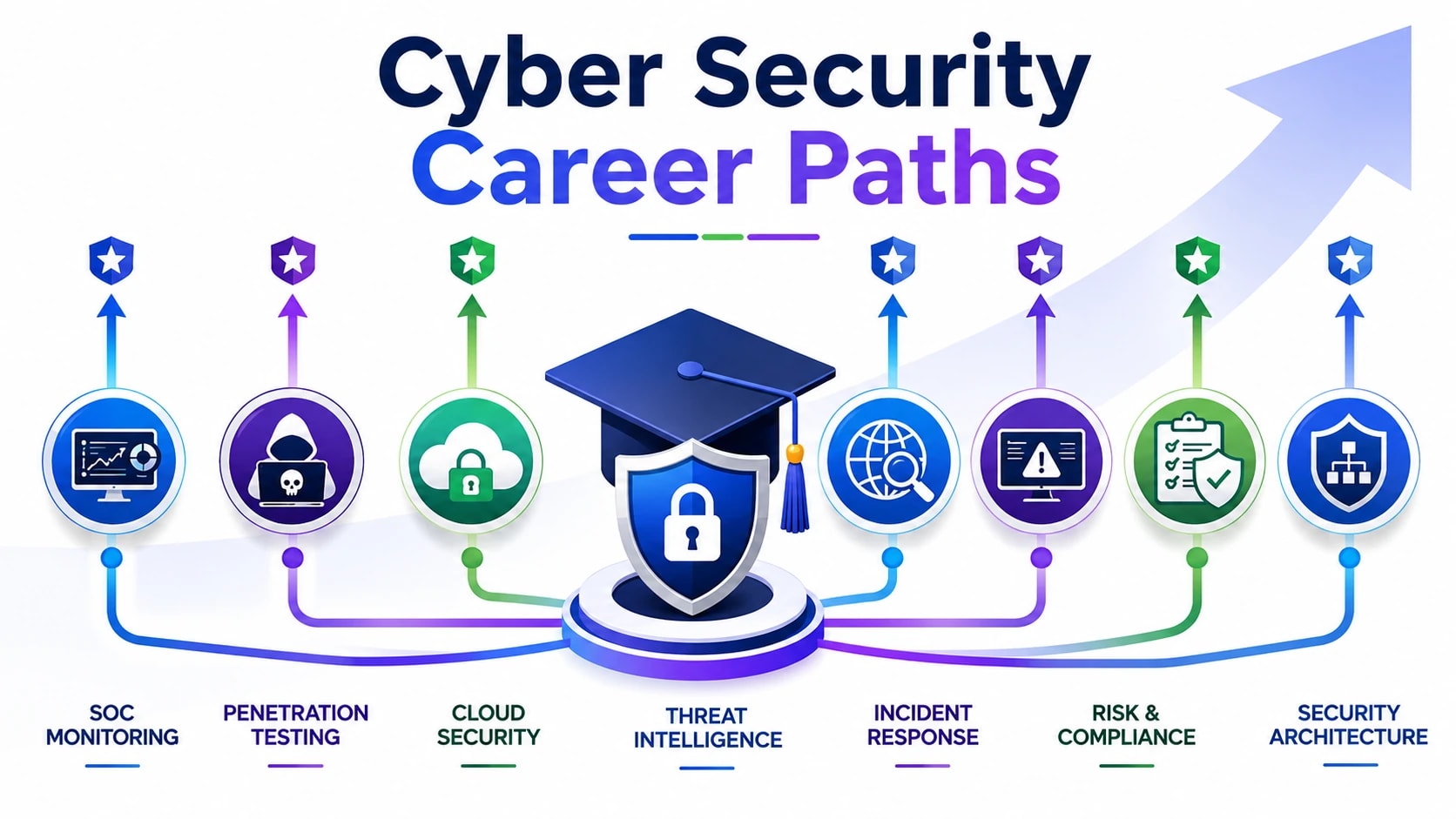
Not all cyber security schools follow the same model, and the right format depends on your current experience level, career goals, time constraints, and how you learn best. The main program types available today each carry distinct advantages and limitations.
Traditional Four-Year University Degrees
Bachelor's programs in cybersecurity or information assurance offered through accredited universities represent the most structured path. These programs provide broad technical grounding, typically including coursework in computer science, networking, systems administration, and security-specific disciplines. Many are designated as National Centers of Academic Excellence by federal agencies, which indicates that the curriculum meets defined standards for content coverage.
The strengths here are breadth, institutional credibility, and access to research opportunities. The limitation is time. Four years is a long runway, and the curriculum cycle at traditional universities often lags behind the speed at which the threat environment changes. Topics relevant to cloud-native environments, container security, or modern adversary techniques may receive less attention than their current importance warrants.
Graduate and Master's Programs
For professionals already working in IT or adjacent fields, a master's degree in cyber security offers a faster, more focused path to advanced knowledge. These programs typically run one to two years and assume a working technical baseline. Specializations often include areas like digital forensics, security architecture, or policy and governance. Graduate programs are well-suited to people moving into senior technical roles or transitioning into security from another discipline.
Online delivery options have made master's programs more accessible, though the quality of hands-on components varies significantly across institutions. Prospective students should evaluate the lab infrastructure, capstone project requirements, and whether faculty are active practitioners in addition to researchers.
Community College and Two-Year Programs
Associate degree programs in cybersecurity or information technology security provide a more affordable and faster entry point into the field. These programs are often closely aligned with industry certifications and are designed to prepare graduates for roles such as security analyst, network technician, or help desk with a security focus. For people who need to enter the workforce quickly or who plan to transfer credits toward a four-year degree, two-year programs can be a practical first step.
Bootcamps and Intensive Training Programs
Cyber security bootcamps, typically running anywhere from eight to thirty weeks, have grown substantially in popularity. These programs prioritize speed and practical skill-building, often covering topics like ethical hacking, network defense, or SOC analyst workflows in a compressed format. The best bootcamps include significant hands-on lab time, real-world scenario practice, and career support. The weakest ones are closer to certification prep courses with an inflated price tag.
Bootcamps are generally not a substitute for foundational knowledge, but they can be highly effective for people who already have a technical background and need to develop specific security skills quickly. They are also a strong option for professionals pivoting from adjacent fields such as systems administration or software development.
Certification-Focused Programs
Some training providers, including community colleges and specialized security training organizations, offer programs built specifically around preparing students for certifications such as CompTIA Security+, Certified Ethical Hacker, or GIAC credentials. These programs can be valuable as supplements to broader education but should not be mistaken for complete preparation. Certifications demonstrate that a candidate understands defined knowledge domains; they do not necessarily demonstrate that the candidate can operate effectively under real conditions.
For organizations like Cyberlad that work across SOC consulting, penetration testing, and cloud security, the most capable professionals typically combine formal education with hands-on certification tracks and direct operational experience, not one of these paths alone.
How to Evaluate a Cyber Security School Before You Enroll
Choosing a cyber security school is one of the more consequential decisions you will make in your career. With hundreds of programs now available online and on campus, the differences between them are not always obvious from a program webpage. The most reliable way to assess a school is to look past the marketing language and examine concrete, verifiable factors: accreditation status, faculty backgrounds, lab infrastructure, and graduate employment outcomes. A program that cannot readily share job placement rates or alumni references deserves serious scrutiny before you commit tuition dollars and years of your time.
Accreditation matters more in cybersecurity than in many other fields because it affects your eligibility for federal financial aid, employer reimbursement programs, and certain government security clearances. Look for regional accreditation from bodies such as SACSCOC, HLC, or MSCHE, and check whether the program carries designation as a National Center of Academic Excellence in Cyber Defense (CAE-CD) from the National Security Agency. CAE-designated programs meet a standardized curriculum baseline and are generally more respected by federal employers and defense contractors. Beyond accreditation, the quality of hands-on lab environments matters enormously. Programs that give students access to dedicated cyber ranges, SIEM platforms, and simulated network environments will produce graduates who can actually perform technical tasks on day one.
Use the checklist below when comparing programs side by side:
- Accreditation: Is the school regionally accredited, and does the program hold CAE-CD designation?
- Faculty credentials: Do instructors hold active industry certifications and real-world practitioner experience?
- Lab access: Are students given hands-on time with live tools, cyber ranges, and simulated attack environments?
- Curriculum currency: When was the syllabus last updated, and does it reflect current threat categories like cloud misconfigurations and supply chain attacks?
- Career support: Does the school have employer partnerships, internship pipelines, or dedicated cyber security career advisors?
- Graduate outcomes: What percentage of graduates work in cyber security roles within six months of finishing the program?
| Evaluation Factor | Strong Program | Weak Program |
|---|---|---|
| Accreditation | Regional + CAE-CD designation | National accreditation only, no CAE |
| Faculty background | Active practitioners with current certs | Primarily academic, limited field experience |
| Lab environment | Dedicated cyber range, live tooling | Simulated only via textbook exercises |
| Curriculum updates | Revised annually with industry input | Core content unchanged for 3+ years |
| Employment outcomes | Published placement data, 80%+ in field | No public outcome data available |
Certification Tracks That Complement Cyber Security School Programs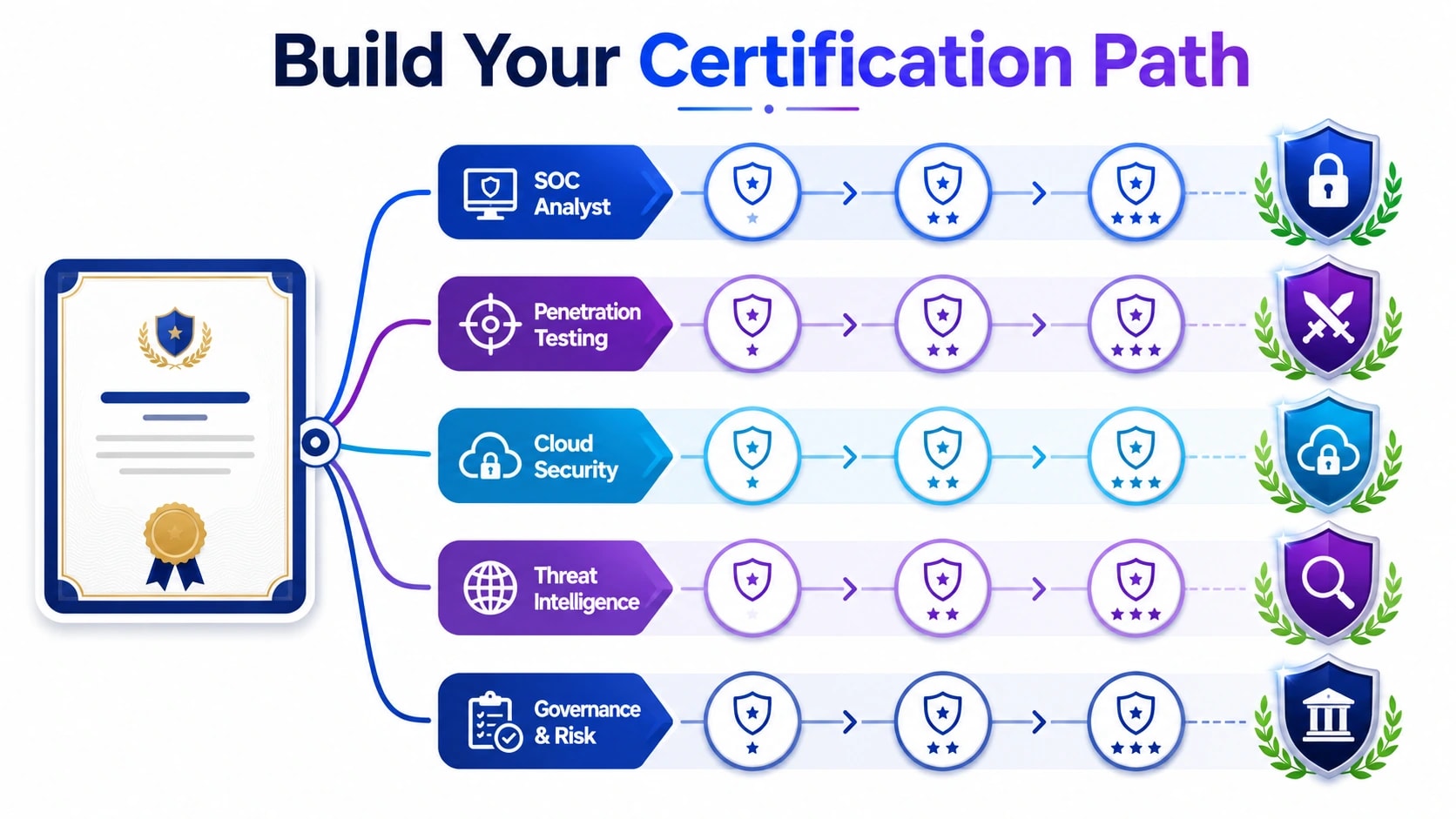
A cyber security degree on its own will open doors, but pairing it with targeted industry certifications is what tends to get candidates past the first round of technical screening. Employers hiring for SOC analyst roles, penetration testing positions, or cloud security functions often treat certifications as quick signals that a candidate can perform specific tasks without extensive ramp-up time. The good news is that many cyber security school programs are now structured to help students earn foundational certifications like CompTIA Security+ before or shortly after graduation, which gives graduates a measurable credential to show alongside their diploma.
The right certification track depends on the specialization you are pursuing. Students aiming for defensive roles in security operations should look at CompTIA Security+, CompTIA CySA+, and eventually the Certified SOC Analyst (CSA) credential from EC-Council. Those moving toward penetration testing will want to work toward the Offensive Security Certified Professional (OSCP), which requires demonstrated hands-on exploitation skills and is widely considered the most credible technical pentesting credential available. Cloud security specialists should prioritize vendor-specific certifications from AWS, Microsoft Azure, or Google Cloud alongside the broader Certified Cloud Security Professional (CCSP) from (ISC)2. Threat intelligence analysts often pursue the GIAC Cyber Threat Intelligence (GCTI) certification to validate their analytical skills.
| Career Track | Entry-Level Cert | Mid-Level Cert | Advanced Cert |
|---|---|---|---|
| Security Operations (SOC) | CompTIA Security+ | CompTIA CySA+ | GIAC GCIA |
| Penetration Testing | eJPT (eLearnSecurity) | CompTIA PenTest+ | OSCP |
| Cloud Security | AWS Cloud Practitioner | AWS Security Specialty | CCSP |
| Threat Intelligence | CompTIA Security+ | CTIA (EC-Council) | GIAC GCTI |
| Governance and Compliance | CompTIA Security+ | CISM | CISSP |
Cost, Financial Aid, and Return on Investment for Cyber Security School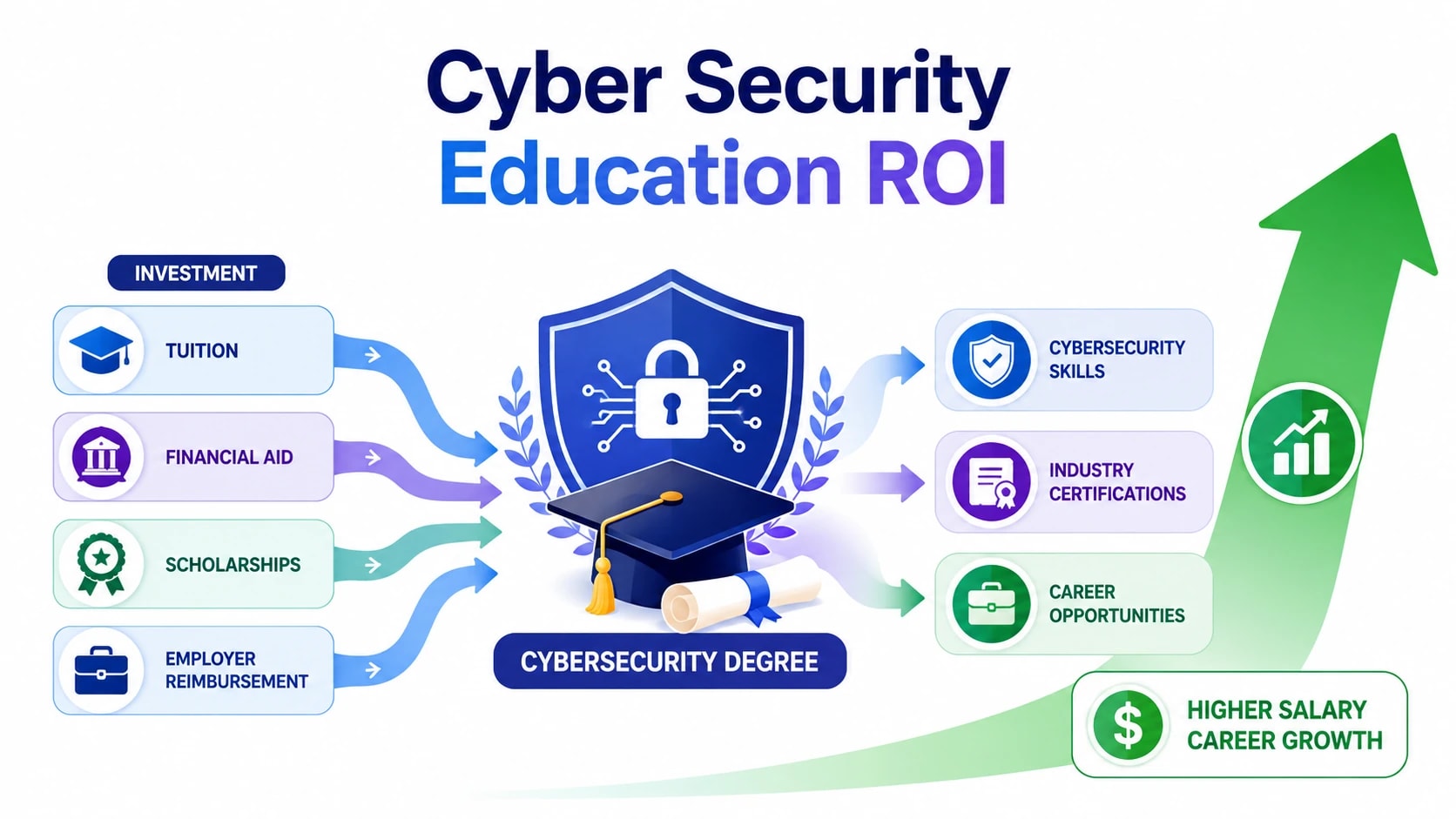
Tuition for cyber security school programs varies sharply depending on school type and delivery format. A two-year associate degree at a community college might cost between $6,000 and $15,000 in total, while a four-year bachelor's degree at a private university can run anywhere from $40,000 to well over $120,000. Online programs from accredited institutions often fall somewhere in between, typically ranging from $20,000 to $60,000 for a full bachelor's degree. Graduate programs, including master's degrees in cybersecurity or information assurance, average around $20,000 to $45,000 depending on residency status and institution type. These are meaningful investments, and they should be evaluated against realistic salary expectations rather than best-case scenario figures.
On the return side, the numbers are generally favorable. The U.S. Bureau of Labor Statistics reports median annual wages for information security analysts above $120,000, with senior roles in penetration testing, cloud security architecture, and threat intelligence frequently exceeding $140,000 to $160,000. Students who combine a cybersecurity degree with one or two relevant certifications tend to move into their first role faster and at higher starting salaries than those who hold a degree alone. Financial aid options worth exploring include federal Pell Grants and subsidized loans for accredited institutions, employer tuition reimbursement programs, SANS Technology Institute scholarships, and state-level workforce development grants tied to cyber security labor shortages.
- Federal aid: FAFSA-eligible programs at regionally accredited schools qualify for Pell Grants, subsidized loans, and work-study
- Employer reimbursement: Many technology and defense employers cover $5,000 to $10,000 per year toward continuing education
- Scholarship sources: (ISC)2, ISACA, AFCEA, and CyberCorps: Scholarship for Service all fund cybersecurity students
- Income share agreements: Some bootcamp-adjacent programs defer tuition until employment, though terms vary considerably
- State grants: Several states with active cybersecurity workforce initiatives offer direct grant funding to students in qualifying programs
| Program Type | Typical Total Cost | Avg. Time to Complete | Est. Starting Salary |
|---|---|---|---|
| Community College (AAS) | $6,000 to $15,000 | 2 years | $55,000 to $75,000 |
| Online Bachelor's Degree | $20,000 to $60,000 | 4 years | $70,000 to $95,000 |
| On-Campus Bachelor's Degree | $40,000 to $120,000+ | 4 years | $75,000 to $100,000 |
| Master's Degree | $20,000 to $45,000 | 1.5 to 2.5 years | $95,000 to $130,000 |
| Bootcamp with Cert Prep | $8,000 to $20,000 | 3 to 9 months | $50,000 to $75,000 |
Career Paths After Cyber Security School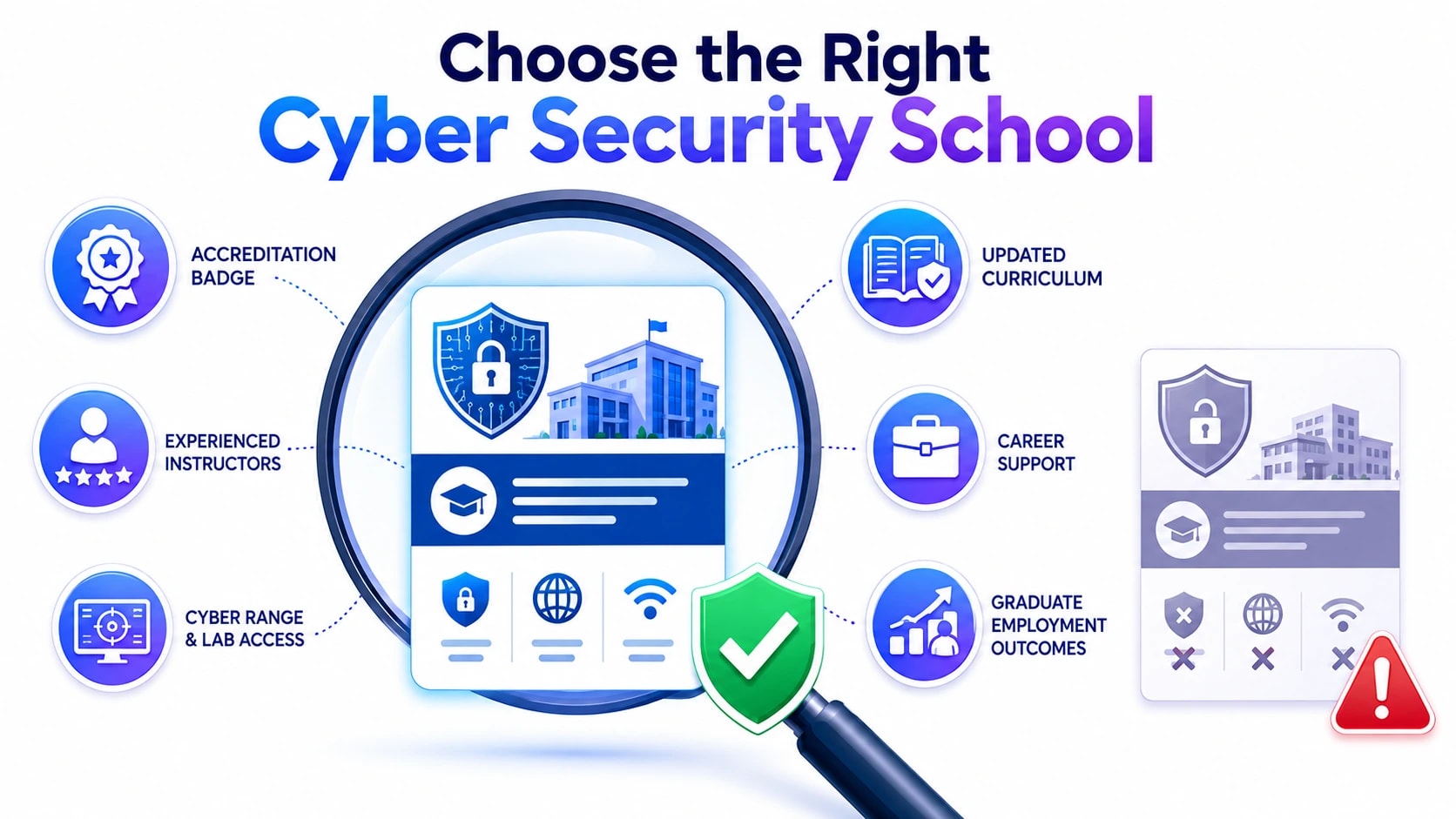
Graduating from a cyber security school opens doors across a wide range of industries. Finance, healthcare, government, and technology companies all compete for qualified security professionals. Understanding where your degree or diploma can take you helps you choose the right program from the start.
Common career paths include:
- Security Operations Center (SOC) Analyst, monitoring networks, triaging alerts, and responding to incidents in real time
- Penetration Tester, simulating attacks against systems, applications, and networks to uncover vulnerabilities before malicious actors do
- Cloud Security Engineer, securing cloud environments across platforms like AWS, Azure, and Google Cloud
- Threat Intelligence Analyst, collecting and interpreting adversary data to support proactive defense strategies
- Incident Response Consultant, leading investigations when breaches occur and helping organizations recover quickly
- Risk and Compliance Analyst, aligning security practices with regulations such as GDPR, HIPAA, and ISO 27001
- Security Architect, designing enterprise-wide security frameworks that protect infrastructure, data, and users
The table below shows average starting and mid-career salaries for common roles that cyber security school graduates pursue:
| Role | Average Starting Salary | Mid-Career Salary |
|---|---|---|
| SOC Analyst (Tier 1) | $52,000 | $75,000 |
| Penetration Tester | $70,000 | $115,000 |
| Cloud Security Engineer | $85,000 | $130,000 |
| Threat Intelligence Analyst | $65,000 | $105,000 |
| Security Architect | $100,000 | $150,000+ |
It is worth noting that school credentials alone rarely secure senior roles. Employers increasingly want candidates who pair academic knowledge with hands-on lab experience, recognized certifications, and a demonstrated ability to think like an attacker.
Online vs. In-Person Cyber Security School: Which Format Suits You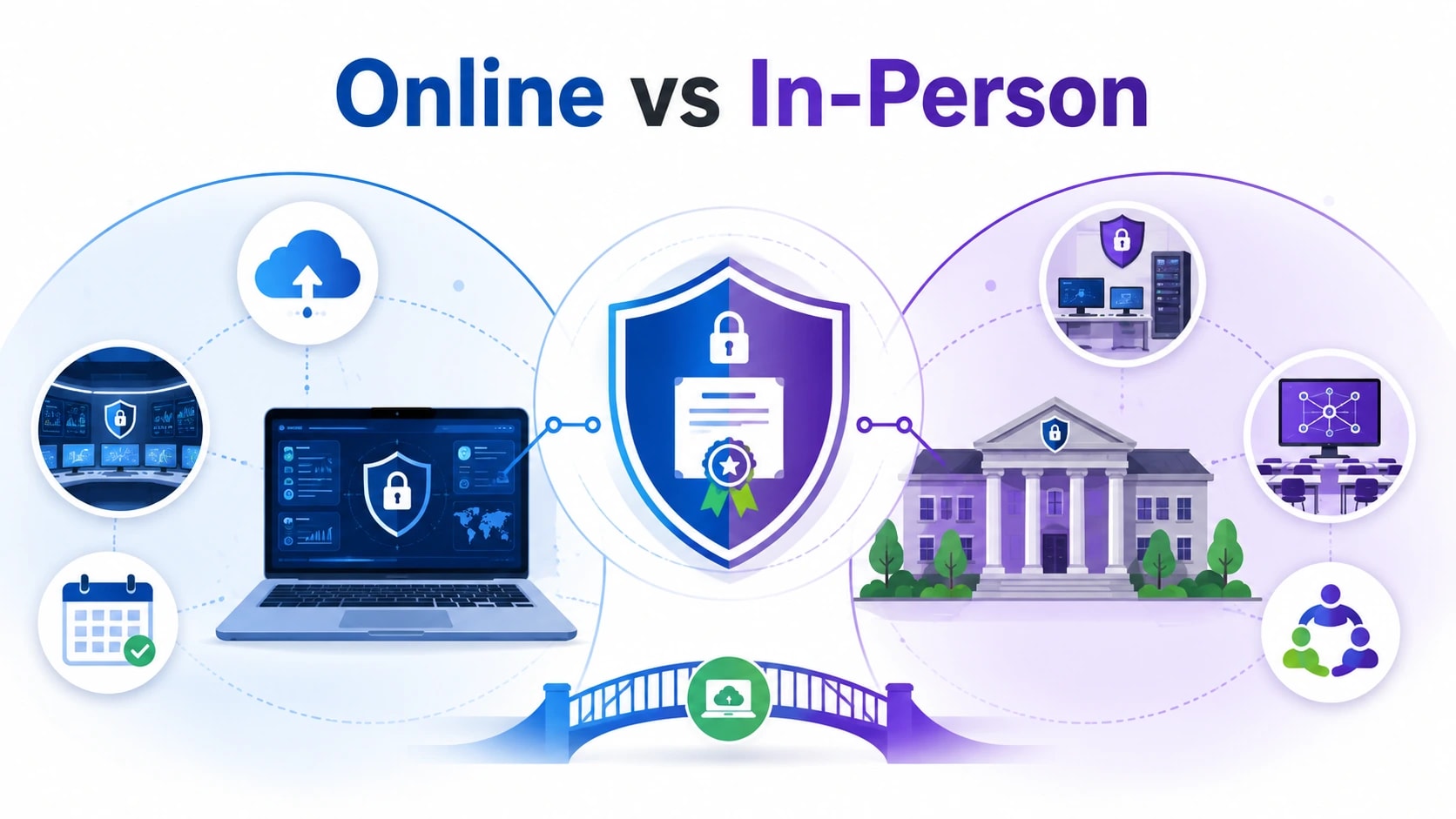
Choosing between online and in-person study affects more than just convenience. It shapes how you network, how you practice technical skills, and how quickly you can move through coursework. Neither format is universally better, but each suits different types of learners and life situations.
Consider these factors when deciding:
- Flexibility needs: online programs allow you to study around work or family commitments, while in-person schedules are fixed
- Lab access: Physical campuses often provide dedicated security labs with specialized hardware, though many online programs now offer cloud-based virtual labs that closely replicate real environments
- Networking opportunities: In-person students build face-to-face relationships with classmates and faculty, which can be valuable for job referrals and mentorship.
- Self-discipline requirements: online learning demands strong time management; without it, course completion rates drop significantly.
- Geographic access: online programs remove location barriers, making specialist cybersecurity schools accessible to students anywhere.
- Cost differences: online programs often carry lower tuition and eliminate commuting or relocation expenses.
A hybrid model, where core theory is delivered online, and intensive lab sessions happen on campus, is becoming an increasingly popular middle ground. If you can access this format, it often provides the best of both approaches without forcing you to sacrifice either flexibility or hands-on depth.
What Employers Actually Want from Cyber Security School Graduates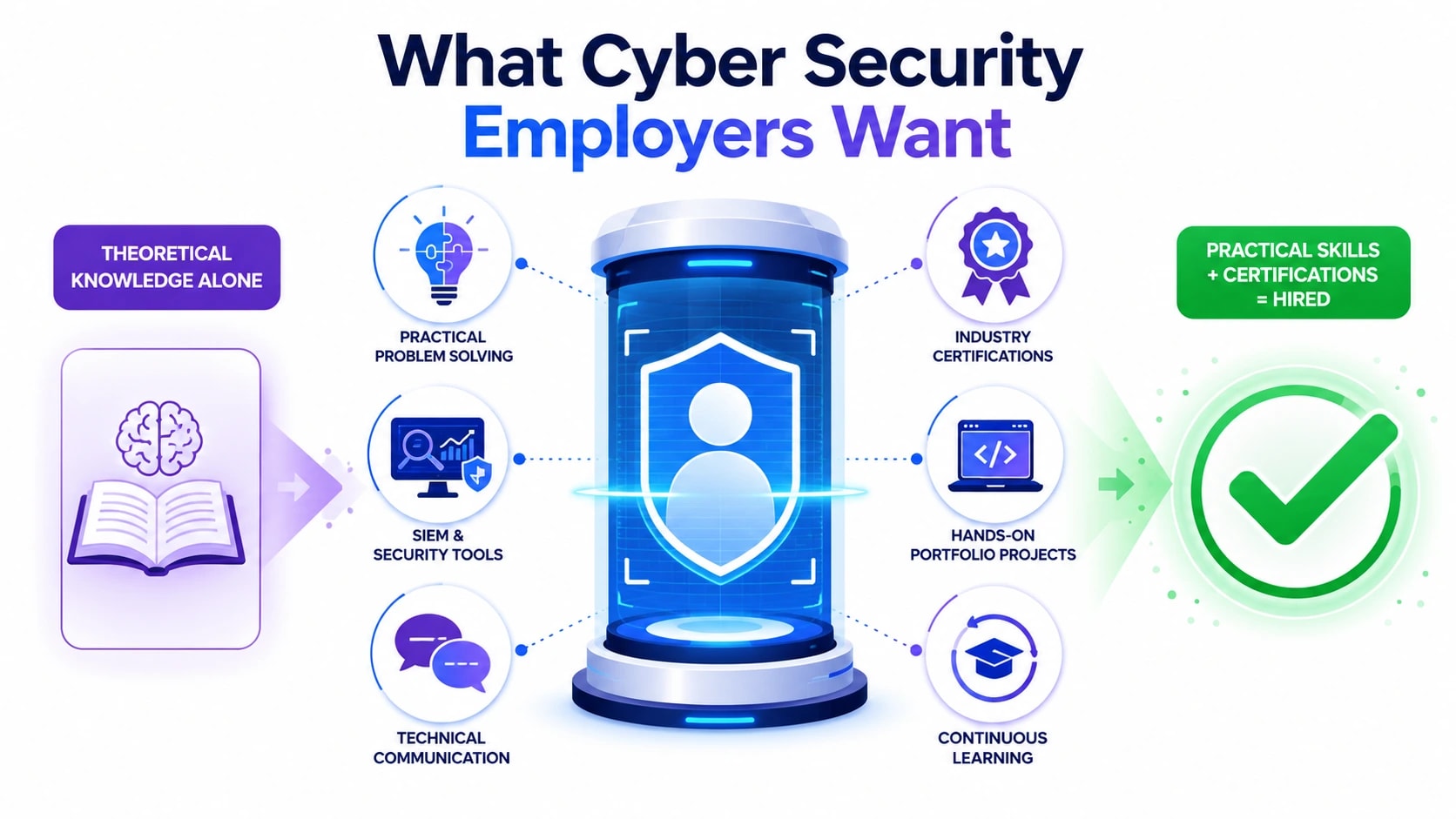
Hiring managers in cyber security are candid about the gap they see between what schools produce and what the job actually demands. Understanding this gap before you enroll lets you supplement your education strategically rather than discovering the shortfall after graduation.
Employers consistently report that they prioritize:
- Practical problem-solving ability: candidates who can walk through how they would investigate an alert, not just define what an alert is
- Familiarity with real tools, experience with SIEM platforms, vulnerability scanners, endpoint detection tools, and scripting languages like Python
- Communication skills: the ability to explain technical findings clearly to non-technical stakeholders, including executives and legal teams
- Certifications alongside degrees: credentials like CompTIA Security+, CEH, or OSCP signal that candidates have validated their skills through structured assessment
- Portfolio evidence, capture-the-flag competition results, GitHub repositories, or documented home lab projects that demonstrate initiative beyond coursework
- Adaptability: threats change constantly, and employers want people who demonstrate curiosity and a habit of continuous learning
Consulting firms and managed security service providers, including teams at Cyberlad, often receive applications from school graduates who have strong theoretical backgrounds but limited exposure to simulated attack scenarios or real incident workflows. Bridging that gap during your studies, rather than after, puts you in a significantly stronger position when interviews begin.
Conclusion
Cybersecurity school provides a structured foundation that matters, especially for understanding the theory behind threat detection, network defense, and security governance. But the strongest candidates in this field treat school as a starting point, not a finish line. The programs that produce job-ready graduates are the ones that combine rigorous academic content with hands-on labs, industry certifications, and exposure to the kinds of real-world scenarios that employers actually care about. Choosing carefully, asking hard questions about outcomes before you enroll, and supplementing your curriculum with practical experience will put you ahead of the majority of graduates entering the field.
If you are serious about building a career in cybersecurity, invest time in understanding what the job actually requires before you commit to any program. Research employer expectations, talk to practitioners already working in the roles you want, and look for schools that connect curriculum to those realities. Whether you are just starting or looking to formalize existing skills, the right educational path combined with certified, practical expertise creates a profile that stands out in a competitive and growing field.
Frequently Asked Questions
Is a degree from a cyber security school necessary to get a job in the field?
Not always. Many employers accept relevant certifications and demonstrated practical skills in place of a formal degree. However, a degree from an accredited cyber security school can open doors to government roles, senior positions, and employers with strict educational requirements, making it valuable depending on your target career path.
How long does it typically take to complete a cyber security school program?
Program length varies widely. Associate degrees typically take two years, bachelor's degrees four years, and master's programs one to two years. Bootcamps and diploma programs can be completed in three to six months. The right length depends on your existing background, career goals, and how quickly you need to enter the workforce.
What is the difference between a cyber security school and a cyber security bootcamp?
Cyber security schools offer accredited academic programs with broader coursework covering theory, compliance, and technical skills. Bootcamps are intensive, short-term training programs focused on specific, job-ready skills. Schools suit those wanting formal credentials, while bootcamps work well for career changers or professionals filling specific skill gaps quickly.
Can I study cyber security school programs entirely online?
Yes. Many accredited universities and colleges offer fully online cyber security programs, including bachelor's and master's degrees. These programs typically include virtual labs to replicate hands-on training. Quality varies, so confirm that any online program you consider holds recognized accreditation and includes practical, skills-based coursework rather than theory alone.
Which certifications should I pursue alongside my cyber security school program?
CompTIA Security+ is an ideal entry-level certification to pursue early in your studies. As you progress, consider CEH for ethical hacking skills or CISSP for security management roles. Penetration testing tracks benefit from OSCP. Pairing school coursework with at least one recognized certification significantly strengthens your employability upon graduation.