What Is OSCP? The Complete Guide for Cyber Pros
In a field where credentials carry real weight, the OSCP stands apart because it demands actual hands-on exploitation skill, not just memorized answers. Most cybersecurity certifications test knowledge on paper. OSCP tests whether you can break into machines under pressure, document your findings professionally, and do it all within 24 hours.
By 2026, OSCP will have become the baseline credential that penetration testing hiring managers point to when assessing whether a candidate can operate independently in the field. This guide covers everything you need to know: the definition, exam structure, who OSCP is for, how it compares to competing certifications, and how to build an effective preparation plan. Cyberlad works closely with professionals pursuing offensive security paths and has direct insight into what this certification demands in practice.
Check out our latest blog on Cyber Security Jobs: Roles, Salaries and How to Get Hired
What Is OSCP? Definition and Core Purpose
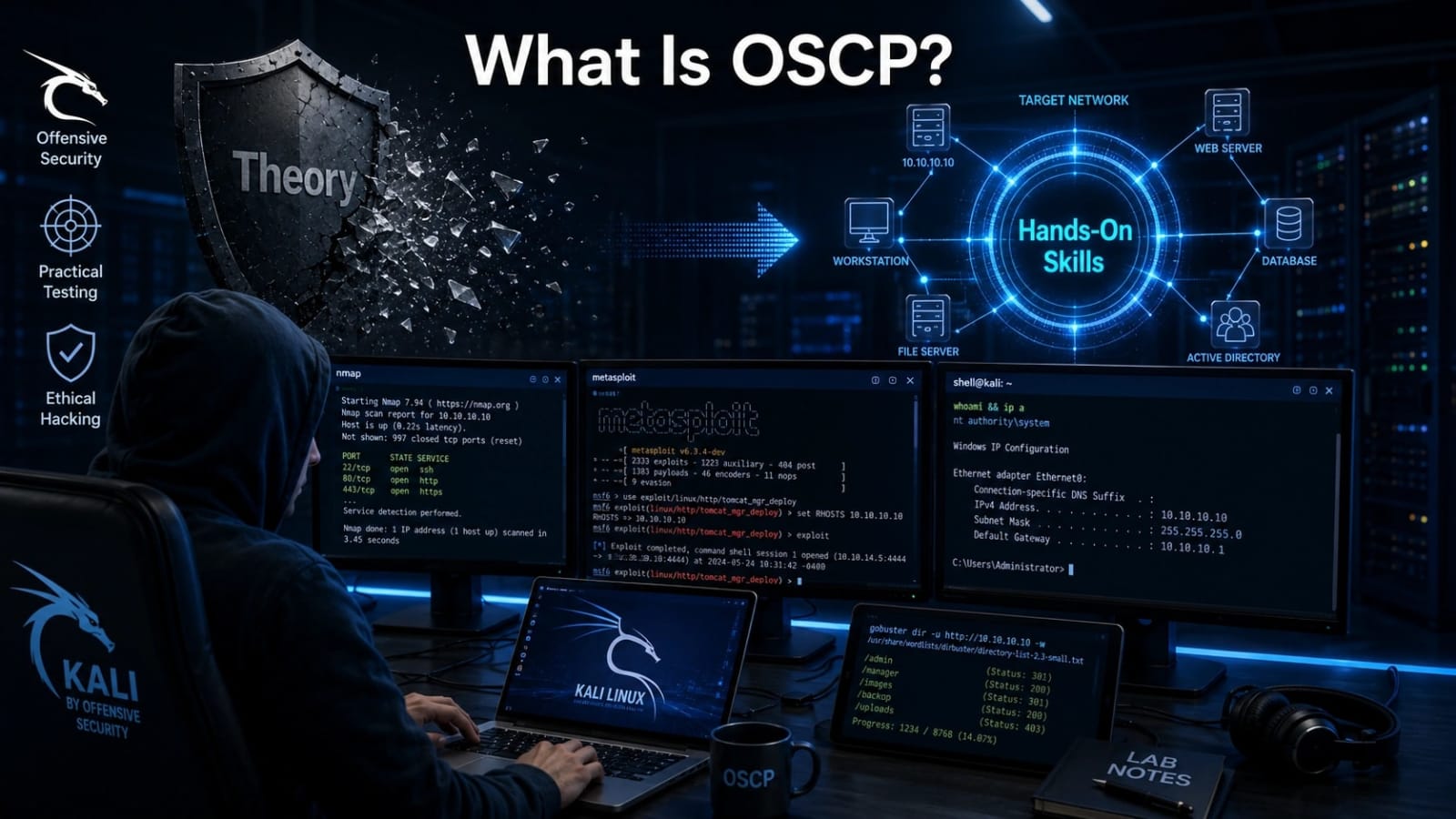
OSCP stands for Offensive Security Certified Professional. It is issued by Offensive Security, a well-known name in the offensive security training space. The certification validates that a candidate can identify vulnerabilities and exploit them in a controlled, real-world-like environment without step-by-step guidance. This is not a theoretical credential. It proves operational skill.
The certification is built around the PWK course, which stands for Penetration Testing with Kali Linux. This course is the required training material before attempting the exam. Unlike multiple-choice exams that test recall, OSCP tests actual attack execution across a live lab network. Candidates must demonstrate that they can enumerate targets, identify weaknesses, and execute exploits under real-time constraints.
The core philosophy behind OSCP is captured in two words: Try Harder. Candidates must solve problems independently and cannot rely on guided walkthroughs during the exam. Offensive Security built this philosophy into every aspect of the certification. It is what makes OSCP credible with employers, SOC teams, and red team leads. When hiring managers see OSCP on a resume, they know the candidate has performed under pressure without hand-holding.
How the OSCP Exam Works
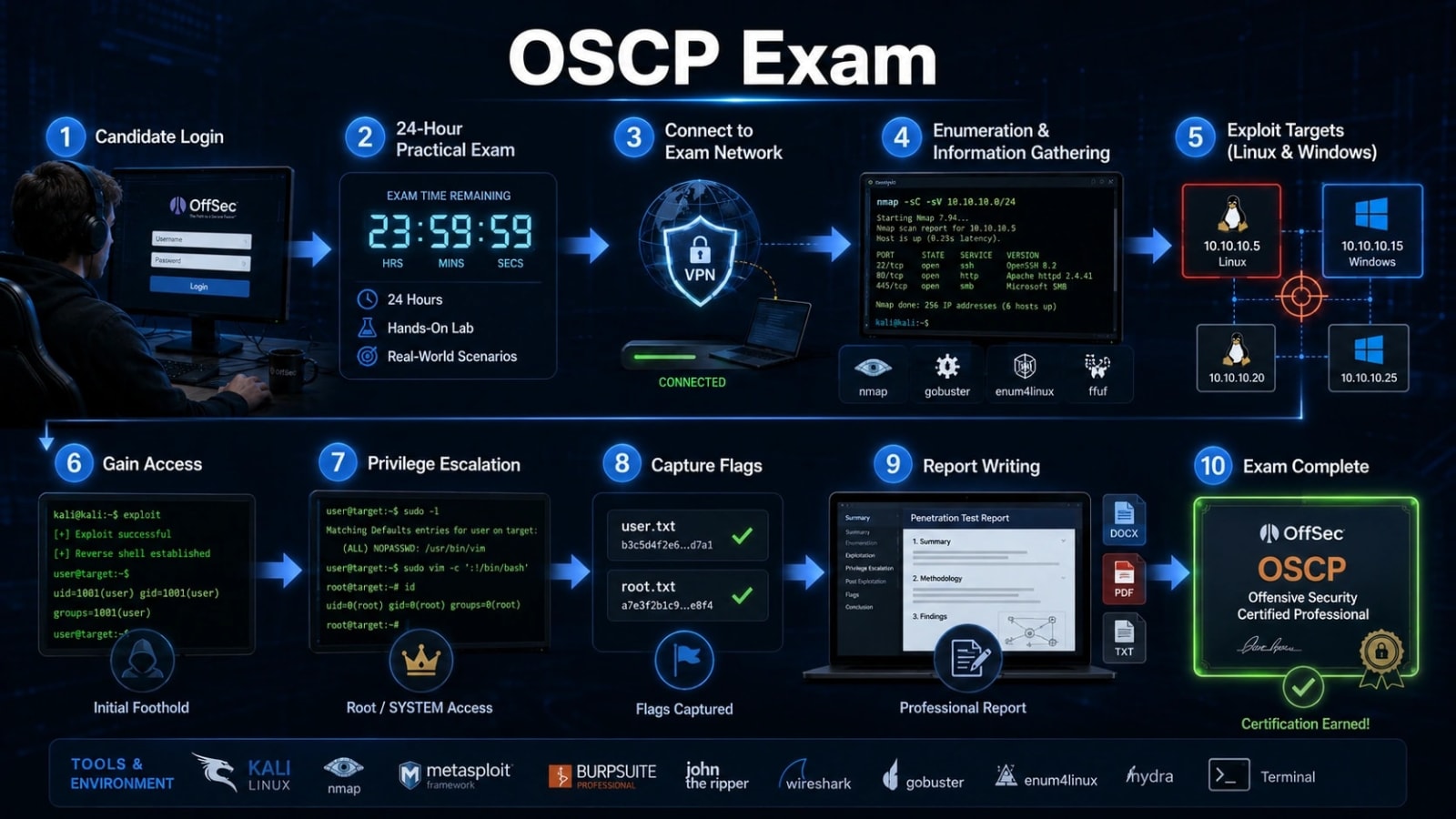
The OSCP exam gives candidates 24 hours to compromise a set of target machines inside an isolated VPN network. Each machine carries a specific point value. Candidates must reach 70 out of 100 points to pass. The exam machines run various operating systems, including Windows and Linux, at different difficulty levels. A standalone buffer overflow machine is typically included and is worth significant points, making it a priority target for many candidates.
After the 24-hour attack window closes, candidates have another 24 hours to submit a professional penetration testing report. This report must document all findings clearly. It must include the steps taken, screenshots at every key stage, and proof files such as local.txt and proof.txt retrieved from each compromised machine. The report is evaluated alongside the technical results, so writing quality and structure matter.
One of the most important constraints in the OSCP exam is the restriction on automated exploitation tools. Metasploit can only be used on one machine during the exam. All other machines must be attacked using manual techniques. This restriction is what separates OSCP from less rigorous certifications and ensures that passing candidates have genuine exploitation skills. Proctoring is conducted remotely throughout the full exam period using screen and webcam monitoring.
What the PWK Course Covers Before the Exam
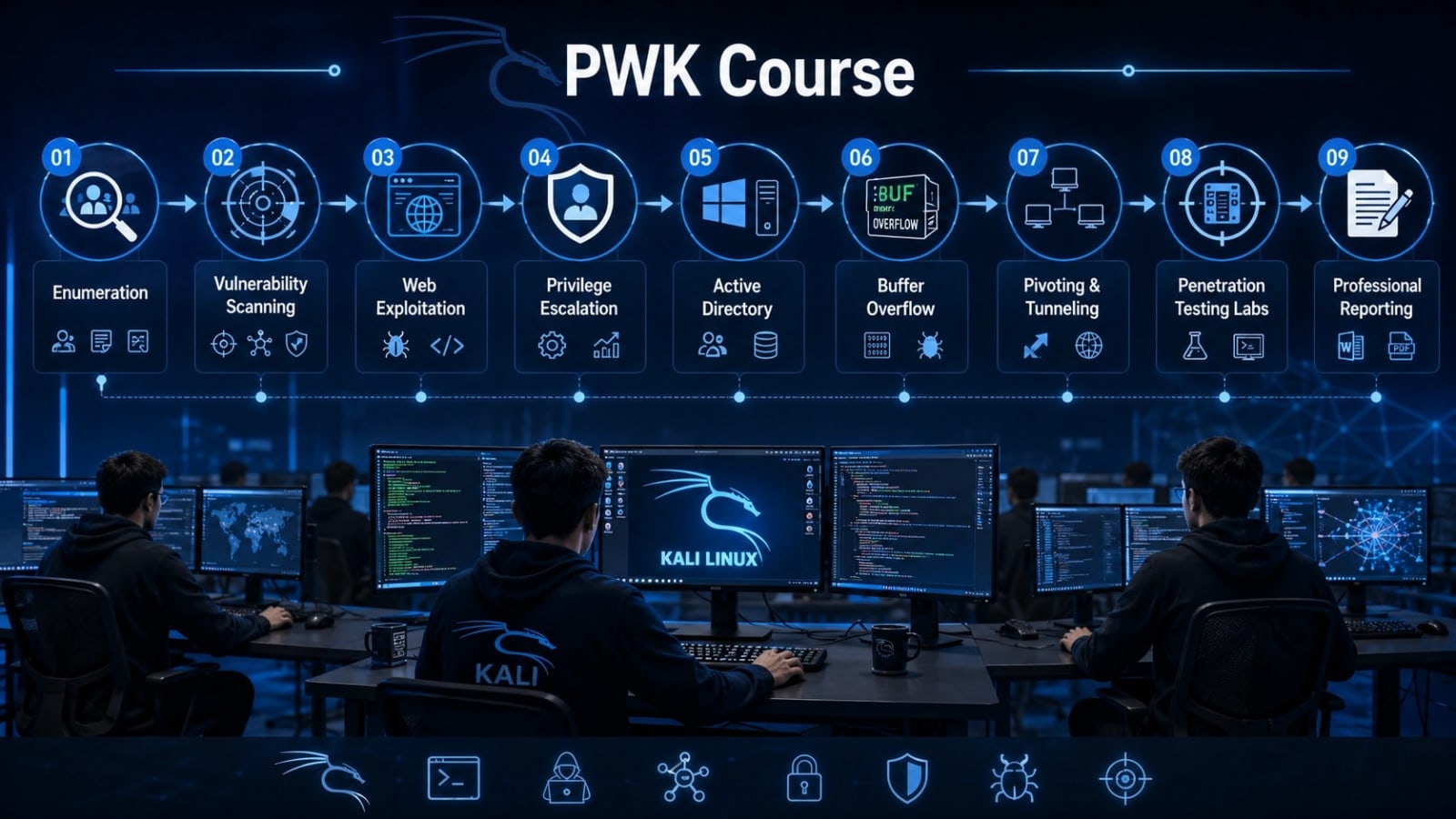
The Penetration Testing with Kali Linux course is the required prerequisite training material for the OSCP exam. It covers a wide range of offensive security topics across both theory and practice. The course does not just explain concepts. It expects candidates to replicate techniques against live lab machines in the official lab environment.
Topics covered in the PWK course include:
Information gathering and enumeration techniques
Vulnerability scanning and service fingerprinting
Manual exploitation of known vulnerabilities
Privilege escalation on both Linux and Windows systems
Client-side attacks and social engineering concepts
Tunneling and pivoting through network segments
Active Directory basics and initial attack vectors
Buffer overflow exploitation on Windows targets
Lab time is purchased separately in blocks, and candidates must manage their time efficiently to cover enough machines before the exam. Bonus points are available for completing course exercises and submitting a minimum number of lab machine reports. These bonus points can push a borderline score over the 70-point passing threshold. Candidates who use lab time well and complete exercises systematically put themselves in a stronger position on exam day.
Who Should Pursue the OSCP Certification
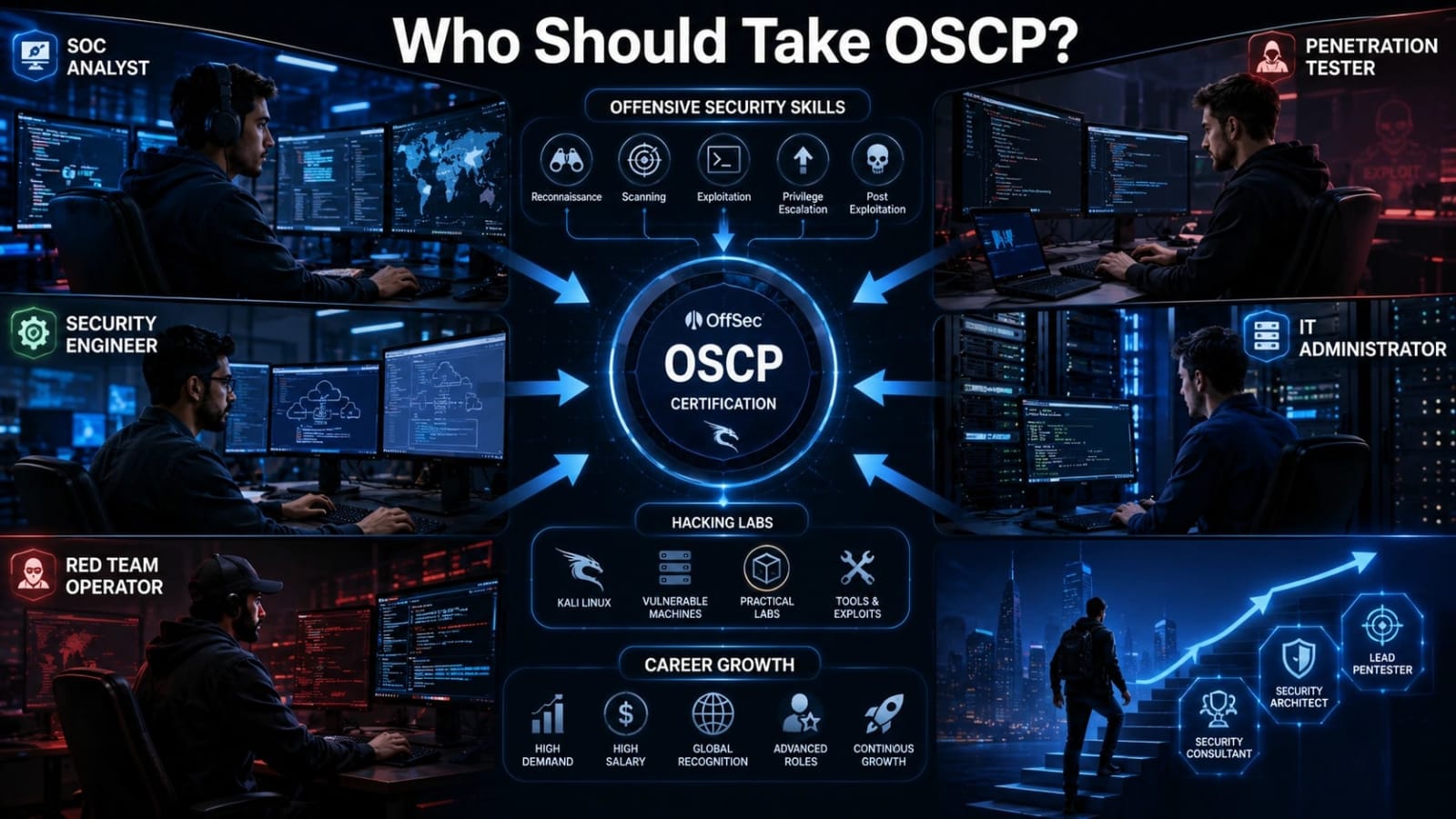
OSCP is best suited for individuals who already have foundational knowledge of networking, Linux, and basic scripting. It is not recommended as a first cybersecurity certification. The technical requirements are steep, and candidates without prior exposure to exploitation concepts will struggle significantly with the lab material before even reaching the exam.
Ideal candidates include:
Junior penetration testers looking to break into red teaming roles
Security engineers who want to develop offensive skills
SOC analysts who want to understand attacker techniques from the inside
IT professionals with networking experience who are transitioning into security
Those who have completed CompTIA Security+ or CEH and want a practical, respected upgrade
Professionals at Cyberlad who work in penetration testing engagements often point to OSCP as the baseline credential that shows a candidate can operate independently. Hiring managers in red team and penetration testing roles frequently list OSCP as a preferred or required qualification. For anyone serious about building a career in offensive security, OSCP is a strong and logical next step after foundational training.
OSCP Compared to Other Penetration Testing Certifications
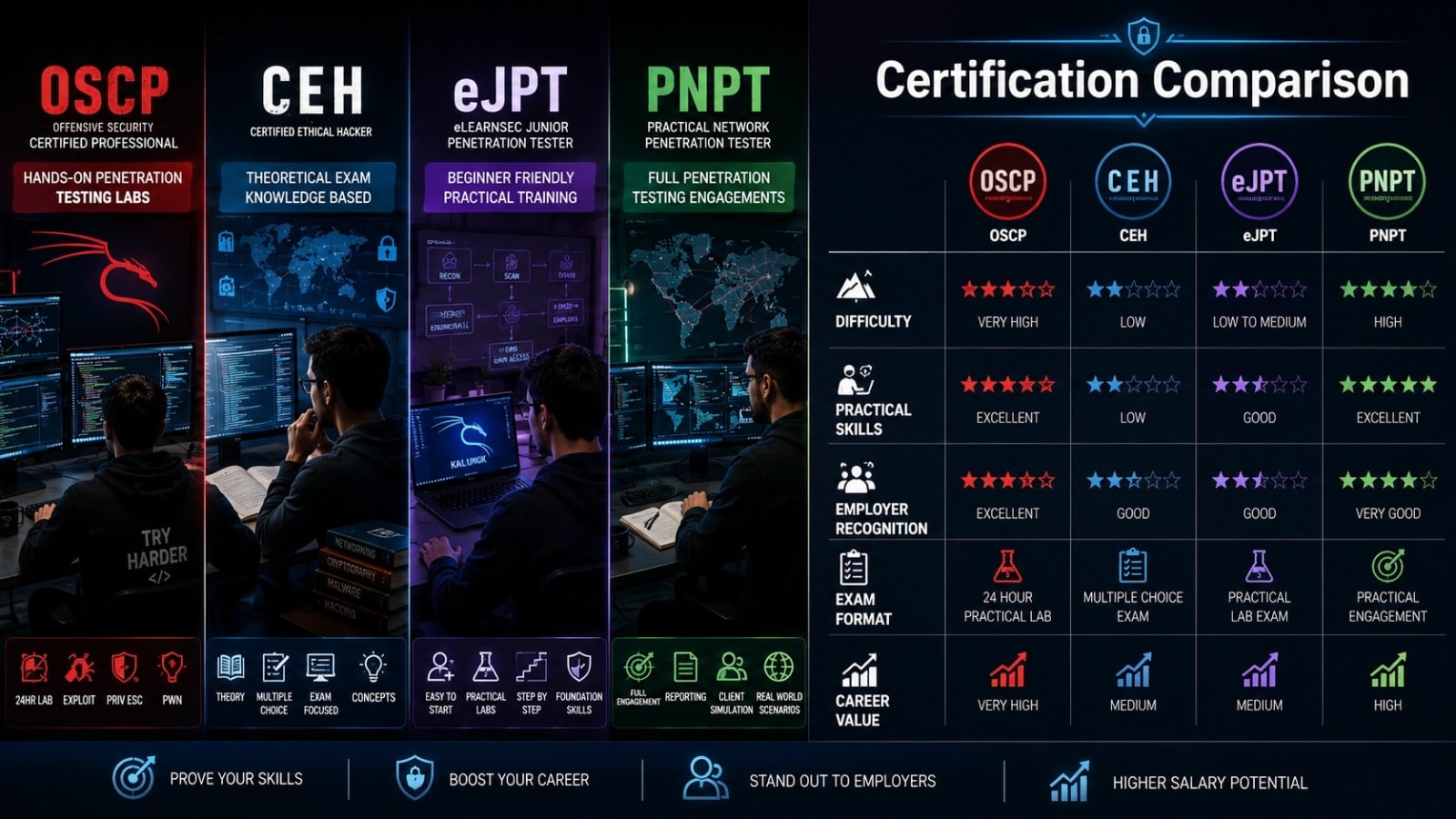
Understanding how OSCP fits against other available certifications helps candidates make informed decisions about which path to take. Not all penetration testing certifications carry the same technical weight or market recognition. The table below compares OSCP with CEH, eJPT, and PNPT across the most relevant criteria.
Criteria | OSCP | CEH | eJPT | PNPT |
|---|---|---|---|---|
Exam Format | 24-hour practical lab + report | Multiple choice | Practical lab | Practical lab + report |
Hands-On Requirement | High | Low | Medium | High |
Approximate Cost | ~$1,499 USD | ~$950-$1,199 USD | ~$200 USD | ~$400 USD |
Employer Recognition | Very High | High (HR filters) | Low-Medium | Medium |
Difficulty | High | Low-Medium | Low | Medium-High |
Beginner Friendly | No | Yes | Yes | Moderate |
CEH is a multiple-choice exam and is widely considered less technically rigorous than OSCP. It appears frequently in corporate HR filters, but technical hiring managers in offensive security roles often view it as insufficient proof of practical skill. The eJPT from eLearnSecurity is a good entry point before attempting OSCP. It tests basic exploitation concepts without the same time pressure, making it useful for building confidence early.
PNPT from TCM Security is a strong alternative to OSCP. It includes both a practical exam and a report requirement at a significantly lower cost. However, PNPT carries less brand recognition than OSCP in enterprise hiring environments. OSCP remains the benchmark for hands-on penetration testing certification in 2026. Teams at Cyberlad that include offensive testing in client security programs frequently reference OSCP-certified professionals when building penetration testing project teams.
How to Prepare for the OSCP Exam Effectively
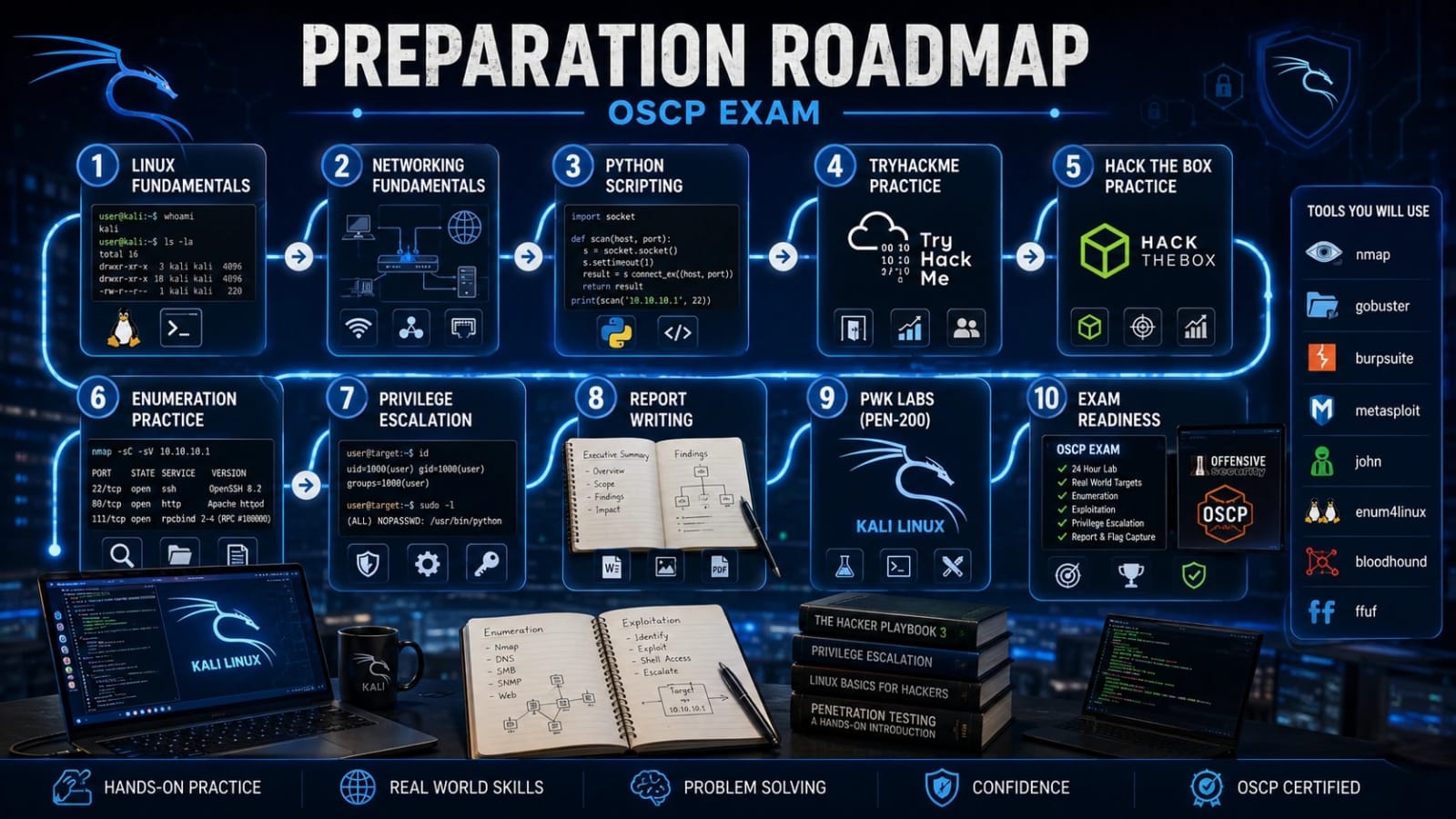
Preparation for OSCP should begin before purchasing the PWK course. Candidates who jump into lab access without foundational skills waste expensive lab time on basics they could have covered elsewhere. Start by building solid Linux command-line skills, a clear understanding of TCP/IP networking, and basic scripting ability in Python or Bash. These are not optional prerequisites. They are the floor from which everything else builds.
Free and low-cost practice platforms provide excellent preparation before lab access begins. HackTheBox and TryHackMe both offer machines that mirror the type of enumeration and exploitation challenges found in OSCP. TJNull's publicly available list of OSCP-like retired HackTheBox machines is a widely used resource in the community and remains one of the best ways to simulate exam conditions.
The following preparation steps are recommended for serious candidates:
Build foundational Linux, networking, and scripting skills before purchasing the PWK course
Practice enumeration and basic exploitation on TryHackMe and HackTheBox before lab access starts
Study privilege escalation techniques for both Linux and Windows in depth
Focus on manual exploitation methods, since automation tools are restricted during the exam
Build a structured note-taking system using tools like Obsidian or CherryTree to document techniques and commands
Practice writing professional penetration testing reports during lab work, not just before the exam<|join|>Practice writing professional penetration testing reports during lab work, not just before the exam
Set internal time limits per machine during practice to build exam-relevant time management habits
Complete as many PWK course exercises as possible to qualify for bonus points
Cyberlad recommends that candidates dedicate a minimum of three to six months to preparation, depending on their existing skill level. Candidates with strong Linux and networking backgrounds may need closer to three months. Those starting from a more general IT background should plan for six months or more. At Cyberlad, where teams regularly work real-world threat scenarios into client engagements, the practical mindset OSCP builds aligns directly with how penetration testing projects are executed in the field.
Time management during the actual 24-hour exam window is critical. Many candidates fail not because they lack skill but because they spend too long on a single machine. Set internal deadlines per target. Move on if a machine is not yielding results after a set time. Return to it later with a fresh perspective. The buffer overflow machine should be prioritized early, as it typically offers a reliable point gain for well-prepared candidates.
Final Thoughts
OSCP is a hands-on, rigorous penetration testing certification that tests real exploitation skill under time pressure across a live network. It is not a beginner certification. For those with foundational skills, however, it is one of the most respected credentials in offensive security. The 24-hour exam format, the required professional report, and the restricted toolset make it a reliable signal of practical capability that employers and security teams consistently trust.
The exam format demands independent thinking, technical depth, and the ability to perform under pressure. These are exactly the qualities that effective penetration testers need in real client engagements. We work with penetration testing professionals and teams who hold credentials like OSCP to deliver accurate, technically sound security assessments. Whether you are preparing to take the exam or looking to build a team that includes OSCP-certified talent, Cyberlad is a resource worth consulting. Visit cyberlad.io to learn more about how we approach penetration testing and offensive security, or to explore how certified professionals are engaged in client security programs.
Frequently Asked Questions
How hard is the OSCP exam compared to other certifications?
OSCP is considered significantly harder than most cybersecurity certifications. It requires live exploitation of machines within a 24-hour window with no multiple-choice questions and strict restrictions on automated tools. Candidates must enumerate, exploit, and escalate privileges manually across multiple machines and then produce a professional report. This combination of technical depth, time pressure, and documentation requirements sets it apart from nearly all other security certifications available in 2026.
How long does it take to prepare for OSCP?
Most candidates spend three to six months preparing for OSCP. The exact timeline depends on existing knowledge of Linux, networking, and exploitation techniques. Candidates who already work in IT or have completed practical security training may be ready in three months. Those coming from a more general background with less hands-on experience should plan for at least six months of dedicated study and practice before attempting the exam.
How much does the OSCP certification cost?
The OSCP certification cost includes the PWK course and initial lab access, typically starting around $1,499 USD. This package usually includes 90 days of lab access. Additional lab time can be purchased separately, and exam retakes also carry an additional fee. Candidates should budget accordingly and plan to use their lab time efficiently to avoid needing costly extensions.
Can beginners attempt the OSCP?
OSCP is not recommended as a first cybersecurity certification. Candidates should have solid Linux command-line skills, a working understanding of TCP/IP networking, and some prior exposure to security concepts before purchasing the PWK course. Beginners who jump in without this foundation tend to waste expensive lab time on basics. A better starting path is to complete entry-level platforms like TryHackMe or certifications like eJPT before committing to OSCP.
Does OSCP expire or require renewal?
OSCP does not expire. Once earned, the certification remains valid permanently with no renewal requirement. This is one of its practical advantages over certifications that require continuing education credits or periodic re-examination. Many professionals who hold OSCP choose to pursue advanced Offensive Security certifications such as OSEP (Experienced Penetration Tester) or OSED (Exploit Developer) to continue building on their offensive security skills after passing OSCP.
Is OSCP recognized by employers?
Yes. OSCP is one of the most recognized hands-on penetration testing certifications globally. It is frequently listed as a preferred or required credential in job postings for red team roles, penetration testing positions, and offensive security consultancy work. Unlike some certifications that appear primarily in HR screening filters, OSCP is respected by technical hiring managers because they understand what passing it actually requires. It signals independent operational capability, which is exactly what penetration testing teams need.