Table of Contents
SOC Analyst jobs involve detecting, investigating, and responding to cyber threats using SIEM, EDR, cloud logs, and threat-hunting techniques. In 2026, SOC analysts earn from $60,000 to $130,000 depending on region and experience, with clear growth paths toward IR, threat hunting, and detection engineering.
Imagine this moment.
You’re in a dimly lit SOC, three monitors glowing in front of you. A sudden spike in failed logins hits your SIEM dashboard.
The alerts multiply. You pause not because you’re scared, but because this is exactly the kind of puzzle you were trained to solve.
You open Sentinel or Splunk.
You pivot across logs.
You correlate timestamps.
You breathe out and say, “This is brute force… but on an internal IP… who triggered it?”
That’s the adrenaline-shot reality of SOC Analyst Jobs, the frontline defenders who keep companies alive in 2026’s threat landscape.
If you’re reading this, there’s a good chance you’re exploring whether SOC work is right for you. Maybe you want a high-growth cybersecurity career, maybe you’re switching fields, or maybe you’re already in IT and want to level up.
Whatever your reason, this guide helps you understand:
What SOC analysts do
What skills companies want in 2026
Your complete career path
Salary breakdowns
Certifications that matter
Tools you must learn
And how to break into the industry
Let’s dive in.
What Exactly Does a SOC Analyst Do?
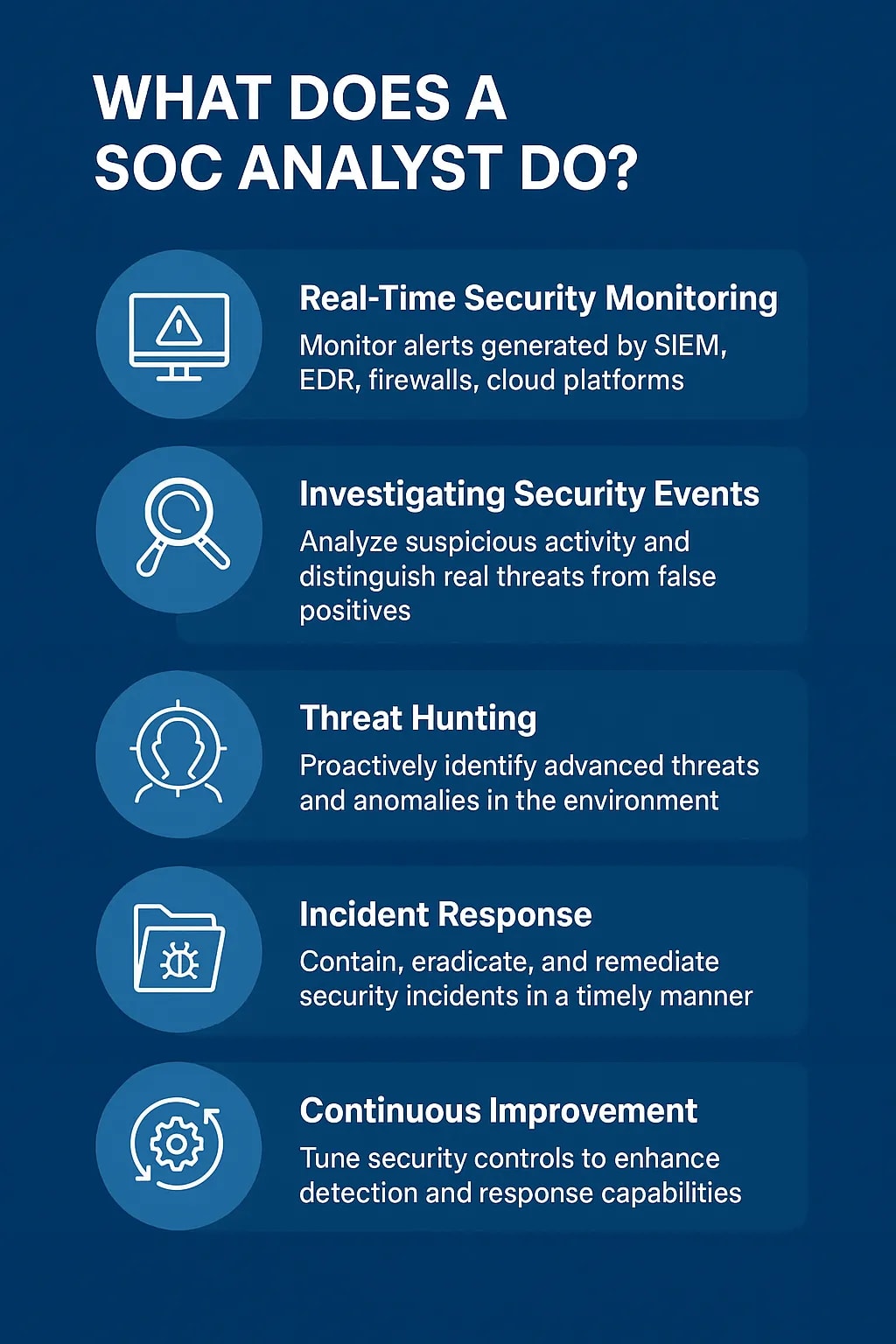
A SOC Analyst (Security Operations Center Analyst) is the first line of defense against cyber incidents. You monitor alerts, investigate anomalies, and contain threats before they escalate.
But the role isn’t “sit and stare at SIEM dashboards.”
Not anymore.
In 2026, the SOC analyst role has evolved into five major responsibilities:
1. Real-Time Security Monitoring
You monitor alerts generated by:
SIEM (Splunk, Sentinel, QRadar, ArcSight, Chronicle)
EDR/XDR (CrowdStrike, Defender, SentinelOne)
Firewalls (Palo Alto, Fortinet, Cisco ASA)
Cloud platforms (AWS, Azure, GCP logs)
Your job is to distinguish real threats from noise.
2. Investigating Security Events
You don’t just acknowledge alerts, you break them apart.
You check:
Source/destination IPs
Authentication logs
Endpoint telemetry
File hashes
Process behavior
Network flow anomalies
Every alert requires judgment. That’s what makes you valuable.
3. Threat Hunting
In 2026, companies expect SOC teams to hunt proactively.
You build hypotheses like:
“What if someone is bypassing MFA?”
“Is there lateral movement hidden under normal traffic?”
“Are there suspicious service accounts?”
Then you dig deep using:
KQL (Sentinel)
SPL (Splunk)
Sigma rules
MITRE ATT&CK mapping
4. Incident Response
When a threat becomes an incident, you escalate and assist IR teams with:
Containment
Isolation
Log enrichment
Malware triage
Timeline creation
Reporting
Your decision speeds define how much damage the attacker can do.
5. Continuous Improvement
Modern SOCs expect analysts to help with:
Use case development
Rule tuning
Threat intel correlation
Playbook updates
SOAR automation
This means you’re no longer “just an alert analyst,” you contribute to the SOC’s overall maturity.
Read More On: Cyber Security Monitoring: Best Practices Guide 2026
How the SOC Analyst Role Has Changed in 2026
The cybersecurity battlefield looks different from what it did even two years ago.
Three major changes define SOC jobs in 2026:
1. AI Alerts Need Human Judgment
Every SIEM and EDR now uses AI to reduce noise.
But AI still cannot:
Understand business impact
Identify human patterns
Correlate subtle anomalies
Decide risk tolerance
That’s job security for you.
2. Cloud Logs Dominate
Azure, AWS, and GCP logs now produce 60%+ of SOC alerts.
Companies want analysts who understand:
Azure AD logs
CloudTrail
VPC Flow Logs
Identity and Access logs
Kubernetes pod logs
If you know cloud + identity, you’re already ahead.
3. Identity-Based Attacks Are the New Normal
Instead of malware, attackers simply log in.
So companies need SOC analysts fluent in:
MFA logs
Conditional access
OAuth misuse
Service principal compromise
Privilege escalation
Identity is the new perimeter.
Skills Required for SOC Analyst Jobs in 2026
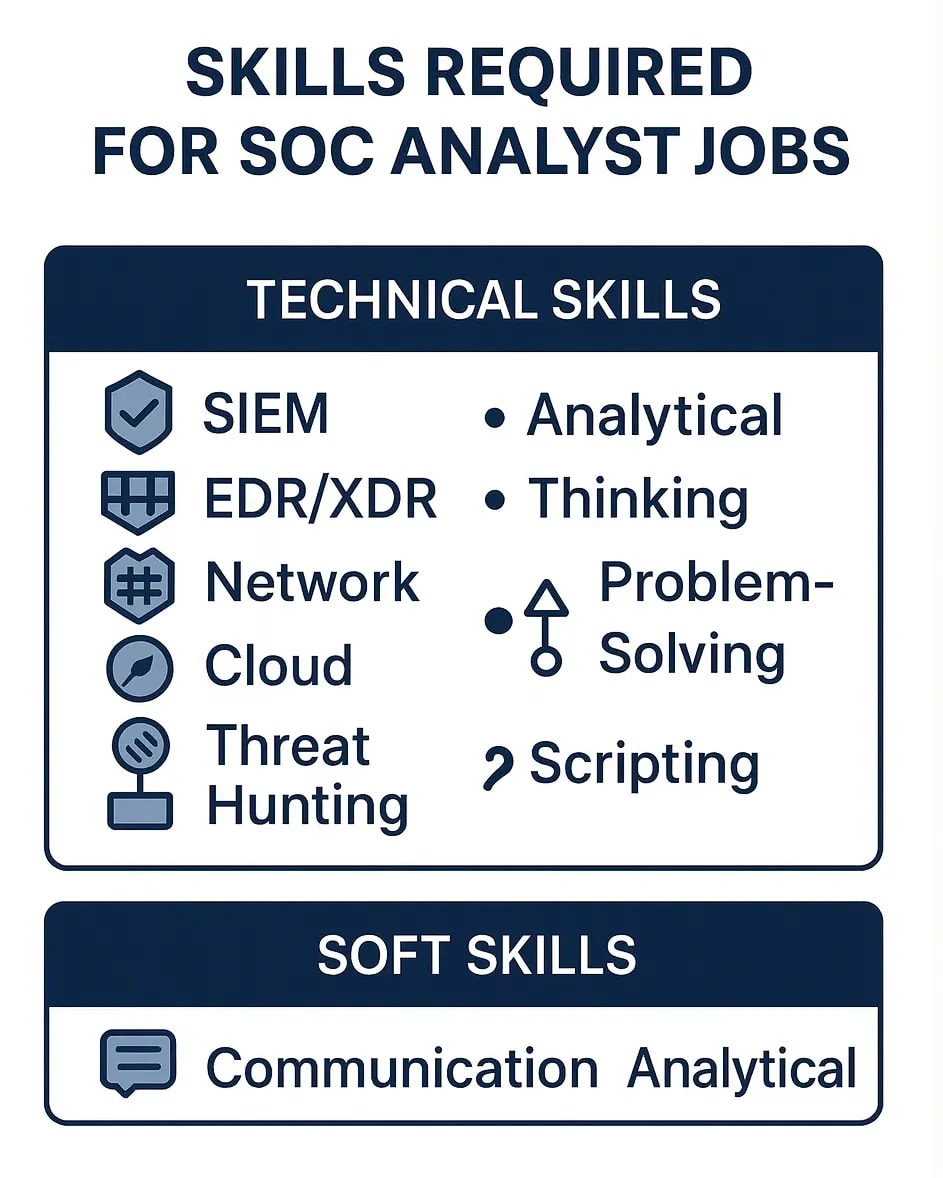
Let’s break this into two parts: technical and soft skills.
Technical Skills (What Employers ACTUALLY Want)
1. SIEM Mastery
You must know at least one of the following deeply:
Microsoft Sentinel
Splunk
IBM QRadar
ArcSight
Google Chronicle
Companies expect you to write queries, tune rules, and build dashboards.
2. EDR/XDR Expertise
SOC is 40% endpoint analysis.
Top tools:
CrowdStrike Falcon
Microsoft Defender XDR
SentinelOne
Trend Micro Vision One
You should know:
Parent-child process analysis
Hash analysis
Behavioral indicators
Containment actions
3. Network Log Analysis
Even in 2026, the fundamentals matter.
You must understand:
Firewall logs
Proxy logs
VPN logs
IPS/IDS alerts
Packet captures (Wireshark)
4. Cloud Security Foundations
Cloud is no longer optional.
Your hiring chances double if you understand:
Azure AD
CloudTrail
GCP IAM
Kubernetes basics
Identity logs
5. Threat Hunting Skills
You should know:
MITRE ATT&CK
Use case creation
Query writing
IOC vs IOA
Behavior-based detections
6. Basic Forensics & Malware Knowledge
Not full reverse engineering, just essentials:
Memory dumps
File hash analysis
PE file basics
Sandbox use
7. Scripting (Not Mandatory, But Valuable)
Python or PowerShell helps you:
Automate investigations
Parse logs
Build simple tools
Integrate with SOAR
Soft Skills (The Skills That Actually Make You Great)
SOC work demands a unique mindset.
1. Pattern Recognition
You notice “something off” before others do.
2. Calm Under Pressure
Incidents don’t give warnings.
You must stay composed.
3. Communication
You explain technical events to:
Managers
Non-technical teams
Clients
Auditors
4. Curiosity
The best analysts dig deeper.
Check out our recent blog on Cybersecurity Stocks: Growth, Risks & Returns
Complete SOC Analyst Career Path (2026 Roadmap)
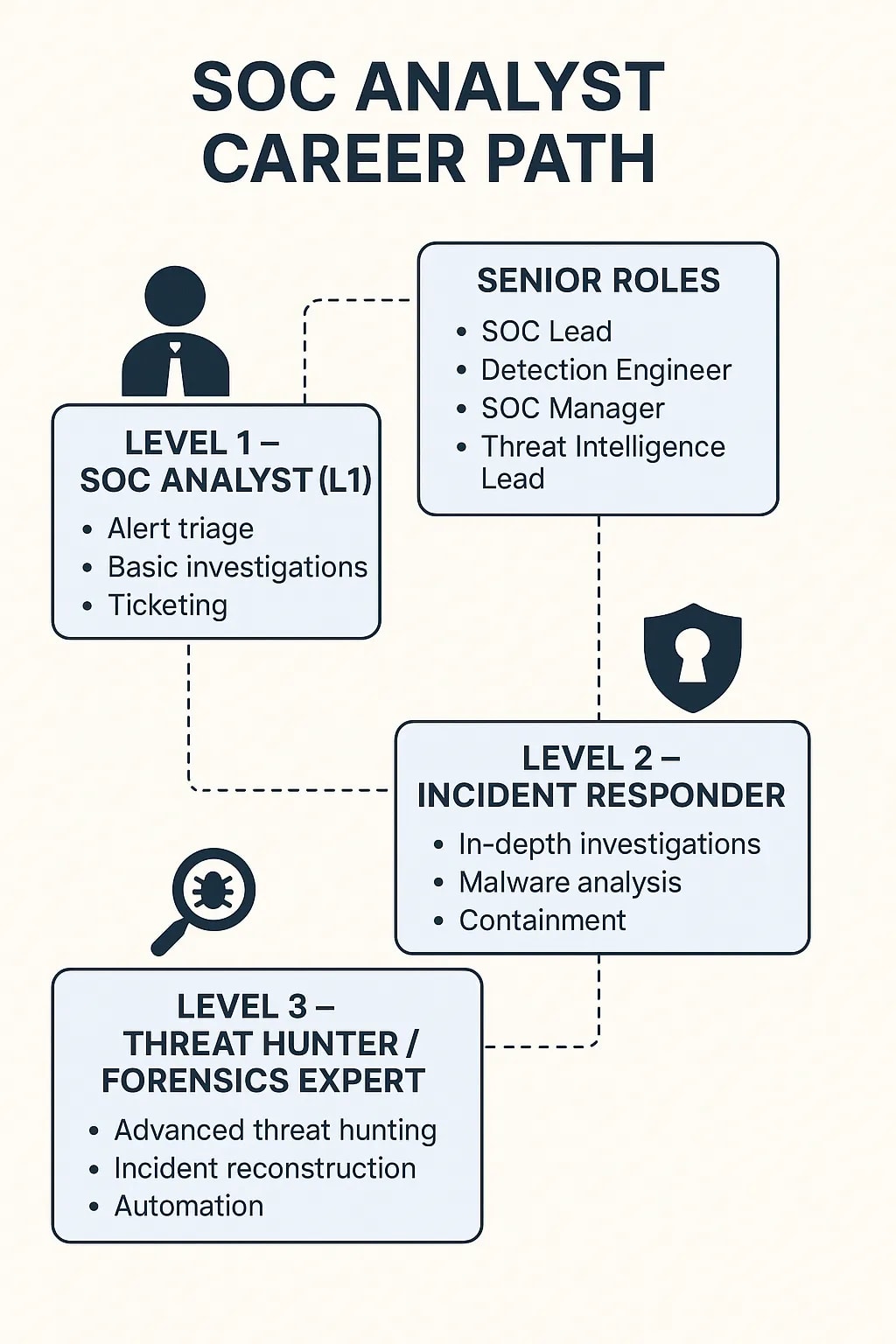
Think of it as a ladder you climb over 5–8 years.
Level 1: SOC Analyst (L1)
Your primary tasks:
Triage alerts
Basic investigations
Ticket creation
Escalations
Experience needed: 0–2 years
Salary:
US: $60–80k
UAE: AED 10–16k
India: ₹5–8 LPA
Level 2: SOC Analyst (L2) / Incident Responder
You now:
Perform deeper investigations
Create incident timelines
Handle phishing investigations
Manage containment
Experience needed: 2–4 years
Salary:
US: $85–110k
UAE: AED 17–28k
India: ₹9–16 LPA
Level 3: Senior Analyst / Threat Hunter
You’re now the “elite defender.”
You perform:
Advanced threat hunting
Use case development
Automation
Malware triage
Purple teaming
Experience needed: 4–7 years
Salary:
US: $115–130k+
UAE: AED 30–45k
India: ₹17–30 LPA
Beyond Level 3 (Specializations)
1. Detection Engineering
You build modern detection logic:
KQL
SPL
Sigma
YARA
UEBA models
2. Threat Intelligence
You track:
TTPs
Malware families
Threat actors
Global IOCs
3. DFIR
You do:
Forensics
Malware analysis
Legal reporting
4. SOC Manager / Lead
You run the entire operations center.
Check out our latest blog on Cybersecurity High-Speed Internet for the US Navy | Guide
Salary Breakdown (2026 Forecast)
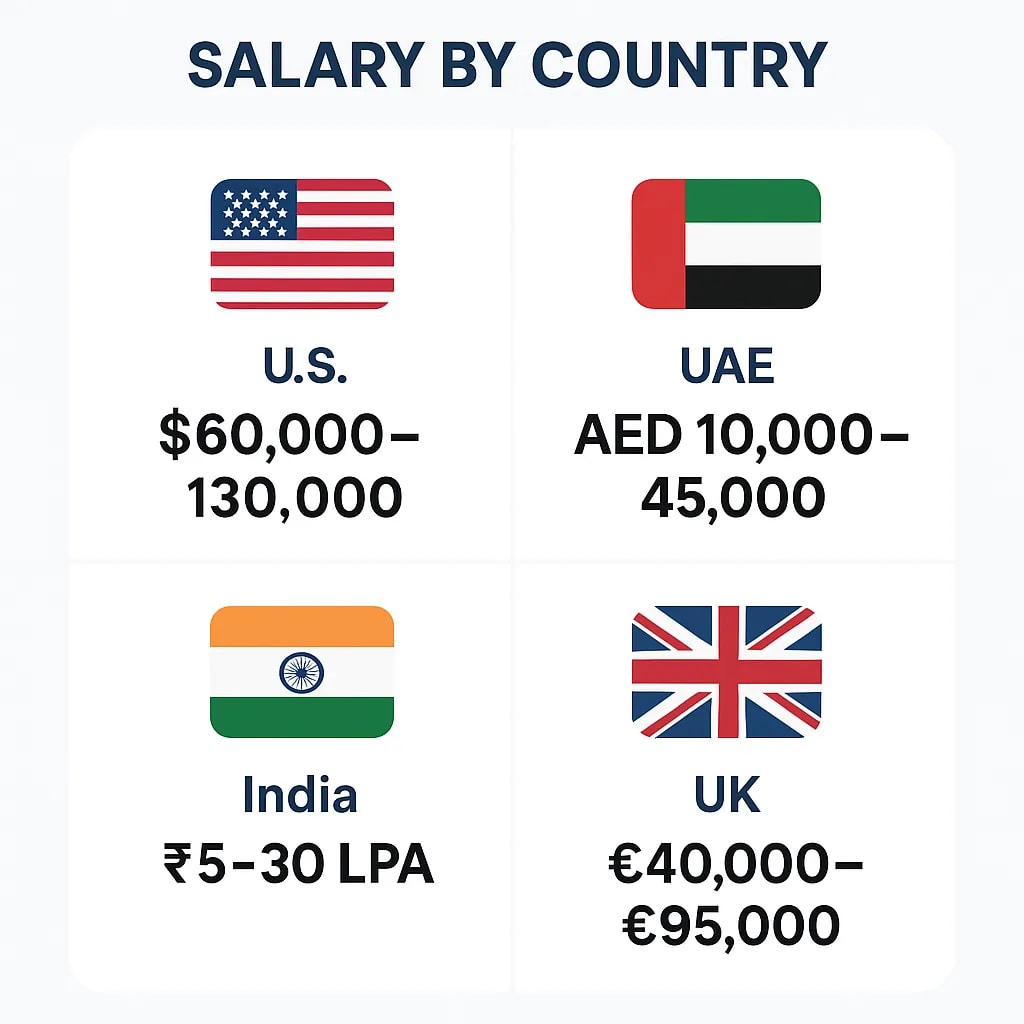
Let’s look at real, updated 2026-projected salary numbers.
United States
Entry: $60–80k
Mid: $85–110k
Senior: $115–130k+
UAE (Dubai & Abu Dhabi)
Entry: AED 10–16k
Mid: AED 17–28k
Senior: AED 30–45k+
Top-paying industries:
Oil & Gas
Telecom
Government
Banking
India
Entry: ₹5–8 LPA
Mid: ₹9–16 LPA
Senior: ₹17–30 LPA
UK & Europe
£40k–£95k
Depending on the country and experience.
Check out our latest blog on What Is PII? Definition, Examples & Security Risks
Want personalized cybersecurity guidance?
If you want to choose the right certification, build a SOC-ready skillset, or understand which tools to learn first, I’ll help you based on real SOC experience.
Best Certifications for SOC Analysts (2026)
I’ll divide them into levels.
Beginner
CompTIA Security+
Google Cybersecurity Certificate
Microsoft SC-900
Intermediate
SC-200 (Azure Security Analyst)
CySA+
CEH
Advanced
GCIH
GCIA
OSCP
CISSP
Tools You Should Master in 2026

These tools appear in 80%+ of SOC job descriptions:
SIEM
Microsoft Sentinel
Splunk
QRadar
ArcSight
Chronicle
EDR/XDR
CrowdStrike
Defender
SentinelOne
Trend Micro
SOAR
Cortex XSOAR
Microsoft SOAR
Shuffle
Threat Intel
MISP
VirusTotal
Recorded Future
Logging & Analysis
Zeek
Wireshark
Sysmon
Elastic
Scripting
PowerShell
Python
How to Become a SOC Analyst in 2026 (Practical Roadmap)
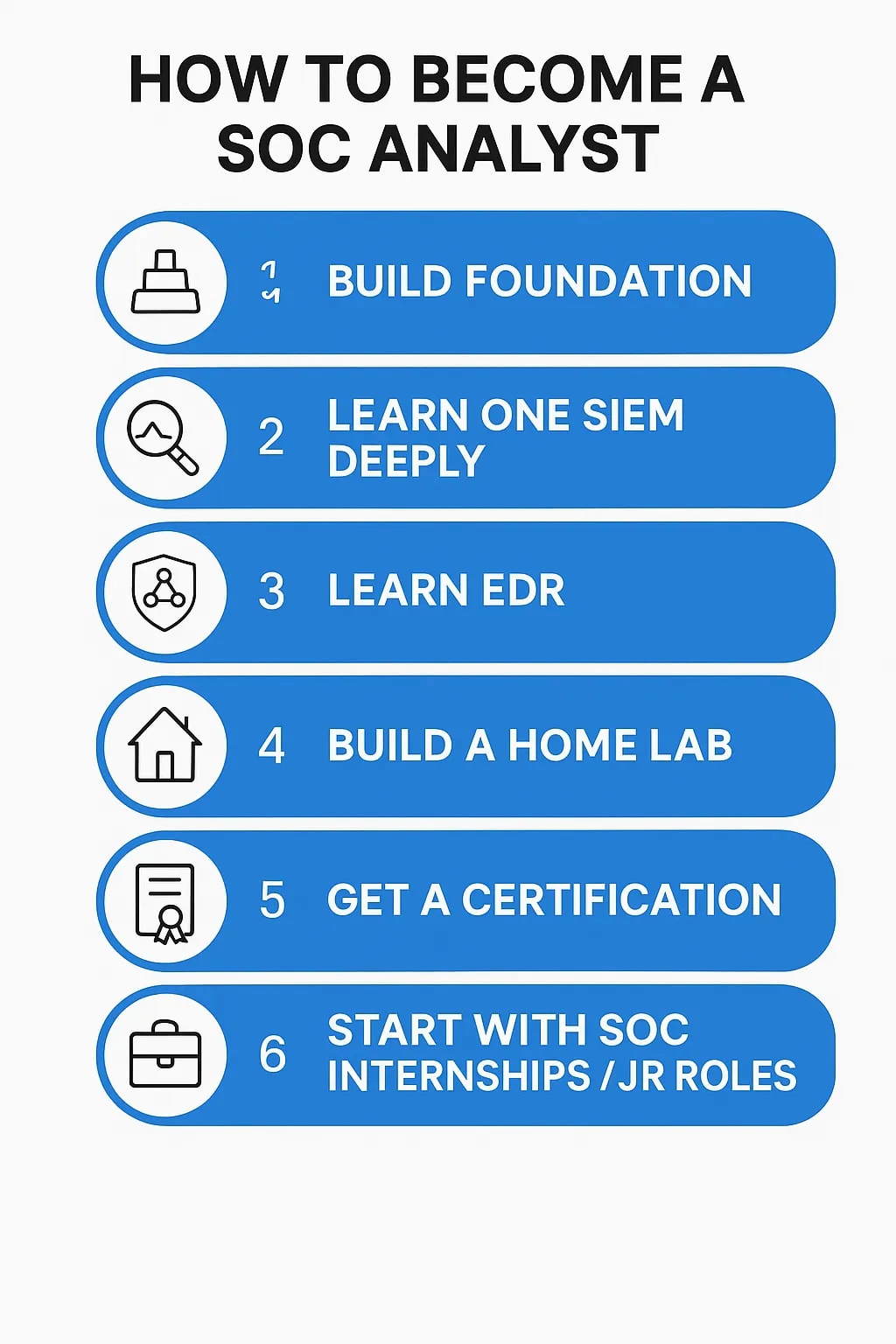
Let’s make it simple:
Step 1: Build Foundation
Learn:
Networking
Linux
Windows internals
Basic scripting
Step 2: Learn One SIEM Deeply
Choose one:
Sentinel
Splunk
Do 20–30 real investigations.
Step 3: Learn EDR
CrowdStrike or Defender.
Step 4: Build a Home Lab
Use:
Blue Team Labs
Splunk Boss of the SOC
Microsoft Defender Labs
Step 5: Get a Certification
SC-200 or Security+.
Step 6: Start With SOC Internships / Jr Roles
Apply confidently once you have:
SIEM knowledge
Lab experience
A basic understanding of attacks
Why SOC Analyst Jobs Remain in High Demand in 2026
Cyberattacks have evolved.
Threat actors use:
AI
Deepfakes
MFA fatigue attacks
Cloud privilege abuse
API exploitation
Companies need human defenders who can:
Interpret behavior
Understand context
Make decisions
Respond instantly
AI can assist SOCs, but it cannot replace human judgment.
That’s why SOC jobs continue to grow everywhere.
Final Thoughts
If you’re exploring SOC Analyst jobs, 2026 is the perfect year to enter the field. The demand is strong, salaries are rising, and the career paths beyond SOC threat hunting, IR, and detection engineering open the doors to some of the highest-paying cybersecurity roles.
You don’t need a computer science degree.
You don’t need 10 years of experience.
You need curiosity, the hunger to learn, and the willingness to understand how attackers think.
Every SOC alert is a story.
Every incident is a lesson.
And every investigation makes you sharper than the last.
If you want a cybersecurity career that grows with you, challenges you, and pays well, becoming a SOC Analyst is one of the smartest moves you can make in 2026.
Check out our other blogs:
NotEvil Search Engine: How It Works and What You Can Find
10 Online Best Dark Web Search Engines for Tor Browser
Frequently Asked Questions
Are SOC Analyst jobs good for beginners in cybersecurity?
Yes. The SOC Analyst is the most common and practical starting point because it gives you real-world exposure to incidents and attacker behavior.
Do SOC Analysts work in shifts?
Most do because SOCs operate 24/7. Senior roles usually move to stable shifts.
What is the biggest challenge SOC Analysts face?
Alert fatigue. Modern SOCs use AI and automation to reduce noise, but analysts still face high alert volumes.
Can SOC analysts transition to red teaming?
Absolutely. Many ethical hackers start their journey in SOC roles because they learn attacker patterns first.
Do SOC analysts need cloud certifications?
Cloud skills dramatically increase your hiring probability. SC-200, AZ-500, or AWS Security Specialty are highly recommended.