
Cyber Security Engineer: Role, Skills, and Career Path in 2026
The demand for a skilled cyber security engineer has never been more urgent, with global cybercrime costs projected to exceed $10 trillion annually by 2026. Organizations across every industry are racing to recruit engineers who can design, build, and maintain defenses that hold up against nation-state actors, ransomware groups, and insider threats alike. Whether you are entering the field or looking to sharpen your expertise, understanding exactly what this role demands is the most practical place to start.
What a Cyber Security Engineer Actually Does on the Job
The title "cyber security engineer" gets applied broadly, but the day-to-day work is far more specific than most job postings suggest. At its core, the role centers on building and maintaining secure systems rather than simply monitoring them. That distinction separates security engineers from security analysts, though there is natural overlap in practice.
On a typical workday, a cyber security engineer might design secure network architectures, configure firewall rules and intrusion detection systems, review code for security vulnerabilities, or respond to an active incident. The breadth of the role means engineers must be comfortable moving between strategic planning and hands-on technical execution within the same shift.
Key responsibilities commonly assigned to this role include:
- Secure architecture design: Building network segments, access control models, and data flow diagrams that reduce attack surface from the ground up.
- Vulnerability management: Running scheduled scans using tools like Nessus or Qualys, triaging findings by severity, and coordinating remediation with infrastructure and development teams.
- Security tool deployment and tuning: Deploying SIEM platforms, endpoint detection and response (EDR) agents, and web application firewalls, then tuning them to reduce false positives without creating blind spots.
- Incident response support: Assisting SOC analysts during active incidents by providing deep technical context, isolating affected systems, and preserving forensic evidence.
- Policy and compliance mapping: Translating regulatory requirements such as NIST CSF, ISO 27001, or SOC 2 into technical controls that can be audited and tested.
- Penetration test coordination: Either conducting internal assessments or working alongside red teams to understand and remediate identified weaknesses.
In organizations that engage external partners like Cyberlad for SOC consulting or threat intelligence, the internal security engineer often serves as the primary liaison, translating vendor findings into actionable internal fixes. The role demands both technical depth and the ability to communicate risk clearly to non-technical stakeholders.
Technical Skills Every Cyber Security Engineer Needs in 2026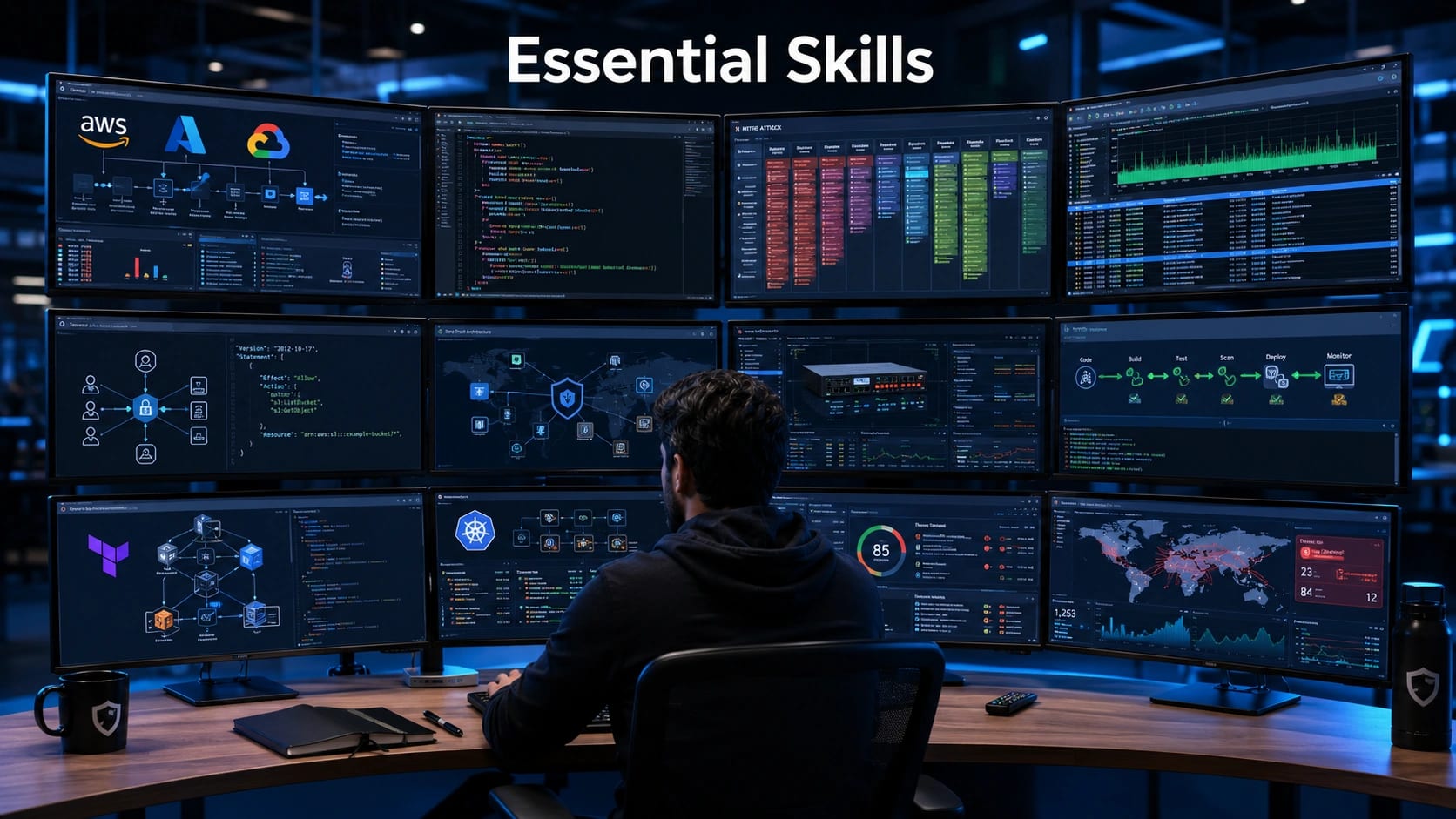
The technical bar for this role has risen sharply over the past three years. Automation, cloud-native infrastructure, and increasingly sophisticated attack tooling mean that engineers who relied on a static skill set are already falling behind. The following areas represent the skills employers are actively screening for in 2026.
Network Security and Protocol Knowledge
A solid grounding in TCP/IP, DNS, TLS, and routing protocols remains non-negotiable. Engineers must understand how traffic flows before they can identify anomalies in it. This includes proficiency with packet analysis tools such as Wireshark and familiarity with common attack vectors like ARP spoofing, DNS poisoning, and BGP hijacking.
Cloud Security Engineering
Cloud environments now host the majority of enterprise workloads, and misconfigurations remain the leading cause of cloud-related breaches. Security engineers need hands-on experience with identity and access management (IAM) policies, security groups, storage bucket permissions, and logging pipelines across platforms such as AWS, Azure, and Google Cloud. Frameworks like the Cloud Security Alliance CCM and the AWS Well-Architected Security Pillar provide structured guidance that engineers are expected to apply directly.
SIEM, SOAR, and Detection Engineering
Writing detection rules is now a core engineering skill rather than a specialist niche. Engineers working with platforms like Splunk, Microsoft Sentinel, or Elastic Security need to author YARA rules, Sigma rules, and KQL queries that catch real attacker behavior without flooding analysts with noise. Understanding the MITRE ATT&CK framework is essential for mapping detection logic to actual threat actor techniques.
Scripting and Automation
Python is the dominant language for security tooling, used for everything from building custom log parsers to automating threat hunting queries. Bash scripting, PowerShell for Windows environments, and basic familiarity with infrastructure-as-code tools like Terraform or Ansible are increasingly expected. Engineers who can automate repetitive tasks free up analyst capacity and reduce response times significantly.
Application Security Fundamentals
With DevSecOps pipelines now standard in most mature engineering organizations, security engineers must understand common application vulnerabilities covered by the OWASP Top 10, basic static and dynamic analysis techniques, and how to integrate security scanning into CI/CD workflows. Familiarity with tools such as Semgrep, Burp Suite, and SonarQube gives engineers the ability to catch issues before they reach production.
Identity and Access Management
Zero-trust architecture has shifted IAM from an IT function to a security-critical engineering discipline. Engineers need to understand OAuth 2.0, SAML, multi-factor authentication implementation, privileged access workstations, and the technical mechanics behind conditional access policies. Poorly configured identity systems are among the most exploited entry points in modern attacks, making this area a priority skill in 2026.
Cyber Security Engineer Salary, Demand, and Career Trajectory
Cyber security engineers are among the highest-paid professionals in the technology sector, and the gap between supply and demand continues to widen. According to industry salary data, the average base salary for a cyber security engineer in the United States sits between $110,000 and $160,000 per year, with senior-level and specialised roles pushing well beyond that range. Professionals working in financial services, defence contracting, and healthcare tend to command the most competitive packages, largely because the consequences of a breach in those sectors carry significant regulatory and financial weight.
The demand picture is equally striking. The global cyber security workforce gap currently stands at over 3.5 million unfilled positions, a figure that has remained stubbornly high for several years. Organisations across every sector are actively recruiting engineers who can move beyond theoretical knowledge and actually build, test, and maintain defensive infrastructure. This persistent shortfall means that qualified engineers rarely stay unemployed for long, and those with certifications, hands-on lab experience, or a background in cloud environments tend to receive multiple offers within weeks of entering the job market.
Career trajectory in this field is steep for those who stay current. Entry-level engineers typically start in roles focused on monitoring, patching, and basic incident response. Within three to five years, strong performers move into architecture or lead engineering positions. From there, paths branch into technical leadership, consultancy, or specialised research. The table below gives a clear view of how compensation and responsibility scale across career stages.
| Career Stage | Typical Title | Average US Salary | Years of Experience |
|---|---|---|---|
| Entry Level | Junior Security Engineer | $75,000 - $95,000 | 0 - 2 years |
| Mid Level | Security Engineer | $110,000 - $140,000 | 3 - 6 years |
| Senior Level | Senior Security Engineer | $145,000 - $180,000 | 7 - 12 years |
| Principal / Lead | Principal Engineer / Architect | $185,000 - $230,000+ | 12+ years |
Cyber Security Engineer Career Paths Compared
Not all cyber security engineering roles are built the same, and understanding the distinctions early can save years of misdirected effort. Some engineers gravitate toward offensive security, spending their careers testing systems, finding weaknesses, and simulating real-world attacks through penetration testing engagements. Others lean toward the defensive side, building detection pipelines, writing security policies, and managing the tooling inside a Security Operations Centre. A third group focuses on infrastructure and cloud security, ensuring that architecture decisions made during development do not create vulnerabilities that surface later in production environments.
The choice between these paths often comes down to personality and skill preference as much as it does market opportunity. Offensive roles tend to attract engineers who enjoy creative problem-solving and thinking like an attacker. Defensive and SOC-oriented roles suit those who prefer analytical work, pattern recognition, and process building. Cloud security engineering has grown rapidly as a discipline of its own, requiring comfort with platforms, identity and access management, and infrastructure-as-code tooling. The table below maps out how these paths differ across key dimensions.
| Career Path | Core Focus | Key Skills Needed | Typical Certifications |
|---|---|---|---|
| Offensive Security | Penetration testing, red teaming | Exploitation, scripting, social engineering | OSCP, CEH, GPEN |
| Defensive / Blue Team | Threat detection, incident response | SIEM, forensics, log analysis | GCIH, GCFA, CySA+ |
| Cloud Security | Cloud architecture, IAM, DevSecOps | AWS/Azure/GCP, IaC, policy automation | CCSP, AWS Security, GCPN |
| Security Architecture | Design, risk frameworks, compliance | Network design, risk assessment, governance | CISSP, SABSA, TOGAF |
Common Mistakes Cyber Security Engineers Make Early in Their Career
Early-career engineers often make the mistake of chasing certifications without building practical, hands-on experience alongside them. A wall of credentials means little if an engineer cannot configure a firewall rule under pressure, investigate a suspicious process on a live endpoint, or explain clearly to a non-technical stakeholder why a particular vulnerability poses a genuine business risk. Certifications open doors, but applied knowledge keeps engineers employed and progressing. Setting up home labs, participating in Capture the Flag competitions, and contributing to open-source security tooling are all ways to close that gap quickly.
Another common error is working in isolation. Cyber security does not operate in a vacuum, and engineers who fail to build strong working relationships with development, IT operations, and business teams often find their recommendations ignored or deprioritised. Communication skills matter far more than most new engineers expect. Writing a clear, concise vulnerability report that a project manager can actually act on is just as valuable as the technical skill that found the vulnerability in the first place.
Several other early-career pitfalls are worth naming directly:
- Focusing too narrowly on one tool or vendor instead of developing transferable, platform-agnostic skills
- Neglecting the business and compliance context behind security decisions
- Underestimating the importance of documentation and process consistency
- Avoiding difficult conversations about risk with senior stakeholders
- Failing to stay current with threat intelligence, new attack techniques, and emerging vulnerabilities
- Treating security as a purely technical problem rather than a people and process challenge as well
Engineers who recognise these patterns early and correct them tend to accelerate through the mid-level stage far faster than peers who rely on technical skills alone. Building a reputation as someone who communicates clearly, documents thoroughly, and understands the business impact of security work is what separates strong engineers from genuinely influential ones.
Certifications That Boost Your Cyber Security Engineer Career
Certifications validate your technical knowledge and signal credibility to employers. For cyber security engineers, the right credentials can mean the difference between landing a junior role and securing a senior position with significantly higher compensation.
- CompTIA Security+, a widely recognized entry-level certification covering core security concepts, network threats, and risk management principles
- Certified Ethical Hacker (CEH) demonstrates hands-on knowledge of offensive security techniques and penetration testing methodologies
- CISSP (Certified Information Systems Security Professional), considered the gold standard for experienced engineers managing enterprise security programs
- AWS Certified Security Specialty, ideal for engineers working in cloud environments who need to prove cloud-native security competence
- OSCP (Offensive Security Certified Professional), a highly practical, exam-based certification valued by penetration testers and red team specialists
- CISM (Certified Information Security Manager, suited for engineers moving into leadership or governance-focused roles within organizations
| Certification | Level | Best For | Avg. Salary Impact |
|---|---|---|---|
| CompTIA Security+ | Entry | Career starters | +$5K, +$10K |
| CEH | Intermediate | Ethical hackers | +$10K, +$15K |
| CISSP | Advanced | Senior engineers | +$20K, +$30K |
| OSCP | Advanced | Penetration testers | +$15K, +$25K |
| AWS Security Specialty | Intermediate | Cloud engineers | +$12K, +$18K |
Cyber Security Engineer vs. Other Security Roles
Many job titles in the security field overlap in day-to-day responsibilities, making it confusing for hiring managers and job seekers alike. Understanding the distinctions helps organizations hire the right person and helps professionals position their skills accurately.
- Cyber Security Engineer vs. Security Analyst: Engineers build and maintain security systems, while analysts monitor those systems and investigate incidents after they occur
- Cyber Security Engineer vs. Penetration Tester: Engineers focus on defensive architecture and system hardening, while penetration testers actively attempt to exploit vulnerabilities on a controlled basis.
- Cyber Security Engineer vs. Security Architect: architects design high-level security frameworks and policies, while engineers implement and operationalize those designs in real environments.
- Cyber Security Engineer vs. DevSecOps Engineer: DevSecOps specialists embed security directly into software pipelines and CI/CD workflows, while security engineers may work across broader infrastructure domains.
| Role | Primary Focus | Offensive or Defensive | Typical Experience Level |
|---|---|---|---|
| Cyber Security Engineer | Build and maintain defenses | Defensive | Mid to Senior |
| Security Analyst | Monitor and respond | Defensive | Entry to Mid |
| Penetration Tester | Simulate attacks | Offensive | Mid to Senior |
| Security Architect | Design security frameworks | Defensive | Senior |
| DevSecOps Engineer | Secure software pipelines | Both | Mid to Senior |
How to Hire a Cyber Security Engineer for Your Organization
Finding the right cyber security engineer requires more than reviewing a list of certifications. Organizations need someone whose technical depth aligns with their specific infrastructure, threat exposure, and long-term security goals.
- Define your security gaps first; identify whether you need expertise in cloud security, network defense, application security, or incident response before writing the job description.
- Prioritize hands-on experience; candidates who have worked in real incident scenarios or built security controls from scratch often outperform those with credentials alone.
- Test practical skills: use scenario-based assessments or technical challenges during interviews to evaluate how candidates respond to realistic threat situations.
- Look for communication ability; a strong engineer must translate complex vulnerabilities into clear business risk for non-technical stakeholders and leadership teams.
- Consider cultural fit within your security posture; engineers who align with your organization's risk tolerance and compliance requirements integrate more effectively into existing teams.
- Engage specialist consulting firms; organizations like Cyberlad provide expert security consulting and can help assess whether you need a full-time hire or an outsourced security function to meet your needs.
Final Thoughts
A cybersecurity engineer is one of the most valuable professionals an organization can have on its side. From designing resilient network architectures to responding to active threats, these specialists sit at the intersection of technical precision and business protection. As attacks grow more sophisticated and regulatory requirements become stricter, the demand for qualified engineers with broad, hands-on expertise will only continue to climb.
Whether you are building a career in cyber security or looking to strengthen your organization's defenses, understanding what a cyber security engineer does, what skills they need, and how they compare to other roles is an essential first step. If your business needs expert support in threat intelligence, SOC consulting, penetration testing, or cloud security, the team at Cyberlad is ready to help you build a security posture that holds up under real-world pressure.
Frequently Asked Questions
What does a cyber security engineer do daily?
Daily tasks typically include monitoring security alerts, reviewing system configurations, patching vulnerabilities, analyzing threat intelligence feeds, and collaborating with IT and development teams. Engineers may also respond to active incidents, conduct internal audits, and update security policies to reflect new risks or compliance requirements facing the organization.
How long does it take to become a cyber security engineer?
Most professionals take three to five years to reach a cyber security engineer role, depending on their educational background and prior IT experience. Those with a computer science degree may progress faster, while career changers from other technical fields often spend one to two years building foundational security skills before transitioning successfully.
Is coding knowledge required to work as a cyber security engineer?
Coding is not always mandatory, but it is a significant advantage. Familiarity with Python, Bash, or PowerShell helps engineers automate security tasks, analyze malware, and build custom detection rules. Engineers working in application security or DevSecOps environments will likely need stronger programming skills than those focused on network or infrastructure security roles.
What industries hire the most cyber security engineers?
Financial services, healthcare, government, defense, and technology companies are among the largest employers of cyber security engineers. These industries handle sensitive data and face strict regulatory requirements, making qualified security professionals essential. Cloud service providers and large enterprises across almost every sector are also actively expanding their internal security engineering teams.
What is the average salary for a cyber security engineer?
Salaries vary by location, experience, and specialization. In the United States, cyber security engineers typically earn between $95,000 and $160,000 per year, with senior or specialized roles often exceeding that range. Certifications like CISSP and OSCP, along with cloud security expertise, tend to push compensation toward the higher end of the market.