Cybersecurity projects for beginners are practical, hands-on builds like password checkers, port scanners, and encryption tools that help you learn how real security systems work by creating them yourself.
If you want to break into cybersecurity, you can’t rely on theory alone. You need to build things, test them, break them, and understand why they fail. That’s how you develop real security instincts.
You might already know the basics, like what hacking is or how encryption works in theory. But until you implement these ideas yourself, they stay abstract. Projects turn those abstract ideas into a real understanding.
When you build your own tools, even simple ones, you start thinking like both an attacker and a defender. You begin to see patterns, weaknesses, and behaviors that most beginners completely miss.
This article walks you through beginner cybersecurity projects in depth. Not just what to build, but how each project works, what you should focus on, and how it actually strengthens your skills.
Check out our latest blog on the Best Tor Search Engine for Privacy (2026)
Why Cybersecurity Projects Are the Fastest Way to Learn

When you rely only on tutorials or videos, your brain recognizes patterns but doesn’t truly understand them. You might feel like you’re learning, but when it’s time to solve a real problem, you get stuck.
Projects change that completely.
When you build something yourself, you’re forced to:
- Make decisions instead of following instructions
- Debug issues when things don’t work
- Understand why a concept exists, not just what it is
For example, reading about hashing might make sense. But when you build a file integrity checker, you realize how hashes behave, why collisions matter, and how even a small file change creates a completely different output.
Projects also simulate real-world scenarios. In cybersecurity, that’s critical because:
- Attacks are unpredictable
- Systems behave differently under stress
- Security flaws often appear in edge cases
By building projects, you train yourself to handle uncertainty.
Another major advantage is portfolio value. When you apply for internships or jobs, saying “I learned cybersecurity” is weak. Showing a working port scanner or encryption tool is powerful.
You demonstrate:
- Practical skills
- Problem-solving ability
- Initiative
That’s what makes projects the fastest and most effective way to grow.
Check out our latest blog on MGM Cyber Attack Las Vegas: Timeline, Losses (2026)
Password Strength Checker: Learn How Attackers Think
This is one of the most important beginner projects because it introduces you to the mindset of attackers.
At first, it might seem simple. You check if a password is long enough or includes special characters. But when you go deeper, you start understanding why those rules exist.
When building a password strength checker, you need to analyze:
- Length of the password
- Variety of characters such as uppercase, lowercase, numbers, and symbols
- Predictability, like common words or repeated patterns
You quickly realize that not all “complex-looking” passwords are secure. For example, a password like “Password123!” might pass basic checks but is still weak because it follows common patterns.
As you improve your project, you can add:
- Entropy calculation to estimate how hard it is to crack a password
- Detection of dictionary words
- Feedback suggestions to guide users
This project teaches you about real attack methods:
- Brute force attacks that try every possible combination
- Dictionary attacks that use common passwords
- Credential stuffing using leaked databases
You start thinking like someone trying to break passwords, which is exactly what cybersecurity requires.
From a technical perspective, you also learn:
- Input validation
- Conditional logic design
- Basic user interface handling
This project is your entry point into security thinking.
Keylogger Project: Understand How Data Gets Stolen

This project introduces you to how attackers capture sensitive information. It’s important that you only build and test this in a controlled environment for educational purposes.
When you create a keylogger, you’re essentially writing a program that records keystrokes. That might sound simple, but it reveals a lot about how systems work.
You’ll need to understand:
- How operating systems handle keyboard input
- How background processes run
- How data can be stored or transmitted
As you build it, you start realizing how dangerous such tools can be. A simple keylogger can capture:
- Passwords
- Credit card numbers
- Private messages
This project helps you understand why endpoint security is critical. Antivirus software, system permissions, and monitoring tools exist specifically to detect and prevent such behavior.
From a learning perspective, you gain:
- Insight into malware behavior
- Awareness of ethical boundaries
- Understanding of system-level programming
It also changes how you think as a user. You become more cautious about:
- Installing unknown software
- Granting permissions
- Using shared devices
This project bridges the gap between theory and real-world threats.
Port Scanner: Build Your Foundation in Networking Security
If you want to move into penetration testing or network security, this project is essential.
Every device connected to a network has ports. These ports act like doors that allow communication. Some are open, some are closed, and some are filtered.
When you build a port scanner, you create a tool that:
- Sends requests to different ports
- Checks which ones respond
- Identifies open services
At first, you might just scan a range of ports and print which ones are open. But as you improve, you can:
- Detect service types running on ports
- Add timing controls to avoid detection
- Handle different protocols like TCP and UDP
This project teaches you how attackers map a target system before launching an attack.
You learn:
- How networks communicate
- How services expose entry points
- Why opening ports can be risky
From a technical standpoint, you gain:
- Socket programming experience
- Understanding of network protocols
- Debugging skills in real-time communication
This project is a major step toward advanced cybersecurity roles.
File Integrity Checker: Detect Unauthorized Changes

This project focuses on defense rather than attack. It teaches you how to detect when something has been altered.
You build a system that:
- Takes a file
- Generates a hash value
- Stores it securely
- Compare it later to detect changes
Even a tiny change in a file produces a completely different hash. That’s what makes hashing powerful.
As you develop this project, you understand:
- How malware modifies files
- How systems detect tampering
- Why integrity is critical in security
You can expand the project by:
- Monitoring multiple files
- Creating alerts for changes
- Logging activity over time
This is similar to what real security systems do in organizations.
You also gain knowledge of:
- Cryptographic hash functions
- File handling operations
- Monitoring and alerting systems
This project shifts your mindset toward defensive security.
Basic Encryption Tool: Learn How Data Is Protected
Encryption is one of the core pillars of cybersecurity. Without it, secure communication wouldn’t exist.
In this project, you build a tool that:
- Converts readable data into an encrypted format
- Allows it to be decrypted with a key
You might start with simple techniques, but the goal is to understand the logic behind encryption.
As you progress, you explore:
- Symmetric encryption, where the same key is used
- How keys are generated and stored
- Why encryption strength matters
You begin to see how encryption is used in:
- Messaging apps
- Online banking
- Secure websites
This project helps you understand both sides:
- How data is protected
- How weak encryption can be broken
Technically, you learn:
- Algorithm implementation
- Secure data handling
- Logical transformations
It builds a strong foundation for more advanced cryptography.
Phishing Detection Tool: Recognize Real-World Attacks
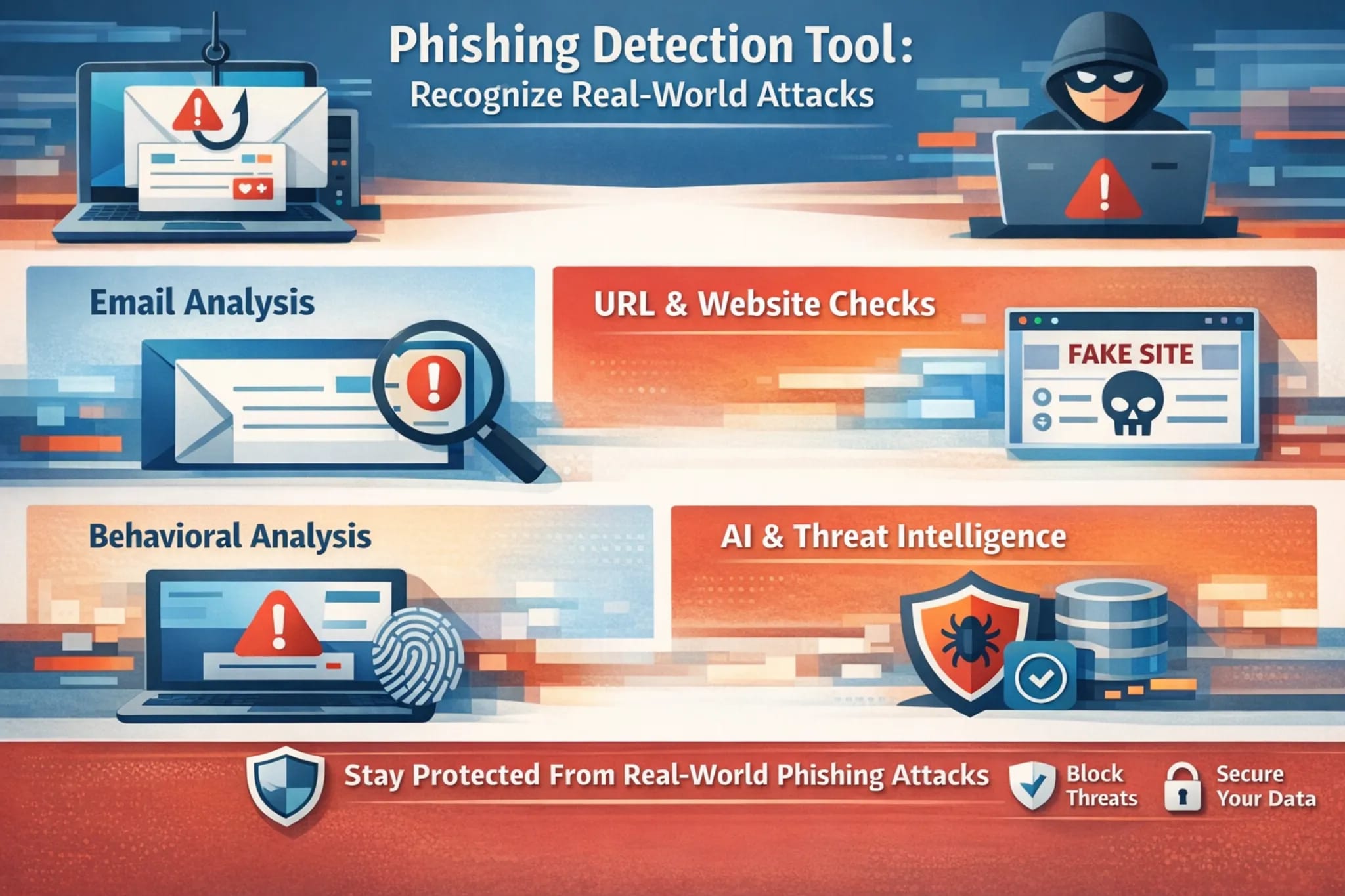
Phishing is one of the most common and effective cyber attacks because it targets human behavior.
In this project, you build a system that analyzes:
- URLs
- Email content
- Domain patterns
You look for signs like:
- Suspicious domain names
- Fake login pages
- Urgent or manipulative language
As you develop this tool, you start thinking like both:
- An attacker crafting a convincing scam
- A defender trying to detect it
You can enhance your project by:
- Adding pattern recognition rules
- Using basic machine learning concepts
- Building a scoring system for risk
This project teaches you:
- Social engineering tactics
- Threat detection techniques
- Real-world attack patterns
It’s one of the most practical cybersecurity skills you can develop early.
Comparison Table: Choosing the Right Project
| Project Name | Difficulty | Focus Area | Best Starting Point |
|---|---|---|---|
| Password Checker | Easy | Logic and security | Yes |
| Keylogger | Medium | System behavior | After basics |
| Port Scanner | Medium | Networking | Strong choice |
| File Integrity Checker | Medium | Defensive security | Recommended |
| Encryption Tool | Medium | Cryptography | Essential |
| Phishing Detector | Medium | Threat analysis | Practical use |
How to Choose the Right Cybersecurity Project
You don’t need to build everything at once. The best approach is to align your projects with your goals.
If you’re just starting, focus on projects that teach fundamentals. Avoid jumping into complex topics too early.
Ask yourself:
- Do you enjoy networking?
- Are you more interested in defense or attack?
- Do you prefer coding logic or system-level work?
Start with one project, complete it fully, and understand every part of it. Depth matters more than quantity.
Tools and Technologies You Can Use
You don’t need advanced tools to begin.
Start with:
- Python for scripting
- Built-in libraries for networking and hashing
- Command-line interfaces
As you improve, you can explore advanced tools, but your foundation should always come from building things yourself.
Pros and Cons of Learning Through Projects
Pros
- You gain real, practical skills
- You build a portfolio that proves your ability
- You understand concepts deeply
- You become more confident in solving problems
Cons
- It can feel difficult at the beginning
- Debugging takes time
- You may get stuck without guidance
These challenges are part of the learning process. They’re what make you better.
Common Mistakes Beginners Make
Many beginners slow their progress by making avoidable mistakes.
Some of the most common include:
- Starting with projects that are too advanced
- Copying code without understanding it
- Ignoring basic concepts like networking
- Testing tools in unsafe environments
Focus on learning, not rushing.
Real-World Impact of These Projects
These projects are not just practice exercises. They represent real tasks performed by cybersecurity professionals.
When you build them, you’re learning how to:
- Identify vulnerabilities
- Protect systems
- Analyze threats
These are the exact skills used in real jobs.
Final Thoughts
Cybersecurity is not something you master overnight. It’s a skill you build step by step through experience.
Projects give you that experience. They force you to think, experiment, and understand systems in a way that passive learning never can.
Start small, stay consistent, and focus on understanding everything you build. Over time, those small projects will turn into real expertise.
And that’s what sets you apart.
Frequently Asked Questions
What is the best first cybersecurity project?
A password strength checker is one of the best starting points because it introduces core security concepts.
Can beginners build cybersecurity tools without experience?
Yes, as long as you start with simple projects and learn step by step.
How long does it take to complete a project?
It depends on complexity, but beginner projects can take a few days to a couple of weeks.
Do I need advanced programming skills?
No, basic knowledge is enough to start. You’ll improve as you build.
Are these projects useful for getting a job?
Yes, they demonstrate practical skills and help you stand out to employers.