What Is an Insider Threat Cyber Awareness?
What is an Insider Threat Cyber Awareness?
It’s the practice of teaching employees how to recognize, prevent, and respond to risks caused by individuals within an organization, whether due to careless mistakes or malicious actions. Cyber awareness reduces the chances of data leaks, fraud, and breaches caused by trusted insiders.
Picture this: You’ve invested years building your business. Clients trust you. Your team feels like family. Then one day, everything changes.
It’s not an external hacker who ruins things. It’s your own employee. Perhaps they clicked on a fake email, shared the wrong file, or, in frustration, walked away with your customer data.
That’s the reality of insider threats.
Did you know that more than 60% of breaches involve insiders? When I first saw that number, I was shocked.
Like you, I assumed the biggest danger came from shadowy hackers in hoodies. But here’s the truth: the real risk might be sitting in the cubicle next to you or working from home on a company laptop.
This is where What Is an Insider Threat Cyber Awareness? becomes crucial.
Because awareness is what helps you and your people turn mistakes into lessons instead of disasters.
Read More On: What Does A Cyber Threat Intelligence Analyst Do?
Understanding Insider Threats
Let’s make this simple.
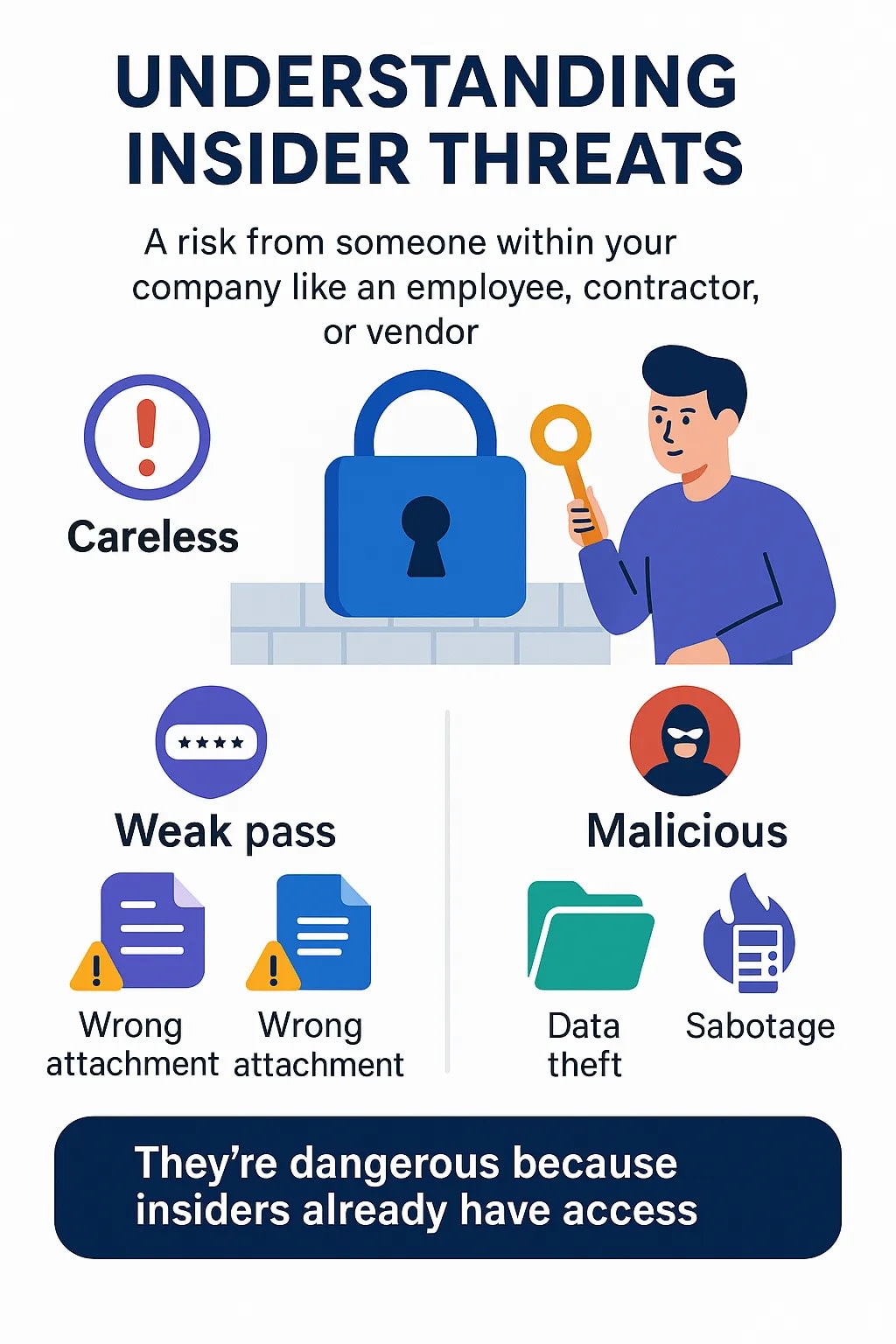
An insider threat is any risk created by someone who already has access to your company’s systems, data, or facilities. That could be an employee, a contractor, a freelancer, or even a vendor you trust with sensitive information.
Sometimes, the threat is careless but unintentional:
- An employee reuses the same weak password across accounts.
- Someone attaches the wrong file and sends it to a client.
- A staff member leaves a laptop unlocked at the airport.
Other times, the threat is deliberate:
- A frustrated employee copies customer data before quitting.
- A contractor sells access credentials to competitors.
- A team member sabotages systems out of anger or revenge.
What makes insider threats so dangerous is one fact: they already have the keys.
Unlike external hackers who spend weeks trying to break in, insiders don’t need to. They’re already inside your walls.
They know the systems, the processes, and sometimes the weaknesses no one else sees.
Here’s where your question What is an Insider Threat Cyber Awareness? comes into play. Awareness is what helps your people recognize the difference between “normal activity” and behavior that signals a risk.
Think about it: a file download, a late-night login, a quick email sent in a rush. To the untrained eye, these look routine. To someone who understands what is an Insider Threat Cyber Awareness is, they could be early warning signs of trouble.
That’s why awareness matters. Without it, insider threats blend into everyday noise until the damage is done. With it, your team becomes your strongest line of defense.
Read More On: How to block radiation from wifi router?
What Is an Insider Threat Cyber Awareness?
Let’s unpack this in simple terms.
What Is an Insider Threat Cyber Awareness? It’s the process of teaching and training your employees to recognize, prevent, and respond to risks that come from within your own company.
These risks don’t always come from shady outsiders. Often, they’re the result of people you already know and trust, your staff, your contractors, or your vendors.
Cyber awareness is more than a training program. It’s a mindset. It’s about creating a culture where your people understand that their everyday actions, sending emails, sharing files, and clicking links directly impact the safety of your business.
Think of it this way: you wouldn’t leave the doors of your office wide open overnight. You’d lock them, check the windows, and set the alarm.
In the digital world, insider threat cyber awareness is the same thing. It’s the act of locking those invisible doors by building habits like:
- Use strong, unique passwords.
- Checking emails before clicking attachments.
- Reporting unusual behavior instead of ignoring it.
Here’s the important part: What is an Insider Threat Cyber Awareness? It’s not about making your team feel like suspects. It’s about empowering them.
When employees understand the risks, they feel responsible and prepared, not afraid. They stop being the weak link and become part of your strongest defense.
And here’s why it matters for you: insiders don’t need to “break in.” They already have access. Without awareness, small actions like clicking on a phishing email can lead to massive breaches.
With awareness, those same actions turn into quick interventions that protect your data, your reputation, and your bottom line.
At its core, What Is an Insider Threat Cyber Awareness? is about giving your people the tools to protect the company as if it were their own. It turns your workforce from potential risks into everyday guardians of your business.
Read More On: Deep Search Engine: Explore Beyond Google
Types of Insider Threats
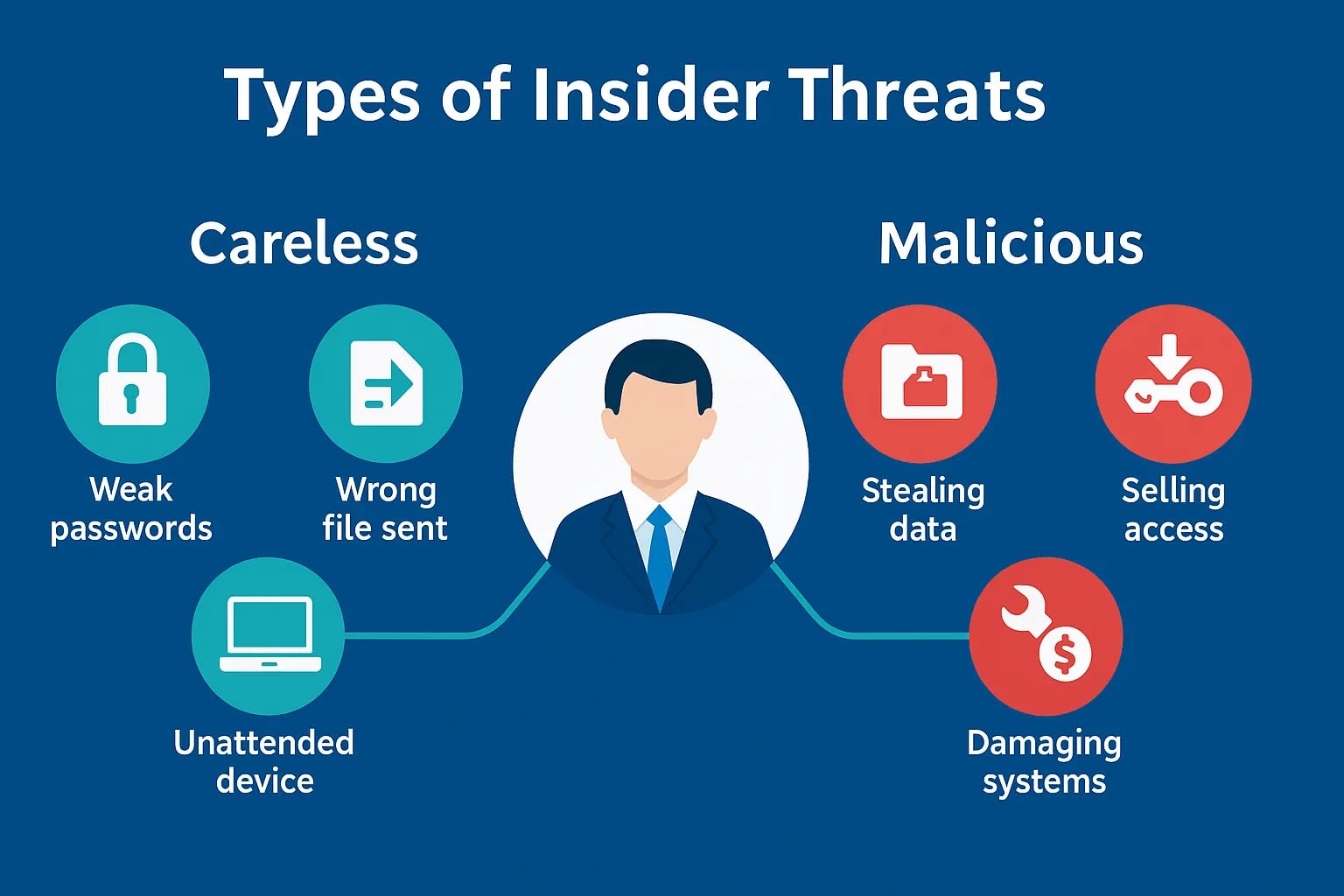
Not all insider threats look the same. Some come from honest mistakes. Others come from bad intentions.
And some don’t even involve the insider knowing they’re part of the problem. To protect your business, you need to recognize the different shapes these threats can take.
1. Careless Employees
Most insider threats aren’t malicious; they’re accidental. A well-meaning employee can still put your company at risk simply by being careless.
- Using weak passwords or reusing the same one across accounts.
- Forgetting to log out of a work device at the airport.
- Forwarding sensitive files to the wrong person in a hurry.
I once saw a manager accidentally send payroll data to an external client because she had two email windows open. She didn’t mean to, but the damage was real.
The wrong attachment cost her company both money and trust.
Carelessness isn’t evil, but it can be just as costly as a deliberate attack.
2. Malicious Insiders
This is the nightmare scenario. Malicious insiders are employees or sometimes contractors who knowingly choose to harm the business.
- Stealing customer records to sell to competitors.
- Sabotaging systems after a conflict with management.
- Downloading intellectual property before leaving for another job.
One story I remember: an IT admin felt overlooked for promotion. Before resigning, he created backdoor accounts to access the company’s data. Months later, competitors had sensitive information. It wasn’t an accident; it was revenge.
Malicious insiders are rare, but when they strike, the consequences are devastating.
Read More On: Cyber Security Bootcamp: Top 10 Programs & Labs
3. Compromised Accounts
Sometimes the insider isn’t aware at all. A hacker compromises their account and uses it as a weapon.
- Clicking on a phishing link gives attackers access.
- Having credentials stolen through malware.
- Falling for a fake login page.
To the company’s systems, the activity looks like it’s coming from a trusted employee. That’s what makes it dangerous.
I’ve seen businesses blame staff for breaches when the truth was that attackers hijacked their accounts.
These cases are tough; you’re fighting an external attacker using an insider’s face.
Read More On: Clearnet vs Darknet: Key Differences Explained
4. Third-Party Vendors and Contractors
Your security doesn’t stop at your employees. Outsiders who have access to your systems, contractors, freelancers, or vendors can create insider-level risks.
- A contractor leaves default passwords unchanged in cloud systems.
- A vendor’s staff member uses shared login credentials across clients.
- A trusted partner accidentally exposes data through poor practices.
One startup I knew outsourced its IT management. The vendor skipped security updates, and hackers slipped in. The startup faced the fallout, not the vendor.
Trusting outsiders is part of doing business, but without cyber awareness, that trust can backfire.
Read More On: How can you prevent viruses and malicious code?
5. Remote Work Insider Risks (Unique)
Here’s a modern angle many businesses forget: remote work has created new types of insider threats.
- Employees working from coffee shops on public Wi-Fi.
- Family members using company laptops at home.
- Staff mixing personal and work accounts on the same devices.
I once heard of a case where a child installed a game on their parent’s work laptop. That “game” was malware. Suddenly, the company’s files were compromised, and the employee had no idea until it was too late.
Remote and hybrid work blur the line between home and office, creating risks that traditional security models never considered.
Read More On: Cyber Security Monitoring: Best Practices Guide 2026
Why This Matters
Here’s the takeaway: insider threats aren’t always about “bad people.” Many times, they’re good people making bad choices without realizing the consequences.
That’s why insider threat cyber awareness is critical. It equips your team to spot these risks before they snowball into disasters.
Protect your personal information before hackers misuse it by exploring the best Dark Web Monitoring Tools that scan hidden marketplaces and alert you instantly.
Why Cyber Awareness Matters for You
Running a business already means juggling a dozen worries. Sales. Deadlines. Customers. Bills. Security can feel like just another item on the list until it suddenly becomes the one that stops everything else.
Think about it for a second.
- Your employees handle client data every single day.
- Your finance team moves money across accounts.
- Your IT staff holds the keys to your systems.
If any one of them makes a mistake or worse, acts maliciously, the fallout doesn’t just land on them. It lands on you.
You’re the one explaining to angry clients why their information leaked. You’re the one covering the losses. You’re the one trying to rebuild trust.
This is where the question What is an Insider Threat Cyber Awareness? becomes so important. Because awareness turns your employees from potential risks into active defenders.
It’s not about fear. It’s about giving people the tools to do their jobs without accidentally putting the company in danger.
Here’s why it matters to you as a business owner or leader:
- Reputation is fragile. One breach can undo years of trust in a single day.
- Money isn’t the only cost. Fines, lawsuits, and lost deals add up quickly.
- Small businesses are easier targets. Hackers know you don’t have the same resources as big corporations, and insider mistakes make the job even easier.
- You set the tone. If leadership treats cyber awareness as optional, employees will too.
The truth is simple: external hackers might be loud, but insiders are silent. Without awareness, you may not even notice the threat until it’s too late. With awareness, your team becomes your early-warning system.
That’s why cyber awareness isn’t “nice to have.” It’s the frontline defense that keeps your business running.
Read More On: Candle Search Engine: Lightning Fast Private Search
When Insider Threats Get Real
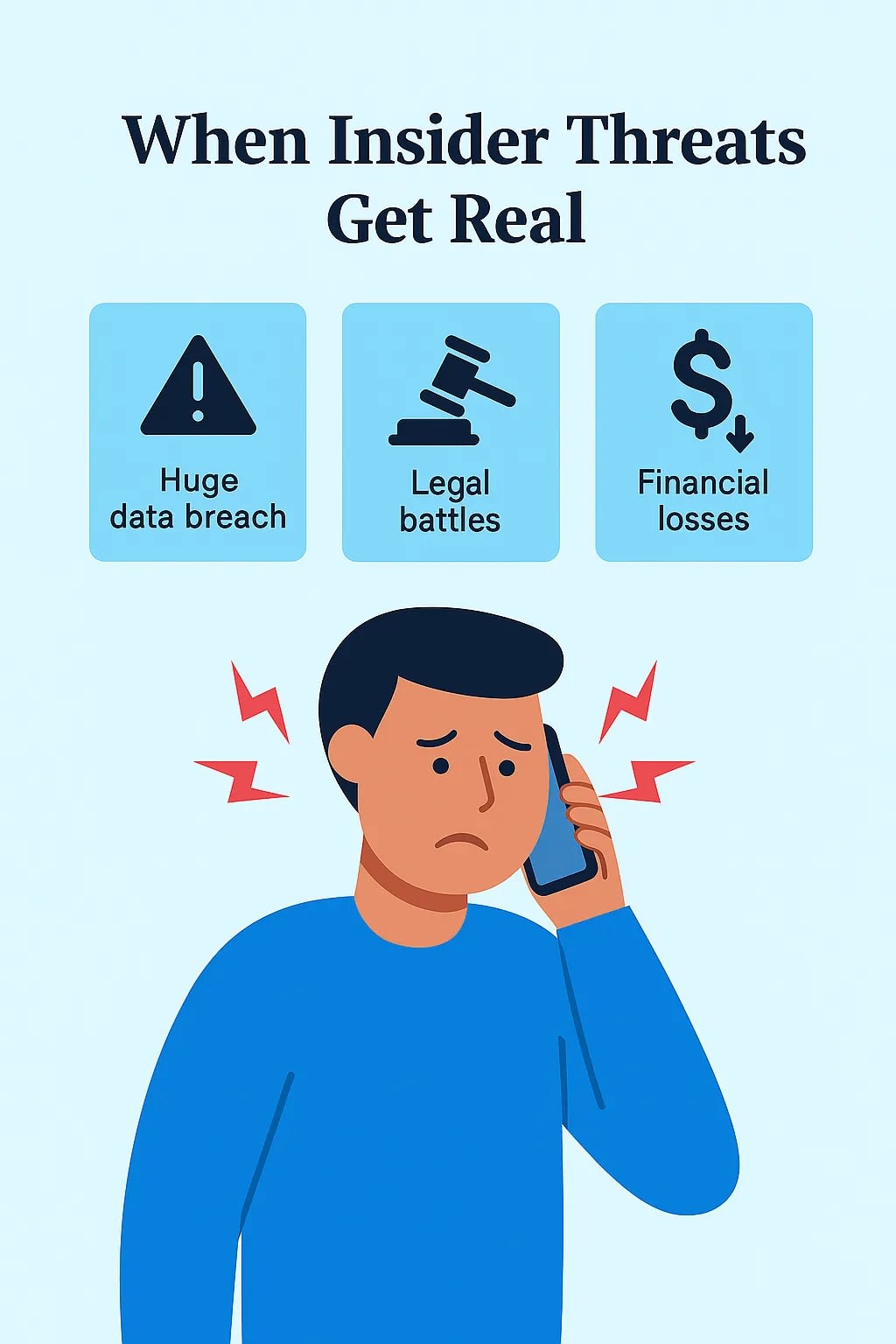
It’s easy to think of insider threats as abstract numbers in a report or warnings from IT. But when you see how they play out in real life, the danger feels much closer to home. These stories aren’t from movies.
They’re situations I’ve seen or heard about that could happen to any business, including yours.
The Accidental Click
A manager received what looked like a normal invoice. Busy with back-to-back meetings, she clicked the attachment without a second thought.
Within minutes, malware spread through the company’s network. Operations stalled for days. The cleanup cost tens of thousands, all because of one rushed click.
This wasn’t sabotage. It was fatigue and distraction. That’s what makes accidents like this so hard to predict and so painful to repair.
The Frustrated Employee
At another firm, a staff member felt ignored and underappreciated. Quietly, he copied sensitive client lists before resigning.
He sold the information to a competitor for quick cash. By the time leadership found out, months of trust had evaporated, and long-time clients were considering walking away.
Sometimes, insider threats aren’t about cyber skills at all. They’re about emotions, grudges, and broken trust.
The Contractor’s Mistake
A growing startup outsourced IT support to a contractor. That contractor left default passwords unchanged on critical cloud systems.
Hackers discovered the weakness, broke in, and stole sensitive data. The startup took the blame.
The founder told me later, “I never imagined the risk would come from someone we paid to keep us safe.”
The Remote Work Oversight (Unique)
One employee worked from home on a shared laptop. His teenage son installed a free game that carried hidden malware.
Overnight, the company’s internal files were exposed. Nobody realized until the system started behaving strangely.
Remote and hybrid work bring convenience, but they also blur the line between professional security and personal habits.
Read More On: How Do Macros Pose A Cybersecurity Risk?
Why These Stories Matter
Here’s the pattern: none of these threats looked like big Hollywood-style cyberattacks. No hooded hacker in a dark basement. They were ordinary moments: a click, a file, a forgotten password, a family laptop.
That’s why the question What Is an Insider Threat Cyber Awareness? is so critical. With awareness, these moments turn into warnings your team can spot. Without it, they turn into costly disasters.
Spotting Insider Threats Early
Insider threats don’t wave red flags. But the signs are there if you know what to look for.
- Unusual access: Employees pulling files outside their role.
- Odd hours: Logins in the middle of the night.
- Declining morale: Unhappy employees cut corners or worse.
- Large data movement: USB copies, mass downloads, odd transfers.
- Weak habits: Reusing passwords, falling for phishing again and again.
Here’s the catch: spotting isn’t just IT’s job. Cyber awareness means your whole team learns what “normal” looks like and raises a flag when things feel off.
Read More On: St Paul Cyber Attack: What Really Happened
Building a Culture of Awareness
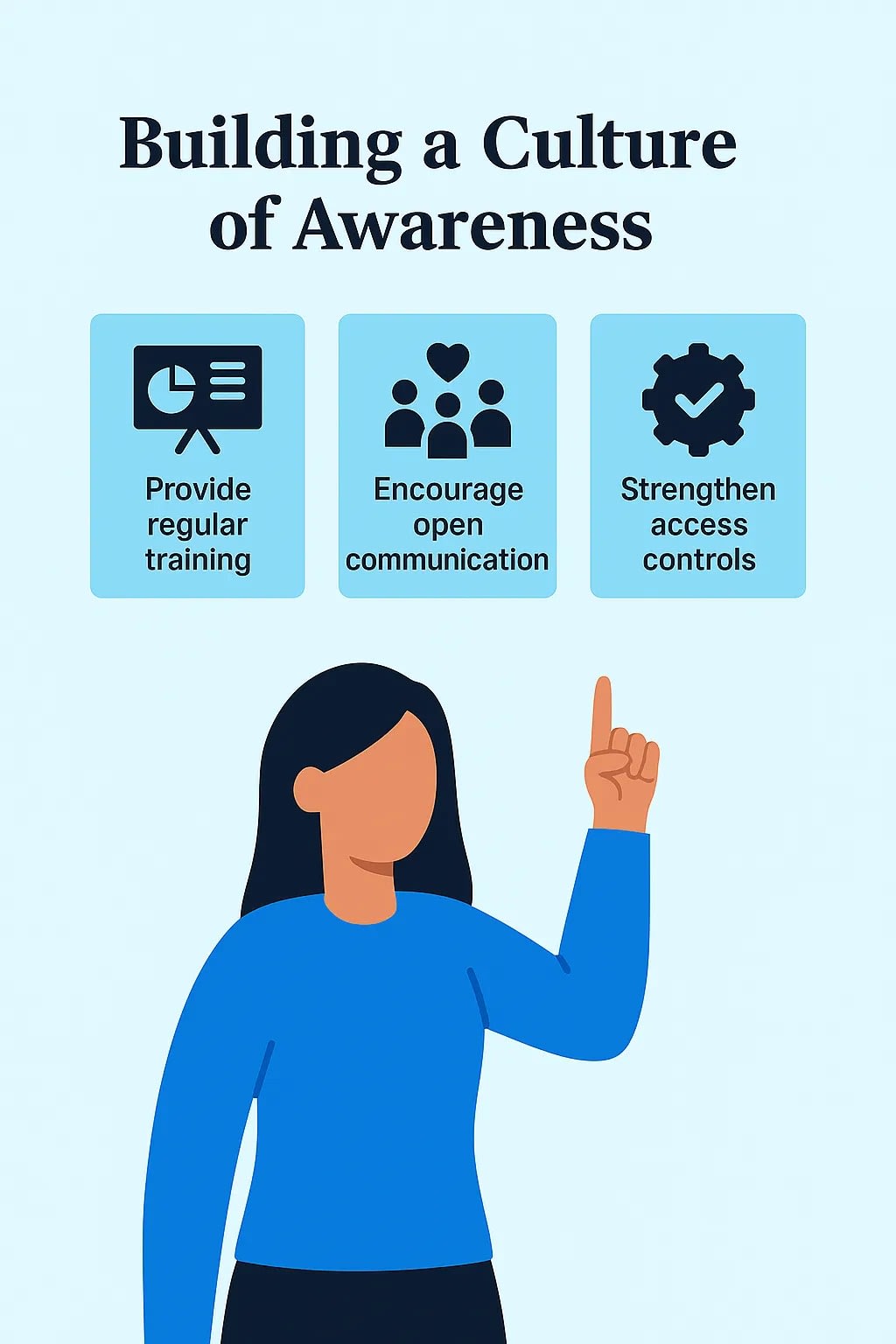
Workshops and handouts alone don’t protect your business. Cyber awareness isn’t a one-time lesson; it’s a culture you build day by day.
And when you ask yourself, What is an Insider Threat Cyber Awareness?, the answer isn’t just “training.” It’s creating an environment where security is woven into the way your people think and work.
Here’s how you can build that culture:
1. Make It Personal
Policies and rules sound distant. What resonates is real impact. Show your team how one careless click could mean lost jobs, angry clients, or damage to the company’s reputation.
When security feels personal, people take it seriously.
2. Reward Good Behavior
Positive reinforcement works better than punishment. Celebrate employees who report suspicious emails, update passwords on time, or follow safe practices.
Recognition, even something as simple as a thank-you in a team meeting, builds momentum.
3. Encourage Honesty Over Fear
If employees are afraid of being punished, they’ll hide mistakes. Hidden mistakes are dangerous.
Create an open-door policy where people can admit slip-ups without fear. When mistakes are reported early, you can fix problems before they escalate.
4. Lead by Example
Your team watches what leaders do more than what they say. If managers reuse passwords or ignore updates, employees will do the same.
Leaders must model the security habits they want the team to follow.
5. Address Burnout and Morale (Unique)
Here’s something many companies overlook: disengaged or burnt-out employees are more likely to cut corners or ignore security rules.
Stress, resentment, or exhaustion can turn into risky behavior. Investing in well-being is part of your security strategy. A cared-for team is a careful team.
6. Keep Awareness Alive
Cyber threats change fast. What worked last year may not work today. Refresh awareness regularly with short monthly reminders, quick check-ins during team meetings, or sharing a “tip of the week.”
Think of it like health and safety drills, but for the digital world.
Read More On: Which Of The Following Is Not A Function Of A Cybersecurity Framework?
Why Culture Wins
Culture is what keeps awareness alive when no one’s watching. A training video might last an hour, but culture lasts all year.
When employees feel responsible and empowered, they shift from being potential risks to everyday defenders of your business.
And that’s the true answer to What Is an Insider Threat Cyber Awareness? It’s not suspicion. It’s not surveillance. It’s a culture where everyone locks the digital doors together.
Protect Your Business from Insider Threats
Your people are your strongest defense. Learn how insider threat cyber awareness can keep your team and data safe
Practical Steps You Can Start Today
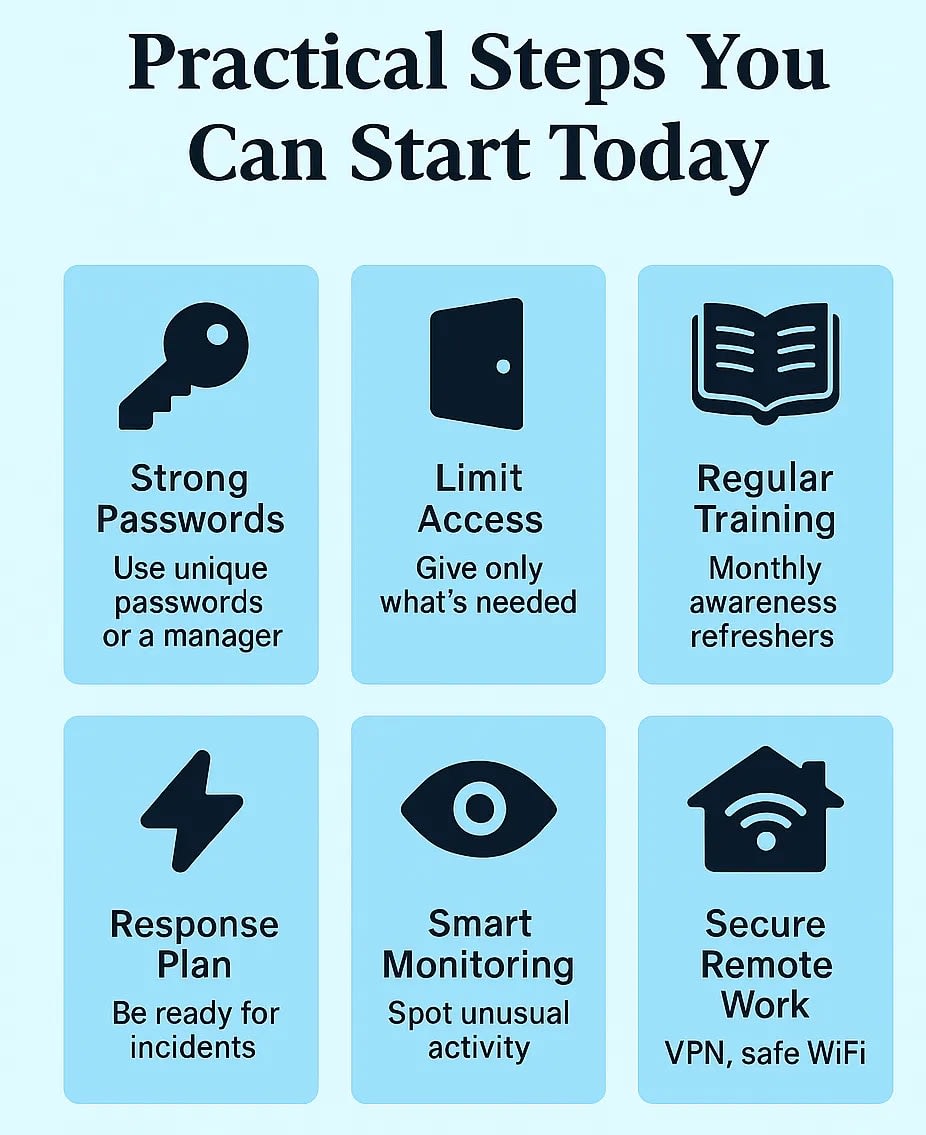
Reading about threats is one thing. Acting on them is what makes the difference. The good news? You don’t need a huge budget or a team of experts to protect your business. You can start small, right now.
This is where the question What is an Insider Threat Cyber Awareness? turns into clear, everyday action.
Here are the steps you can roll out today:
1. Strengthen Password Practices
Weak passwords are like leaving your office door unlocked at night. Provide your team with a password manager, and make sure every account uses a strong, unique password.
A careless login is one of the easiest ways for insider threats to slip through.
2. Limit Access to “Need to Know”
Not every employee needs access to every system. Set permissions based on roles. When you reduce unnecessary access, you reduce the chance that a simple mistake or a malicious insider can cause widespread damage.
3. Train Regularly, Not Once
One training session isn’t enough. Threats evolve, and people forget. Schedule short refreshers monthly or quarterly.
Even 15 minutes of awareness can prevent costly mistakes. That’s the essence of insider threat cyber awareness: repetition builds habits.
4. Build a Simple Incident Response Plan
Ask yourself: If an insider threat happened tomorrow, would my team know what to do? Write down clear steps for containment, communication, and recovery.
A calm, prepared response saves money and protects trust.
5. Use Monitoring Tools Wisely
Tools that flag unusual behavior, like large file transfers or logins at odd hours, give you early warnings.
But remember, tools don’t replace culture. They work best when paired with awareness, communication, and trust.
6. Secure Remote Work
Your team isn’t always in the office. Many are logging in from homes, cafés, or airports.
Share clear guidelines for safe remote work VPN use, avoiding public Wi-Fi, and keeping family devices separate from work accounts.
Remote work is convenient, but it also makes insider threat awareness even more important.
Why These Steps Matter
None of these changes requires massive investments. But together, they create a safety net that strengthens your business.
And when someone asks you, “What is an Insider Threat Cyber Awareness?”, you’ll know it’s not just theory, it’s practical steps like these that keep your company secure.
The Future of Insider Threats
When people ask, “What is an Insider Threat Cyber Awareness?”, they often think it’s a one-time project: train your staff, run a drill, and you’re done.
But the truth is, insider threats are evolving. The way you handle them today may not be enough tomorrow.
Here’s what the future looks like and why staying alert matters:
Remote Work Is Here to Stay
Employees now log in from home offices, coffee shops, and even airports. That flexibility is great for productivity, but it blurs the line between secure and insecure environments.
A family member using a work laptop or an unsecured Wi-Fi connection can create risks you never planned for.
Remote work means insider threats won’t just come from offices anymore; they’ll follow wherever your people are.
AI Is a Double-Edged Sword
Artificial intelligence is changing the game. Attackers are already using AI to craft more convincing phishing emails and fake login pages. At the same time, AI is helping defenders spot suspicious behavior faster.
The challenge? It’s a race. Without cyber awareness, your employees may not recognize how real and dangerous these AI-driven attacks can look.
Supply Chains Will Add Complexity
Your company doesn’t operate in isolation. You rely on freelancers, contractors, and third-party vendors. Each one is a potential entry point. If their systems aren’t secure, their weakness becomes your weakness.
The future of insider threat management will require training not just for your employees but also for your partners.
Regulations Will Get Tougher
Governments are catching up. Data privacy laws and industry regulations are tightening. Soon, failing to train your team won’t just be risky; it may be illegal.
Companies will need to show evidence of insider threat cyber awareness programs to stay compliant.
Culture Will Be the Differentiator
Here’s the hopeful part: awareness is spreading. Businesses are beginning to treat security like health and safety, not optional, but essential.
The companies that thrive will be the ones where awareness is baked into culture, not treated as a box-ticking exercise.
What This Means for You
The future isn’t about eliminating insider threats. That’s impossible. It’s about staying one step ahead. Technology will help, but people will always be at the heart of the solution.
If your team understands insider risks and feels ownership of their role in protecting the business, you’ll be ready for whatever comes next.
So the next time someone asks, “What is an Insider Threat Cyber Awareness?”, you’ll know it’s not just about today. It’s about preparing your business for tomorrow.
Final Thoughts
When I first heard about insider threats, I felt uneasy. How do you protect yourself from the very people you trust?
Here’s what I’ve learned: it’s not about suspicion. It’s about awareness.
So, What Is an Insider Threat Cyber Awareness? It’s turning your people into defenders instead of risks.
Start small:
- Train your staff on phishing.
- Limit data access.
- Refresh awareness regularly.
- Review your response plan each year.
Remember, insider threats aren’t just about cybersecurity; they’re about people. And with awareness, people become your strongest defense.
Want to see how insider threat cyber awareness could protect your team? Contact me here. I’ll review your setup and share what’s worked for others like you.
Check out our latest blog on Cyber Tanks: What It Teaches About Cyber Attacks
Frequently Asked Questions
What’s the difference between insider threats and external cyberattacks?
Insider threats come from people who already have access to employees, contractors, or partners. They may cause harm by mistake or on purpose. External attacks come from hackers outside your company trying to break in. Both are dangerous, but insider threats are harder to spot because they come from trusted users.
How can small businesses build insider threat awareness without big budgets?
You don’t need expensive tools to start. Share simple guidelines with your team: use strong passwords, avoid clicking unknown links, and report mistakes right away. Run short awareness talks once a month. Free resources and basic training can go a long way in building awareness without straining your budget.
Are contractors and third-party vendors considered insider threats?
Yes, they can be. Contractors often need access to your systems or data to do their job. If they misuse that access or if their accounts get hacked, they can pose the same risks as employees. That’s why it’s important to set clear policies and monitor vendor access carefully.
What role does company culture play in preventing insider threats?
Culture shapes behavior. If employees feel safe speaking up about mistakes, they’re more likely to report issues before they grow. A positive culture also reduces resentment that could lead to malicious actions. Training is important, but culture makes people want to follow it every day.
Can technology alone stop insider threats, or is training essential?
Technology helps by monitoring tools, access controls, and alerts that can reduce risks. But tools can’t catch every mistake. Awareness training makes employees your first line of defense. When people know how to spot suspicious behavior and understand why it matters, they combine with technology to create stronger protection.